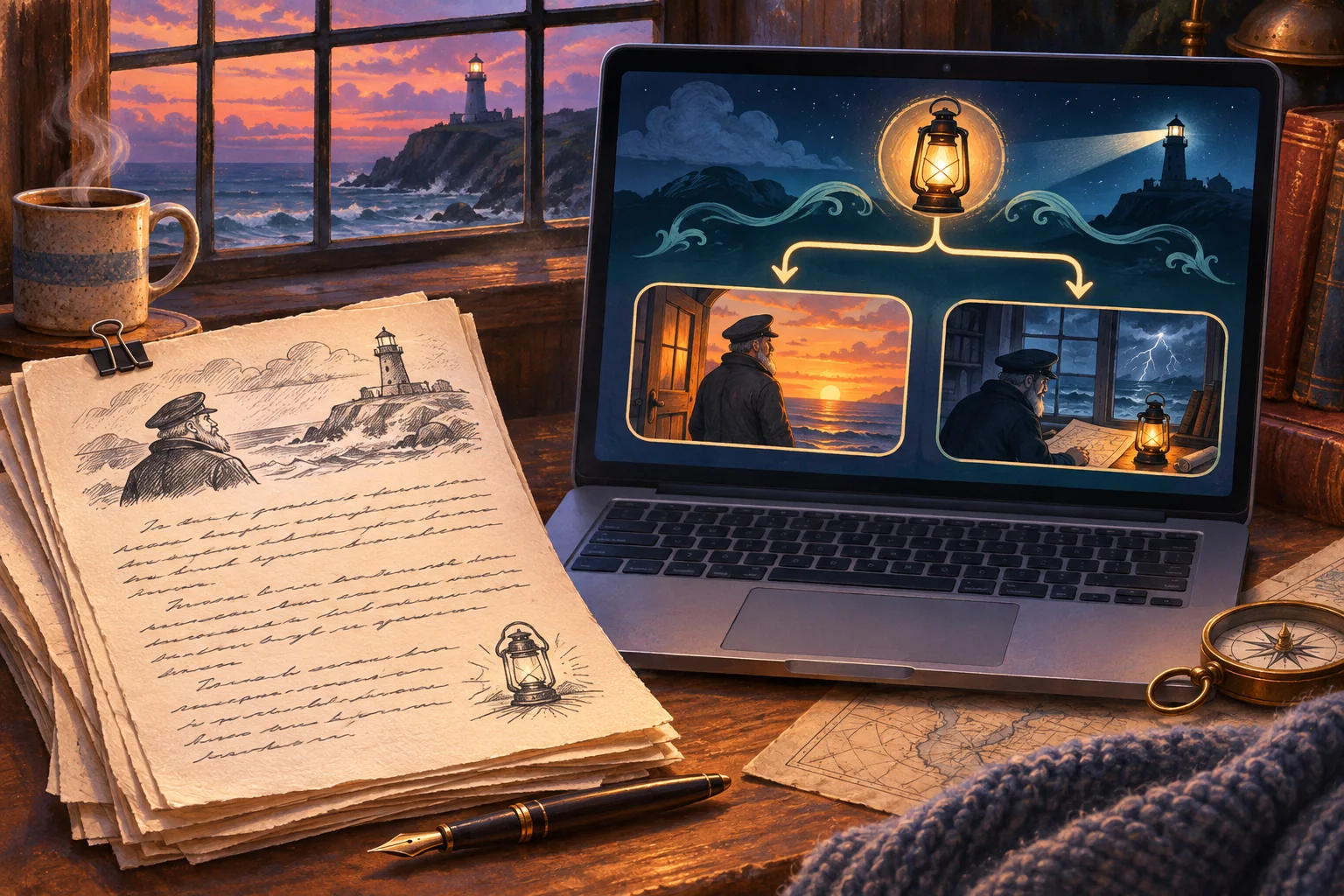
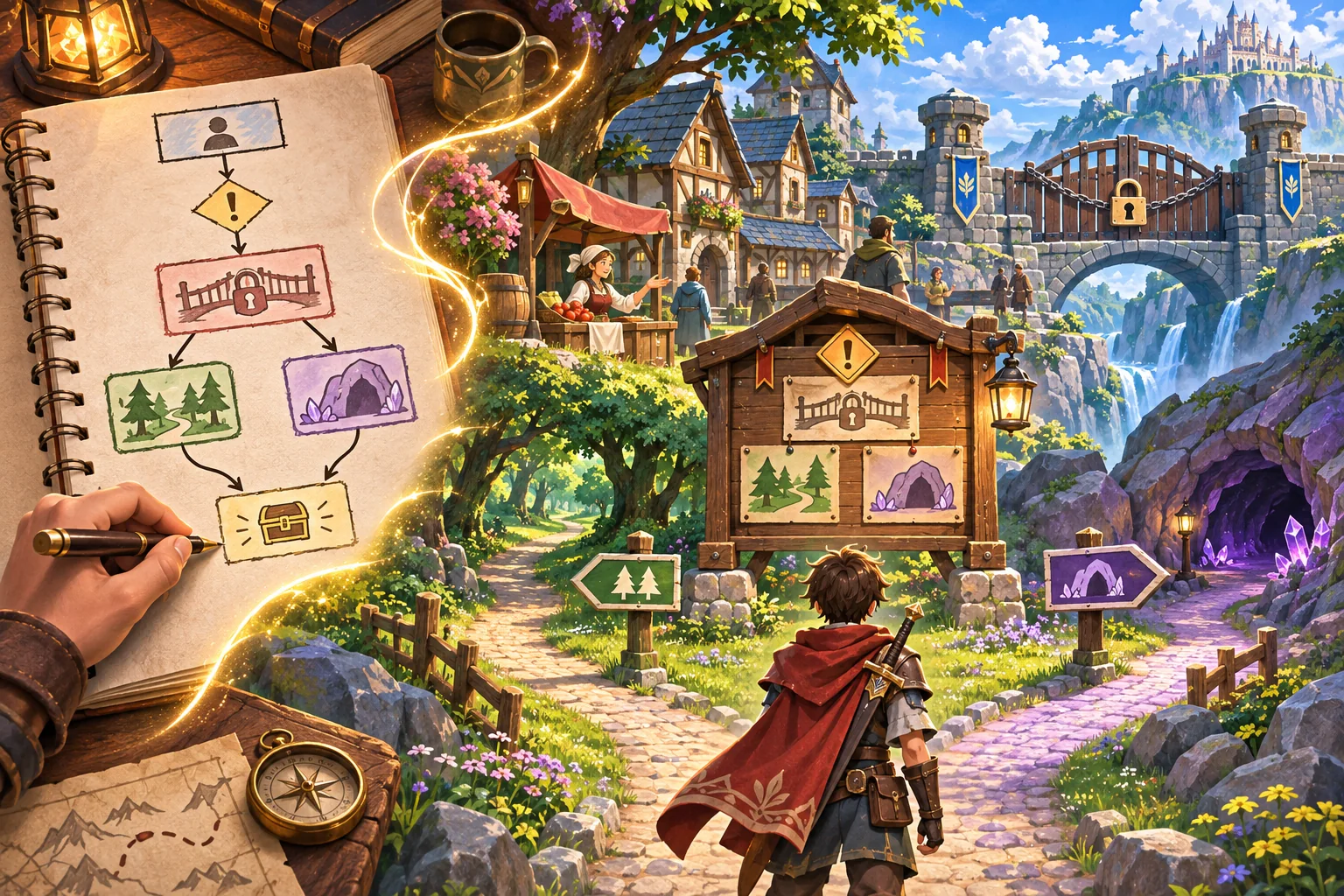
A worldbuilding notebook can hold maps, histories, customs, factions, and rules that make a setting feel deep. A world-driven RPG asks a further question: which of those facts change what the player can do? Turning notes into a playable slice means choosing a few canonical facts, connecting them to actions and consequences, and testing them in a small location.
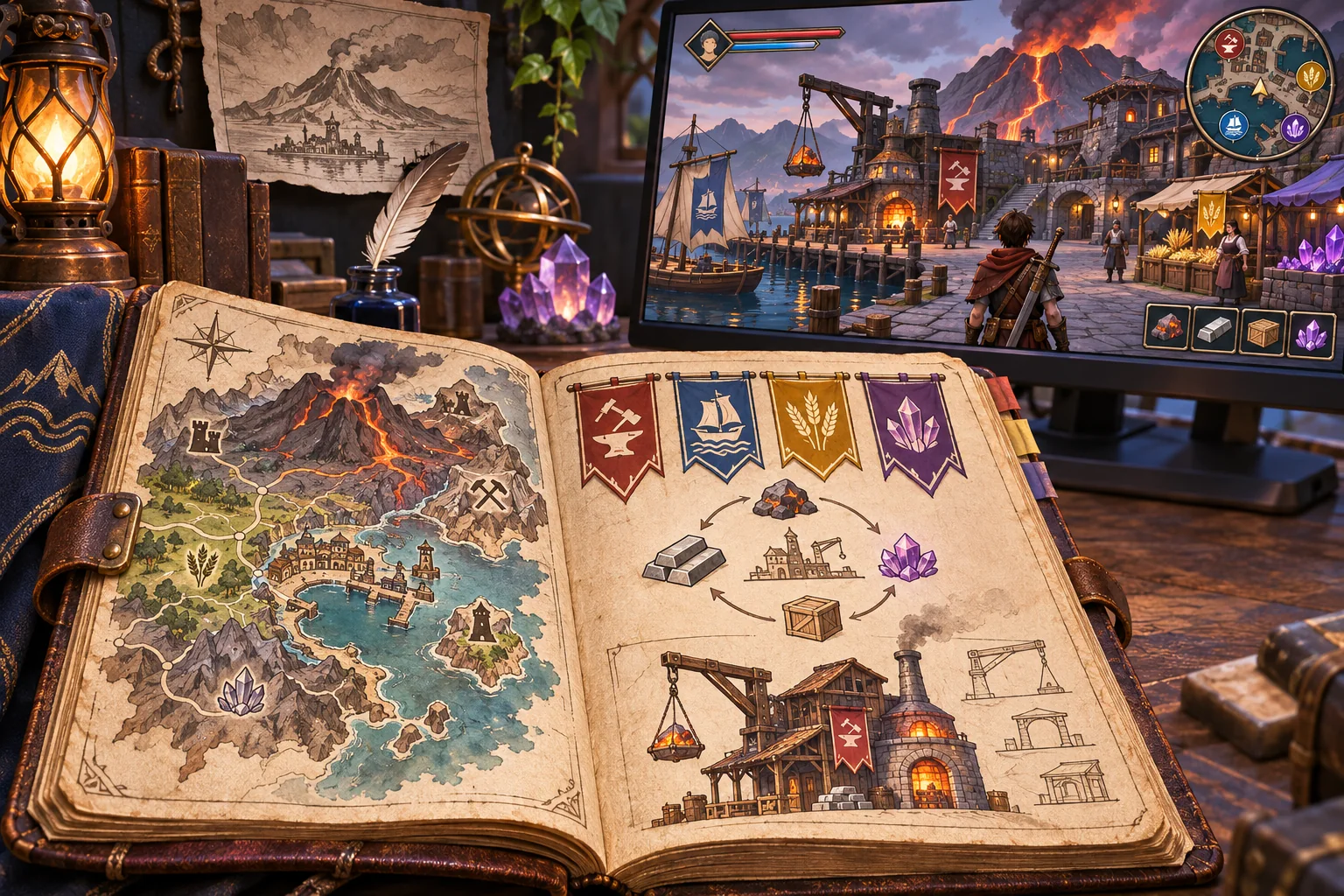
This guide uses Cinderwake, a fictional volcanic harbor setting, as an example. Its maps, factions, resource rules, quests, and outcomes are invented; no setting notes or RPG build were supplied. Godot references below support software features only and do not prove the design is playable.
Sort notes into canon, possibility, and open questions
Start by collecting notes in a structured index. Give places, groups, characters, resources, events, and rules stable names or IDs. Mark each item as canonical, proposed, or unresolved. Record who can approve changes and which other facts depend on it. This avoids turning an unfinished brainstorm into a hard rule by accident.
Then choose a few facts with direct player consequences. A scarce resource might affect trade; a faction conflict might close a route; a local custom could change which dialogue options are accepted. Other lore may deepen the mood without changing play. Keep it in the setting reference until a quest or scene needs it.
AI can summarize long notes, cluster repeated terms, or flag apparent contradictions. It cannot decide which draft is authoritative or whether a contradiction is intentional. Compare every suggestion against the canonical source and have the setting owner approve changes.
Turn one world fact into a rule
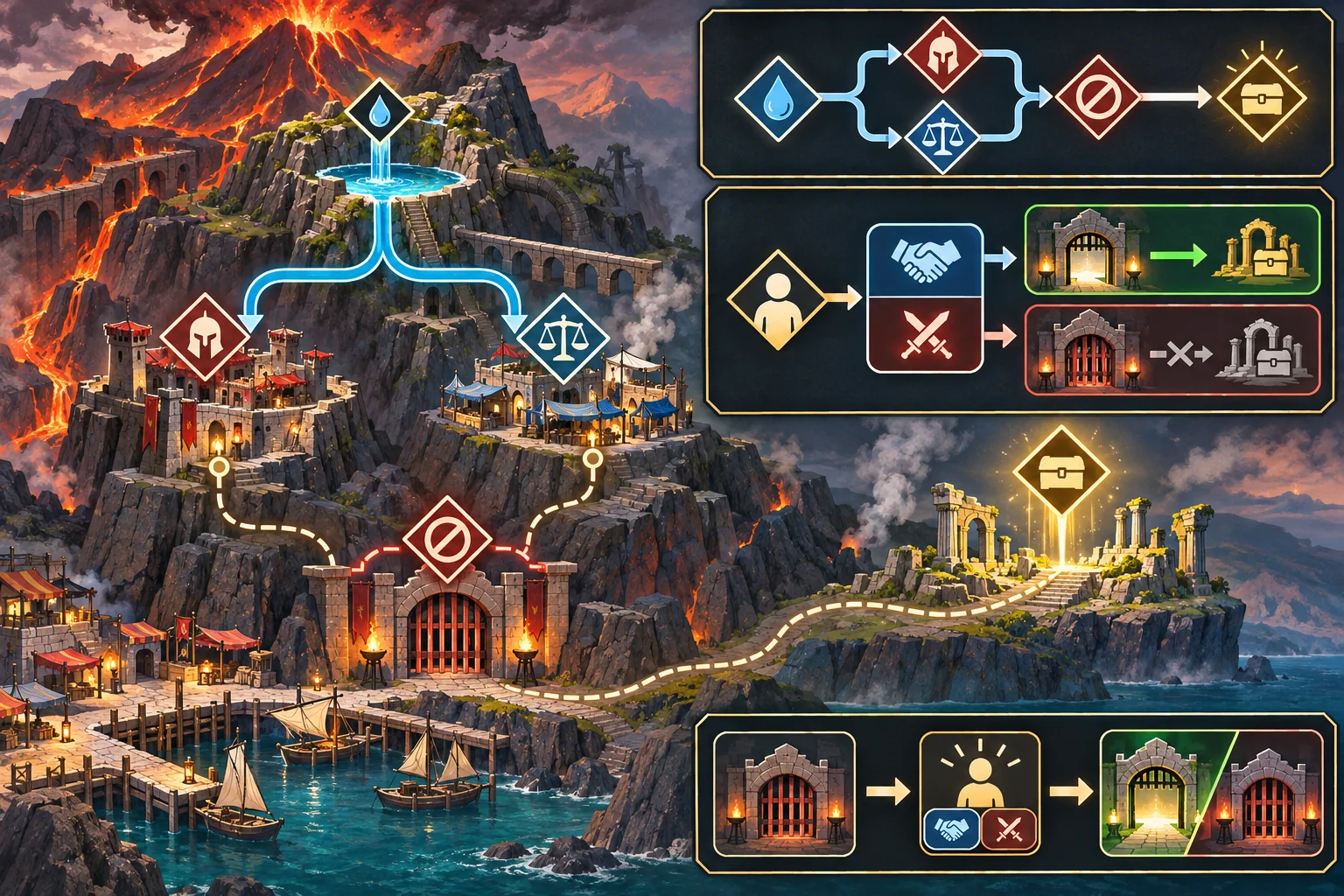
For Cinderwake, imagine that a volcanic eruption damaged the town’s water cistern. Two fictional factions now control separate supply routes. The playable question is not simply “what happened in the past?” but “how does the shortage shape a choice in the present?” The player might negotiate access, repair a gate, or divert supplies, and each response can affect a later scene.
Write the rule in operational terms: who controls access, what the player can observe, which action changes the state, and what later content reads that state. Avoid vague entries such as “water is important.” Specify how scarcity changes a price, route, relationship, or available quest. Keep numeric values provisional until the game is tested.
Build the smallest world-driven quest
Choose one location, one objective, a few characters, and one state-changing decision. Show the world rule before the player is asked to act: a dry fountain, a guarded gate, a public ration board, or a character’s behavior. Give the player more than one reasonable response, then make the outcome visible. A short loop can establish whether lore, quest logic, and environment agree.
Separate reusable content data from scenes and behavior. Godot’s Resource class supports serializable data containers that can be nested and saved; scenes can be composed and instantiated as reusable node trees. These features can help represent a faction record, dialogue definition, or quest location. They do not define how your canonical lore is approved or how quest state is validated.
Connect systems through clear events. In Godot, signals allow one node to react to another’s event without a direct reference, which can reduce coupling. A gate might emit an event when opened and a quest system may react by updating access. Keep the rule and state ownership clear so the water gate does not have several competing versions of truth.
Let characters reveal the world through choices
Use dialogue to show what each faction knows, needs, or misunderstands. A character should not repeat the setting bible. Give the player enough information to make an informed decision, then let later dialogue reflect what they chose. If a choice changes trust or access, record that state explicitly and test each route.
Avoid exposition that only explains history but never affects the present. A short optional conversation can reward curious players, while the main objective should remain legible without reading every note. Use environmental art, item descriptions, and quest responses to reinforce the same rules in different ways.
Review the slice for consistency and play
Play the location from start to objective. Can the player infer the water shortage? Do the faction roles make sense? Does the gate state match the dialogue? Can the player see what their decision changed? If a world fact appears in a note but not in behavior, either make it playable or keep it clearly as background lore.
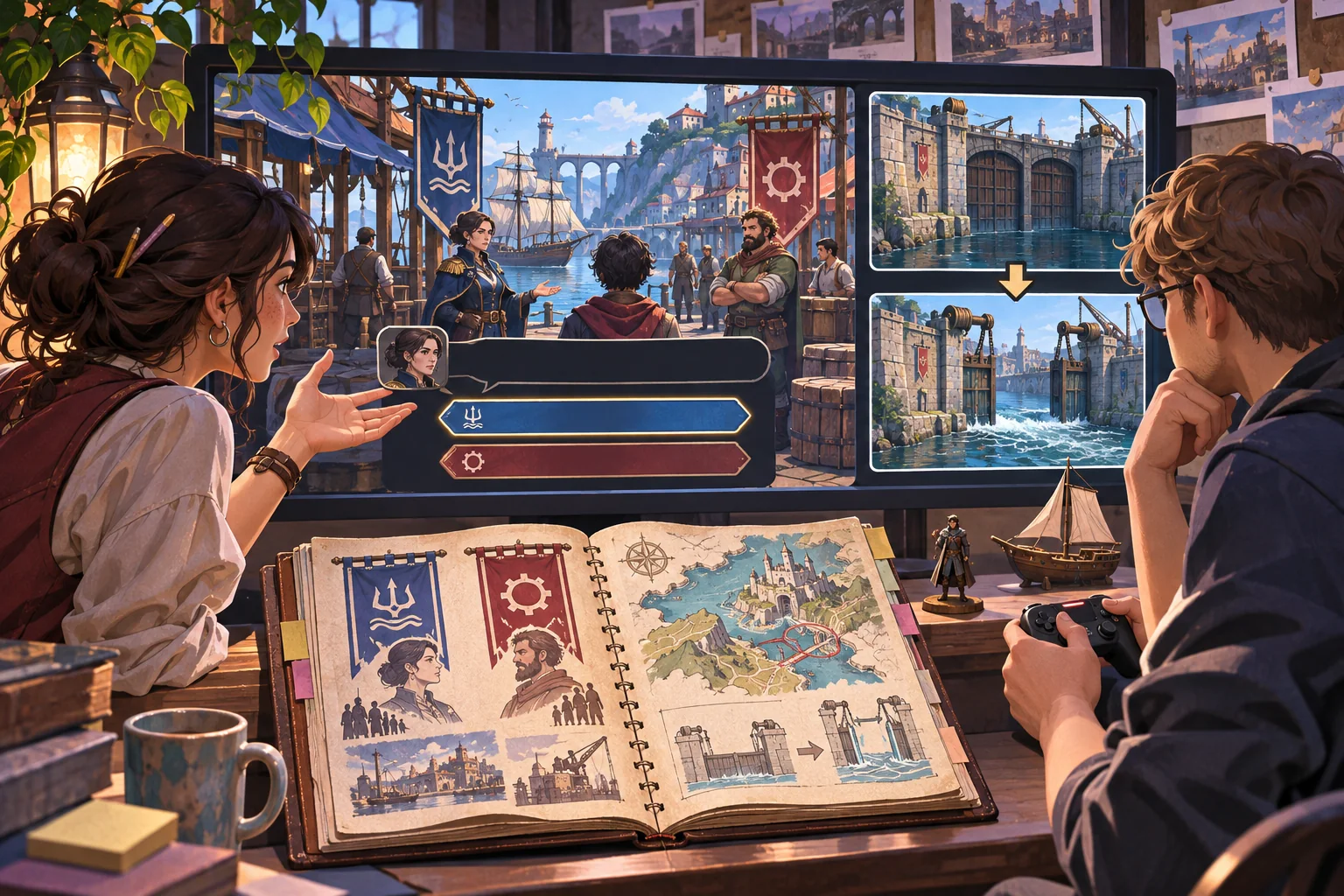
Keep a state table with starting value, player action, new value, and later scenes that read it. Include unresolved questions and the build version. Ask someone unfamiliar with the setting to explain the conflict in their own words. If they cannot tell what is happening, improve the cues before adding more history.
World-to-RPG checklist
- Mark canon, proposed ideas, and open questions separately.
- Give places, factions, rules, and quest states stable identifiers.
- Choose a small number of facts that change player actions.
- Show world rules through environment, characters, and consequences.
- Keep reusable data, scene composition, and state ownership explicit.
- Test all routes against the same setting facts.
- Expand the lore-driven system only after a small slice works.
A world-driven RPG emerges when the setting changes what players can do and what happens afterward. Select one canonical rule, build a short quest around it, and verify that the environment, dialogue, and state agree. For more production guidance, browse the resource library.
Frequently asked questions
How do I turn worldbuilding notes into an RPG?
Extract a few facts that can change player choices: a faction conflict, a resource rule, a local custom, or a historical event that affects the present. Turn each into an observable system, scene, or decision, then build one location with an objective and consequence. Keep lore that has no playable role in reference material instead of forcing it into the first slice.
Can AI turn worldbuilding notes into a playable game?
AI can help organize notes, find contradictions, suggest quest hooks, or draft structured records. It cannot decide which facts are canonical or prove that a world system is fun. Keep the author-approved setting bible authoritative, review every generated change, and test the resulting rules in a playable build.
How much lore should be in a world-driven RPG?
Include enough context for players to understand the current conflict and make a choice. A first slice can introduce one location, a few characters, and one world rule with consequences. Expand the setting through play rather than explaining every historical detail upfront. Keep extra lore available for players who want it.
How can worldbuilding affect gameplay?
Connect setting facts to actions and consequences: a local resource changes trade, a faction controls a route, or a custom shapes dialogue and access. Show the rule through the environment, character behavior, and outcomes. If a world fact never changes what players can do or understand, it may belong in optional reference material.
How do I keep an RPG’s lore consistent across quests?
Use stable terms and IDs for places, factions, characters, rules, and events. Record which facts are canonical, uncertain, or player-dependent, then reference them in quest briefs. Test routes that change knowledge or alliances and check that later dialogue responds to those states without contradicting the setting.