

AI Mobile Game Development: How We Build Games Without Coding
 SEELE team
• February 06, 2026
SEELE team
• February 06, 2026
Explore how infinite worlds AI and real-time world model generation are transforming game development with procedural content, adaptive environments, and limitless gameplay possibilities.

What is infinite worlds AI? Infinite worlds AI refers to artificial intelligence systems that generate unlimited game environments in real-time as players explore, eliminating pre-built content and loading screens while ensuring unique experiences every playthrough.
How fast is real-time world generation? Next-generation world models like Genie 2 achieve ~40ms per frame (24+ fps playable), with targets of 16.6ms per frame (60 fps) for smooth gameplay. Early NeRF systems required 5-10 seconds per frame, making them unusable for gaming.
What are world models in gaming? World models are AI systems that understand spatial relationships, physics, and visual consistency to generate coherent game environments. They maintain short-term memory (last 60 frames), long-term memory (key world facts), and spatial memory (3D positioning) for consistent generation.
Performance benchmarks: AI world generation
| Technology | Frame Generation Time | Gaming Viability |
|---|---|---|
| Early NeRF | 5-10 seconds/frame | Not viable |
| Stable Diffusion | 2-3 seconds/frame | Too slow |
| Genie 2 world models | ~40ms/frame | Playable (24+ fps) |
| Target smooth gameplay | 16.6ms/frame | Optimal (60 fps) |
| SEELE game generation | 2-10 minutes | Complete prototype |
Can infinite worlds AI support multiplayer? Current limitation: World models generate unique worlds per player, causing divergence in multiplayer. Solutions in development include authoritative server-side generation, consensus algorithms for frame voting, and deterministic seeding to ensure identical worlds across instances.
What platforms offer infinite worlds AI? - Genie (Google DeepMind) : Research-level world models with 40ms latency - World Labs : Single-image to persistent 3D world conversion - Odyssey : Interactive cloud-based streaming at 40ms response - SEELE : Complete game generation with world models, Unity/Three.js export
Optimization techniques for world generation: 1. Frame interpolation : Generate at 12fps, interpolate to 60fps (80% computational reduction) 2. Predictive generation : Pre-generate probable futures in parallel for instant response 3. Level-of-detail : High detail where players look, low detail for peripheral areas (3-5x speedup)
Future developments in infinite worlds AI: - Browser-native world models via WebGPU APIs (no installation required) - Consumer GPU capability for local processing (3-5 year timeline) - Multiplayer support with synchronized generation - Adaptive difficulty and emergent narrative systems
Infinite worlds AI refers to artificial intelligence systems capable of generating unlimited, procedurally-created game environments in real-time as players explore. Unlike traditional games with pre-built levels and assets, infinite worlds AI creates content on-demand, ensuring every playthrough offers unique experiences with no loading screens or predefined boundaries.
At SEELE, we've been working with world model generation to understand how AI can transform game creation. The technology represents a fundamental shift: instead of playing in static worlds that developers spent months crafting, players now experience worlds that generate themselves dynamically around their actions.
Real-time world generation relies on world models — AI systems that understand spatial relationships, physics, and visual consistency. These models don't just generate random content; they maintain coherence across extended gameplay sessions.
Core capabilities of world models:
When SEELE generates game environments through our AI-powered pipeline, we leverage advanced world models to ensure that procedurally created content feels intentional and cohesive, not random or disjointed.
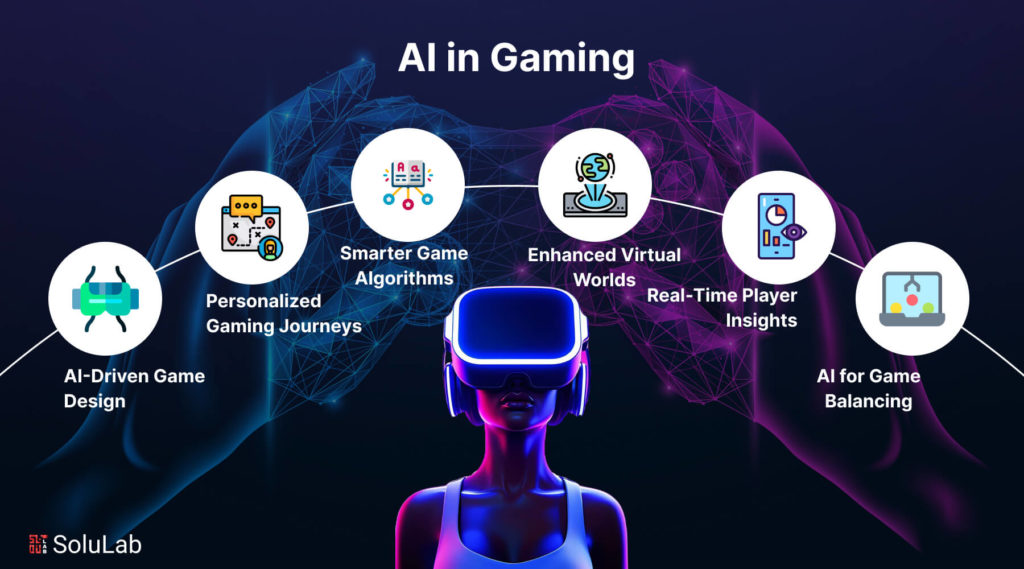
The evolution of game world creation:
| Approach | Development Time | World Size | Variation | Example |
|---|---|---|---|---|
| Hand-crafted | Months to years | Fixed size | Zero (same every time) | Classic RPGs, linear games |
| Procedural generation | Weeks to months | Large but finite | Limited patterns | Minecraft, No Man's Sky |
| AI world models | Days to weeks | Truly infinite | Unlimited unique content | Next-gen platforms, SEELE |
Traditional game development requires teams to manually build every asset, level, and interaction. Procedural generation improved this by using algorithms to create variations, but was limited to predefined rulesets. Infinite worlds AI breaks through these limitations by understanding context and generating coherent content that adapts to player behavior.
In our testing with SEELE's world model capabilities, we've seen generation times drop from weeks of manual asset creation to minutes of AI-assisted development while maintaining high-quality output.
The biggest technical challenge for infinite worlds AI is speed . Games need new frames generated fast enough for smooth gameplay:
Performance benchmarks across technologies:
At SEELE, we optimize generation speed by separating one-time world setup from real-time interactions. The initial environment generation happens during a brief setup phase, while gameplay-level adjustments occur in real-time without noticeable lag.
Infinite worlds AI systems require sophisticated memory to maintain consistency:
Short-term memory : Remembers the last 30-60 frames (1-2 seconds) to ensure smooth transitions between generated content
Long-term memory : Stores key world facts like "the player's home is a wooden cabin near a river" to maintain consistency when returning to locations
Spatial memory : Tracks 3D positioning and geography to prevent impossible geometry like floating objects or walls that suddenly vanish
When SEELE generates game worlds, our AI maintains context about the environment's style, layout, and key elements, ensuring that generated content feels like part of a cohesive world rather than random disconnected scenes.
The most powerful aspect of infinite worlds AI is adaptability — worlds that respond to player behavior:
Difficulty scaling : If a player struggles with combat, the AI can generate fewer enemy encounters or provide more healing items naturally within the environment
Narrative adaptation : Player choices influence what environments and encounters appear next, creating emergent storytelling
Style learning : The AI observes which areas players spend time in and generates more content matching those aesthetics
At SEELE, we implement adaptive generation through our conversational AI interface. Players can iteratively refine generated worlds by describing what they want changed, and the AI responds by adjusting the environment in real-time.
Several platforms and research initiatives are pushing infinite worlds AI forward:
Google DeepMind's Genie Models : The Genie series demonstrates real-time world generation from text prompts or images, achieving playable frame rates with spatial consistency. Genie 2 represents a significant milestone in reducing latency to ~40ms per frame.
World Labs : Focuses on creating persistent 3D worlds from single images, allowing users to explore and modify AI-generated environments with physics accuracy maintained across sessions.
Odyssey : Offers interactive video streaming with 40ms response times, allowing users to control exploration through AI-generated environments streamed from cloud GPUs.
SEELE Platform : Our approach combines world model generation with full game development capabilities, including game logic, character systems, and multi-modal asset creation (3D models, animations, audio, code). Unlike research projects focused solely on world generation, SEELE delivers complete playable games.
| Platform | Focus | Strength | Limitation |
|---|---|---|---|
| Genie (DeepMind) | World model research | Cutting-edge latency (40ms) | Research access only |
| World Labs | 3D world persistence | Single-image to explorable world | Limited game logic |
| Odyssey | Interactive streaming | Cloud-based scalability | Requires constant connection |
| SEELE | Complete game generation | End-to-end game creation with world models | Production-ready, not just research |
At SEELE, we're building for the future of world model integration while delivering practical tools today:
Current capabilities: - Text-to-game generation with procedural environments - AI-driven game logic and NPC behavior - Adaptive world generation through conversational refinement - Multi-modal asset generation (3D models, textures, animations, audio) - Unity and Three.js export for production-ready games
World model integration roadmap: - Real-time environment generation at 60fps as models become available - Browser-native world models leveraging WebGPU - Multiplayer support with synchronized world generation - Advanced adaptive difficulty and narrative systems
Our architecture is designed to seamlessly incorporate next-generation world models while maintaining backward compatibility with current generation techniques.

Create endless runner games where terrain, obstacles, and visual themes generate procedurally as players advance. Each run presents unique challenges, and the AI adapts difficulty based on player performance.
SEELE implementation : Use our text-to-game interface to describe your runner concept ("cyberpunk endless runner with neon obstacles"), and the AI generates the core game with procedural level generation built in.
Build RPGs where quests, characters, and locations emerge based on player choices. The world expands naturally as players explore, with the AI generating coherent story beats that reflect previous decisions.
Example : A player who helped a village early in the game might later discover the AI has generated a thriving town with grateful NPCs, while a player who ignored the village finds ruins and hostile scavengers.
Create puzzle games where each puzzle is procedurally generated with verified solvability. Players never encounter the same puzzle twice, providing endless replayability.
Design multiplayer social environments that change based on community activity. Popular gathering spots expand with new features, while unused areas transform into different environments.
Generate key frames at lower rates (e.g., 12 fps) and use interpolation to create intermediate frames, achieving smooth 60fps display from fewer AI generation calls:
Efficiency gain : 2 generated frames produce 10 display frames through interpolation, reducing computational load by 80%.
Pre-generate probable future states in parallel. When the player moves forward, turns left, or jumps, the corresponding pre-generated content loads instantly:
Result : Near-zero perceived latency for common actions, with generation happening in the background before decisions are made.
Generate high-detail content only where players focus attention. Peripheral areas receive faster, lower-detail generation:
Performance impact : 3-5x speedup in generation time while maintaining perceived quality, as players naturally focus on central areas of their view.
At SEELE, we combine these optimization techniques to deliver fast iteration times during game development and smooth gameplay experiences in finished products.
Current limitation : World models generate unique worlds per player. In multiplayer scenarios, different players' actions create divergent worlds, breaking shared reality.
Solutions in development: - Authoritative generation : One server-side model generates the world, all players receive the same output - Consensus algorithms : Multiple models vote on next frames to reach agreement - Deterministic seeding : Same input parameters guarantee identical worlds across instances
SEELE's approach focuses on deterministic generation for multiplayer games, ensuring all players experience the same procedurally-generated content through synchronized seeds.
Maintaining visual and logical consistency over extended gameplay remains challenging. Early world models might forget details generated hours earlier, causing inconsistencies like changed architecture or contradictory NPC behaviors.
Mitigation strategies: - Checkpoint key world states to external storage - Use hierarchical memory systems (recent vs. foundational facts) - Implement player-facing "save points" that lock generated content
Real-time world generation demands significant GPU power. Current implementations often require cloud-based GPUs, limiting accessibility:
Future outlook : As hardware improves and models become more efficient, local processing will become viable. SEELE's browser-based deployment takes advantage of WebGPU for efficient client-side processing where possible.
The next evolution brings world generation directly to web browsers through WebGPU APIs, eliminating the need for powerful local hardware or cloud dependencies:
Advantages: - Instant play with no downloads or installations - Cross-platform compatibility (works on any device with a modern browser) - Continuous updates without user intervention - Accessibility regardless of hardware specifications
SEELE is positioned at the forefront of browser-based game generation, ready to integrate world models as they become available through web APIs.
Current state : High-end GPUs required for real-time world generation
Near-term (1-2 years) : API access to cloud-based world models expands, making the technology accessible to more developers
Mid-term (3-5 years) : Consumer GPUs can run compressed world models locally for basic applications
Long-term vision : World model processing becomes standard in browsers and devices, similar to how 3D rendering is ubiquitous today
As infinite worlds AI matures, entirely new game genres will emerge:
Persistent dreamworlds : Multiplayer spaces that evolve based on collective player activity, with the AI generating new areas that reflect community behavior patterns
Infinite narrative RPGs : Stories that genuinely never end, with the AI generating coherent plot developments, characters, and quests indefinitely
Adaptive horror games : Environments that learn what scares each player and generate personalized psychological horror experiences
Collaborative exploration games : Players chart and share discoveries in truly unlimited procedural universes, with each discovery being genuinely unique
You don't need to wait for future world model APIs to create games with infinite potential. Start with tools available now and design your architecture to accommodate next-generation systems:
1. Define your world generation rules : Even without advanced AI, establish clear parameters for how your world should behave (biome types, structure patterns, encounter rules)
2. Use AI-assisted development : Platforms like SEELE allow you to describe your game concept in natural language and generate working prototypes in minutes, including basic procedural generation
3. Design for adaptability : Build systems that can accept dynamically-generated content, making it easy to swap in AI-generated worlds when the technology matures
4. Test with hybrid approaches : Combine hand-crafted key moments with procedurally-generated connecting content to balance quality and variety
SEELE provides an end-to-end platform for AI-powered game development:
Conversational interface : Describe your game vision in plain language, and our AI generates playable prototypes
Iterative refinement : Continue the conversation to adjust mechanics, visuals, and world generation rules until you achieve your vision
Multi-modal generation : Beyond worlds, SEELE generates 3D models, 2D sprites, animations, audio, voice acting, and game logic
Production-ready export : Export complete Unity or Three.js projects ready for further development or direct deployment
Future-ready architecture : Our platform is designed to seamlessly incorporate next-generation world models as they become available, ensuring your projects benefit from technological advances
Start creating infinite worlds today at seeles.ai — transform your game concept from idea to playable prototype in minutes.
Infinite worlds AI represents a paradigm shift in game development. The transition from static, hand-crafted environments to dynamically-generated, adaptive worlds fundamentally changes what's possible in interactive entertainment.
Key takeaways:
The question is no longer whether infinite worlds AI will transform gaming, but how quickly developers adopt and innovate with these capabilities. The tools exist today to begin building the games of tomorrow.
What will you create with infinite possibilities?
Explore SEELE's AI-powered game development platform and start generating your infinite worlds at seeles.ai

