
AI Game Maker: How AI Creates Games in 2026
 SEELE team
• February 25, 2026
SEELE team
• February 25, 2026
Discover the best online game design platforms in 2026. Compare SEELE AI, Construct 3, PlayCanvas, and GDevelop to start creating games in your browser today.
The right online game design platform depends on whether you need ideation, no-code prototyping, asset creation, collaboration, or engine-level production. Use browser tools for speed, full engines for control, and AI platforms such as Seele for rapid playable iteration.
| Workflow stage | Tool category | Verification |
|---|---|---|
| Idea to prototype | AI/no-code builder | Export, rights, and usage limits |
| 2D/3D assets | Asset generators/modelers | Commercial terms and formats |
| Production game | Unity/Unreal/Godot | Engine license and deployment target |
| Publishing | Store/platform tools | Submission and disclosure rules |
AI and game-platform terms change quickly. Use these official or primary sources as checkpoints rather than treating this article as a pricing or legal source of truth.
Risks include platform lock-in, weak export paths, unclear commercial rights, and underestimating store submission requirements. This article is editorial guidance, not legal advice; verify official docs, terms, and release notes before shipping.
Use AI tools for first playable drafts and specialist software for final polish. Check official documentation and licensing pages before using output commercially.
Usually yes only when the tool license, asset source, and generated output rights allow it. Keep records of prompts, source materials, model/tool terms, and human edits.
Verify export formats, pricing or usage limits on the official page, commercial terms, content policy, support status, and whether the workflow fits your engine.
Seele can help prototype game ideas and production flows, but teams should still review generated assets, test builds, and use dedicated art or engine tools when precision is required.
Risks include platform lock-in, weak export paths, unclear commercial rights, and underestimating store submission requirements.
Recheck official docs, pricing, release notes, and license terms before every production decision because AI platform capabilities and terms change frequently.
What is online game design? Online game design is the process of creating video games using web-based platforms and tools that run in browsers or cloud environments, without requiring heavy software installation on local machines.
What are the best online game design platforms in 2026? - SEELE AI : AI-powered multimodal platform supporting Unity and Three.js with text-to-game generation (2-10 min prototype time) - Construct 3 : Browser-based visual 2D game development with drag-and-drop ($99/year) - PlayCanvas : Collaborative WebGL 3D game engine (free for public projects) - GDevelop : Open-source event-based game engine (free, web/mobile/desktop export)
How long does it take to create a game with online tools? - AI-powered platforms (SEELE): 3-10 minutes for playable prototypes - Visual editors (Construct 3, GDevelop): Hours to days for simple games - Manual coding platforms (PlayCanvas): Days to weeks for complete games
Do I need coding experience for online game design? No coding is required for platforms like Construct 3 and GDevelop (visual event systems) or SEELE (AI-powered natural language interface). Understanding basic programming logic helps but is not mandatory.
What can I build with online game design platforms? You can create 2D platformers, puzzle games, RPGs, 3D first-person games, racing games, browser-based multiplayer games, and interactive experiences. AI platforms like SEELE support both 2D and 3D with asset generation included.
Key Technical Terms: - WebGL : Web Graphics Library enabling 3D graphics in browsers without plugins - Three.js : JavaScript 3D library built on WebGL for browser-based 3D rendering - PBR (Physically Based Rendering) : Realistic material rendering using diffuse, metallic, and roughness maps - Sprite sheet : Single image containing multiple animation frames for 2D game characters - LOD (Level of Detail) : Technique reducing polygon count for distant objects to optimize performance
Online game design refers to creating video games using web-based tools and platforms that run directly in your browser or through cloud-based development environments. Unlike traditional game development that requires installing heavy software like Unity or Unreal Engine on your local machine, online game design lets you build, test, and publish games from anywhere with an internet connection.
The rise of WebGL, advanced JavaScript frameworks like Three.js, and AI-powered development platforms has made online game design increasingly accessible in 2026. You no longer need years of coding experience or expensive hardware to create engaging 2D or 3D games.
Online game design platforms offer several advantages over traditional desktop-based development:
Accessibility : Start designing games immediately without downloads or installations. All you need is a web browser.
Lower barrier to entry : Many online platforms use visual editors or AI-assisted coding, eliminating the need to master complex programming languages from scratch.
Instant deployment : Publish your game as a web game that players can access instantly through a URL—no app store approval required.
Collaboration : Cloud-based platforms make it easier for teams to work together in real-time, regardless of location.
Cost-effective : Many online game design tools offer free tiers or affordable pricing compared to professional game development software licenses.
Here's a comparison of leading online game design platforms, each with different strengths depending on your needs:
SEELE is an AI-powered multimodal game development platform that enables text-to-game generation through conversational interfaces. It supports both 2D and 3D game creation with a dual-engine architecture (Unity and Three.js).
Key features: - Complete 2D and 3D game generation from text prompts - AI-powered sprite sheet generation and animation - Text-to-3D model conversion with PBR textures - Unity project export for professional development - Browser-based deployment via Three.js - Built-in audio, voice, and animation generation
Best for: Developers who want to rapidly prototype games using AI or create production-ready assets with minimal manual work.
Pricing: Freemium model with commercial licensing on pro plans
Generation speed: 2-5 minutes for complete 2D games, 2-10 minutes for 3D games (based on platform benchmarks)
Construct 3 is a browser-based visual game development platform focused on 2D games. It uses a drag-and-drop event system instead of traditional coding.
Key features: - Visual event system (no coding required) - Strong 2D game capabilities - Extensive plugin library - Real-time collaboration features - Export to multiple platforms (HTML5, mobile, desktop)
Best for: Beginners who want to create 2D games without coding, educators, and rapid prototypers.
Pricing: Free tier available; subscription starts at $99/year
PlayCanvas is a collaborative WebGL game engine that runs entirely in your browser, focused on 3D game development.
Key features: - Real-time collaboration with visual editor - High-performance 3D rendering - Built-in asset pipeline - GitHub integration - Strong physics engine
Best for: 3D web game developers who need professional-grade tools and team collaboration.
Pricing: Free for public projects; paid plans for private projects
GDevelop is an open-source, cross-platform game engine with a web-based editor focused on event-based development.
Key features: - No-code event system - Both 2D and 3D support - Extensive extension library - Open-source and free - Export to web, mobile, and desktop
Best for: Indie developers who want flexibility without licensing costs, and those who prefer open-source tools.
Pricing: Free (open-source), with optional cloud services
| Platform | Best For | Engine Type | AI Features | Avg. Prototype Time | Export Options |
|---|---|---|---|---|---|
| SEELE AI | AI-assisted rapid development | Unity + Three.js | Full multimodal AI | 3-10 minutes | Unity projects, WebGL |
| Construct 3 | 2D no-code games | Proprietary 2D | Limited | Hours to days | HTML5, Mobile, Desktop |
| PlayCanvas | Collaborative 3D web games | WebGL (Three.js-based) | None | Days to weeks | WebGL only |
| GDevelop | Open-source flexibility | Proprietary | None | Days to weeks | Web, Mobile, Desktop |
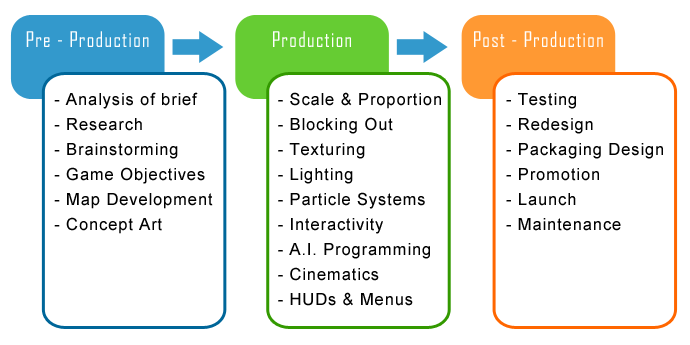
While online platforms lower the technical barrier, developing these skills will significantly improve your game design capabilities:
Understanding core game mechanics, player psychology, and level design principles is crucial regardless of your chosen platform. Study successful games in your target genre to learn what makes them engaging.
Even with AI-powered asset generation, knowing basic principles of color theory, composition, and UI/UX design helps you create more polished games. Online tools like SEELE can generate assets, but artistic direction still matters.
While visual editors eliminate complex syntax, understanding programming concepts like variables, conditionals, loops, and functions helps you create more sophisticated game behaviors. Many online platforms use event systems that mirror programming logic.
If you're creating 3D games, familiarize yourself with concepts like meshes, textures, lighting, and camera controls. Platforms like SEELE automate much of the technical implementation, but understanding the fundamentals improves your results.
Ready to start creating games online? Follow these steps:
1. Choose your platform : Based on your goals (2D vs 3D, AI-assisted vs manual, team collaboration needs), select a platform from the comparison above.
2. Start small : Don't attempt a massive RPG as your first project. Create a simple prototype—a basic platformer, puzzle game, or interactive scene—to learn the platform's workflow.
3. Use templates : Most online platforms offer starter templates. These provide working examples you can modify and learn from. SEELE offers game templates that can be edited through natural language descriptions.
4. Join the community : Every major platform has forums, Discord servers, or subreddits. Connect with other developers to get help, share progress, and find collaborators.
5. Iterate quickly : One advantage of online game design is rapid iteration. Test your game frequently, gather feedback, and make improvements. AI-powered platforms like SEELE enable particularly fast iteration cycles.
6. Study successful games : Analyze games similar to what you want to create. What makes them fun? How is the difficulty balanced? How do they onboard new players?
AI is transforming online game design in 2026. Platforms like SEELE demonstrate how multimodal AI can handle asset creation, code generation, and even game logic through conversational interfaces.
Key AI capabilities changing the game:
This doesn't mean traditional game design skills become obsolete—rather, AI handles technical implementation while you focus on creative direction and game design decisions.
Performance optimization : Web games must load quickly and run smoothly across devices. Use optimized assets, implement LOD (Level of Detail) systems, and test on various devices. Platforms like SEELE include automatic optimization features.
Scope creep : It's tempting to keep adding features. Define a minimal viable product (MVP) first, complete it, then add features iteratively.
Asset quality : While AI can generate assets rapidly, you may need to curate and refine outputs for consistency. Develop an art style guide and maintain visual coherence.
Browser compatibility : Test your web games across different browsers (Chrome, Firefox, Safari) to ensure consistent functionality.
Once your game is ready, online platforms make distribution straightforward:
Direct web hosting : Deploy your game to platforms like itch.io, Newgrounds, or your own website. Players access it through a URL with no download required.
Game portals : Submit to web game platforms like Kongregate, CrazyGames, or Poki to reach existing player audiences.
Social sharing : Web games are easily shareable via links, making them ideal for social media marketing and viral growth.
Mobile wrapping : Many online game platforms allow exporting to mobile apps for iOS and Android distribution.
Platform-specific documentation : Each platform offers tutorials and documentation. SEELE provides AI assistance that explains code and processes as you work.
YouTube channels : Search for tutorials specific to your chosen platform. Many creators offer step-by-step project walkthroughs.
Game jams : Participate in online game jams (like Ludum Dare or Global Game Jam) to practice rapid development and connect with other creators.
Asset libraries : Use resources like OpenGameArt.org, Kenney.nl, or platform-specific asset stores to supplement your game art.
Online game design in 2026 offers unprecedented accessibility for aspiring game creators. Whether you choose traditional visual editors like Construct 3 and GDevelop, collaborative 3D platforms like PlayCanvas, or AI-powered solutions like SEELE, you can start creating games today without expensive software or extensive coding knowledge.
The key is to start small, learn iteratively, and leverage the strengths of your chosen platform. As AI capabilities continue advancing, online game design will become even more accessible, allowing creators to focus on what matters most: designing engaging, fun experiences for players.
Ready to start your game development journey? Pick a platform that matches your goals and create your first prototype today. Visit SEELE to experience AI-powered game creation firsthand.