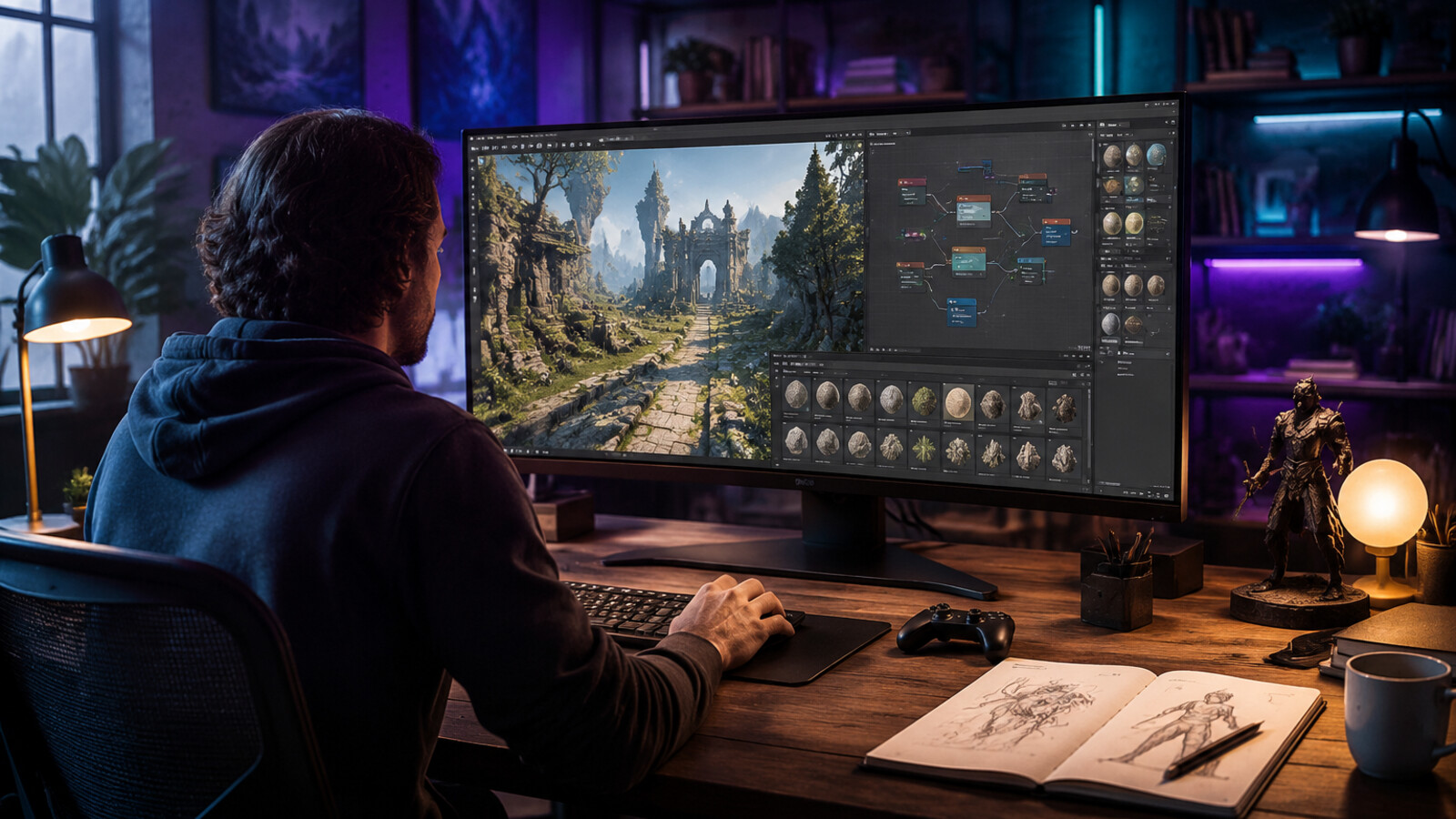
Here's the result of the phyreengine-game-development-guide model generated using Meshy.
Key Concepts: PhyreEngine and Modern Game Development
What is PhyreEngine?
PhyreEngine is a proprietary game engine developed by Sony Interactive Entertainment specifically for PlayStation platform game development. It was available exclusively to licensed PlayStation developers and provided optimized tools, rendering pipelines, and platform-specific features for console game creation.
Proprietary vs Open-Source Game Engines
- Proprietary engines (like PhyreEngine): Owned by specific companies, access restricted through licensing, platform-optimized but limited flexibility
- Open-source engines (like Phaser JS, Godot): Freely accessible source code, community-driven development, full customization potential, cross-platform support
AI-Powered Game Development
Modern AI-powered platforms like SEELE represent a paradigm shift in game creation: - Text-to-game generation : Create games from natural language descriptions - AI asset generation : Automatic 3D models, sprites, textures, and animations - Development speed : Hours to days for prototypes vs. weeks to months with traditional engines - Dual-engine support : Generate both Unity projects and Three.js web games
Game Engine Selection Criteria (2026)
- Development speed requirements : AI platforms for rapid prototyping, traditional engines for fine-tuned control
- Technical expertise level : AI platforms reduce coding barriers for non-programmers
- Platform targets : Cross-platform needs favor flexible engines like Unity or AI-powered multi-engine platforms
- Asset creation capacity : AI generation dramatically reduces need for large art teams
- Budget constraints : Open-source and AI platforms offer cost-effective alternatives to proprietary licensing
FAQ: PhyreEngine and Game Development
Q: Can I use PhyreEngine for my indie game?
A: PhyreEngine requires official PlayStation licensing and is not publicly available. Indie developers should consider open-source engines (Phaser JS, Godot) or AI-powered platforms (SEELE) instead.
Q: How does AI-powered game development compare to traditional engines?
A: AI platforms accelerate development by generating code, assets, and animations from descriptions, reducing prototype time from weeks to hours while maintaining export compatibility with traditional engines like Unity.
If you're exploring game development options, you may have encountered the term PhyreEngine . This proprietary game engine has an interesting place in gaming history, particularly for PlayStation development. Understanding what PhyreEngine is—and how it compares to modern alternatives—can help you make informed decisions about your game development workflow.
What Is PhyreEngine?
PhyreEngine is a proprietary game engine developed by Sony Interactive Entertainment, specifically designed to support game development on PlayStation platforms. Released to licensed PlayStation developers, PhyreEngine provided a comprehensive framework for creating games optimized for Sony's console ecosystem.
Unlike open-source engines such as Phaser JS or Godot, PhyreEngine was not freely available to the general public. Access was restricted to studios and developers with official PlayStation licensing agreements, making it a specialized tool within the console development space.
The engine was designed to streamline the development process for PlayStation games by providing pre-built systems, optimized rendering pipelines, and platform-specific features that took advantage of PlayStation hardware capabilities.
Key Features of PhyreEngine
PhyreEngine included several technical capabilities that made it valuable for PlayStation-focused game development:
Optimized for PlayStation Hardware
PhyreEngine was specifically engineered to maximize performance on PlayStation consoles. The engine provided low-level access to hardware features, allowing developers to achieve optimal frame rates and visual quality on Sony's platforms.
This optimization meant developers could focus on game design and content creation rather than spending excessive time on platform-specific technical challenges.
Comprehensive Development Tools
The engine came with an integrated suite of development tools, including:
- Scene editors for visual game design and level construction
- Animation systems for character and object movement
- Physics engines for realistic collision detection and dynamics
- Audio systems for sound effects and music integration
- Shader support for custom visual effects
These tools reduced the need for third-party plugins and provided a cohesive development experience.
Multi-Platform Support (Limited)
While primarily focused on PlayStation, later versions of PhyreEngine offered some support for cross-platform development, allowing teams to target both PlayStation and other platforms from a single codebase—though this was not as robust as fully cross-platform engines like Unity or Unreal.
Who Used PhyreEngine?
PhyreEngine was adopted by various game studios developing for PlayStation platforms. It was particularly popular among:
- First-party Sony studios creating exclusive PlayStation titles
- Independent developers with PlayStation licensing agreements
- Mid-sized studios focused on console game development
The engine provided a middle ground between building entirely custom engines and using larger, more complex commercial engines.
PhyreEngine vs Open-Source Engines
Understanding the difference between proprietary engines like PhyreEngine and open-source alternatives helps clarify the game development landscape.
Proprietary Engines: Access and Control
Proprietary engines are owned and controlled by specific companies. Access is typically restricted through licensing agreements, and the source code is not publicly available. PhyreEngine exemplifies this model—only licensed PlayStation developers could use it.
Advantages of proprietary engines: - Platform-specific optimization - Dedicated support from the engine creator - Pre-built integrations with platform features - Streamlined workflows for target platforms
Disadvantages: - Limited or no access for independent developers without licensing - Less flexibility to modify core engine code - Dependent on the company's continued support and updates
Open-Source Engines: Community and Flexibility
Open-source engines , such as Phaser JS , Godot, and others, provide freely accessible source code that anyone can use, modify, and contribute to.
Advantages of open-source engines: - Free access for all developers - Community-driven improvements and plugins - Full transparency and customization potential - Cross-platform support without restrictions
Disadvantages: - May require more manual optimization for specific platforms - Support relies on community rather than dedicated teams - Learning curves can vary based on documentation quality
The Evolution of Game Development: AI-Powered Alternatives
Game development has transformed significantly since PhyreEngine's peak usage. Today, developers have access to powerful AI-driven platforms that dramatically accelerate the development process.
Modern Game Development Challenges
Traditional game engines—whether proprietary like PhyreEngine or open-source like Phaser JS—still require substantial technical knowledge:
- Coding expertise in languages like C++, C#, or JavaScript
- 3D modeling skills for creating game assets
- Animation knowledge for character movement
- Audio production for sound effects and music
- Manual optimization for performance tuning
These requirements create barriers for aspiring game developers and slow down even experienced teams.
AI-Powered Game Development with SEELE
SEELE represents a new generation of game development platforms that leverage artificial intelligence to streamline the entire creation process. Rather than requiring developers to manually code every system or create each asset from scratch, SEELE uses AI to generate game components from natural language descriptions.
Key capabilities that differentiate AI-powered development:
| Traditional Engine (Manual) | SEELE AI-Powered |
|---|---|
| Hand-code game logic in C++/C# | Describe game mechanics in natural language |
| Manually create 3D models | Generate 3D models from text descriptions |
| Build animations frame-by-frame | AI-generated animation libraries (5M+ presets) |
| Write shaders and materials | AI-generated PBR textures and materials |
| Manual asset optimization | Automatic mesh optimization and LOD generation |
Real-World Impact: Development Speed
When we compare development timelines across different approaches, the impact of AI assistance becomes clear:
- Custom engine development : Months to years before first playable prototype
- Traditional engine (Unity/Unreal/PhyreEngine) : Weeks to months for prototype
- AI-powered platform (SEELE) : Hours to days for playable prototype
This acceleration doesn't just save time—it enables rapid iteration and experimentation that would be prohibitively expensive with traditional workflows.
Dual-Engine Architecture: Unity and Three.js
SEELE's dual-engine support is particularly noteworthy. The platform generates complete projects for both:
- Unity : For developers who want desktop/mobile game exports with full engine capabilities
- Three.js : For instant browser-based deployment with WebGL rendering
This flexibility means you can start with a web-based prototype and scale to full Unity projects as your game evolves—something proprietary engines like PhyreEngine couldn't offer.
Choosing the Right Development Approach in 2026
The choice between traditional engines and AI-powered platforms depends on your specific needs and constraints.
When Traditional Engines Still Make Sense
If you're working on a project that requires: - Extremely low-level hardware optimization - Complete control over every technical detail - Proprietary console features with dedicated licensing - Large teams with specialized technical expertise
Traditional engines (including modern proprietary and open-source options) remain valuable.
When AI-Powered Development Accelerates Your Workflow
If your project prioritizes: - Rapid prototyping and iteration speed - Reduced technical barriers for non-programmers - Asset generation without hiring large art teams - Cross-platform deployment (web and native) - Cost efficiency for indie developers and small teams
AI-powered platforms like SEELE provide measurable advantages.
The Hybrid Approach
Many modern developers are adopting hybrid workflows: 1. Use AI platforms for rapid prototyping and asset generation 2. Export to traditional engines (Unity) for platform-specific optimization 3. Leverage AI-generated code as a foundation and customize as needed
This approach combines the speed of AI generation with the control of traditional engine workflows.
The Future of Game Engines
PhyreEngine represents a specific era in game development—proprietary, platform-specific, and focused on console optimization. The industry has since moved toward more accessible, flexible solutions.
The next evolution integrates AI directly into the development process, reducing manual labor while maintaining creative control. As AI models improve, the gap between "describe what you want" and "get a playable game" continues to narrow.
For developers exploring their options in 2026, understanding this spectrum—from proprietary engines like PhyreEngine to open-source frameworks and AI-powered platforms—helps you select the tools that best match your goals, timeline, and technical expertise.
Whether you're building for specific platforms, experimenting with game concepts, or launching commercial projects, the modern game development landscape offers more choices than ever before. The key is understanding which approach aligns with your specific needs and workflow preferences.
Getting Started with Modern Game Development
If you're ready to explore AI-powered game development, SEELE offers a practical entry point. The platform supports both 2D and 3D game creation with text-to-game generation, sprite sheet creation, 3D model generation, and complete Unity project export.
For developers who prefer traditional open-source engines, Phaser JS remains an excellent choice for browser-based 2D games, offering a robust framework with extensive community support.
The most important step is simply to start creating—whether with proprietary engines, open-source frameworks, or AI-powered platforms, the best way to learn game development is through hands-on experimentation.