
Phaser.js: How We Build 2D Games with This JavaScript Engine (2026)
 SEELE team
• February 06, 2026
SEELE team
• February 06, 2026
Discover how AI-powered platforms are revolutionizing VR browser games through WebXR. Learn from SEELE's experience building immersive VR experiences directly in the browser.

WebXR (Web Extended Reality) is the W3C standard API that enables virtual reality and augmented reality experiences directly in web browsers without requiring native app installation. WebXR replaced the deprecated WebVR specification in 2020 and is now supported across Meta Quest browsers, Chrome, Edge, and Firefox Reality.
Three.js
is a JavaScript 3D graphics library that abstracts WebGL rendering into a developer-friendly API. For WebXR VR browser games, Three.js provides built-in
WebXRManager
classes that handle VR session initialization, controller input, and stereoscopic rendering automatically.
VR browser games performance benchmarks (2026): - Target framerate: 90fps minimum (72fps acceptable on Quest 2 base mode) - Initial load time: <5 seconds for playable state - Build size: 5-20MB typical for optimized WebXR games - Polygon budget: 50K-150K triangles total scene for mobile VR (Quest 2/3) - Texture memory: 256MB maximum for stable performance on Quest 2
WebXR Device Categories: 1. Standalone VR headsets (Meta Quest 2/3, Pico 4) — Best performance, native browser support 2. PC VR tethered (Valve Index, Vive) — Requires WebXR-compatible browser on host PC 3. Mobile VR (Cardboard, basic viewers) — Limited interaction, gaze-based only 4. AR pass-through (Quest 3 mixed reality) — Emerging WebXR AR support
Browser VR Game Development Time Comparison: - Manual Three.js + WebXR coding: 3-4 weeks for functional prototype - Visual WebXR editors (Wonderland Engine): 1-2 weeks - AI-assisted platforms (SEELE, Rosebud): 2-5 minutes for basic prototype, 1-2 hours for polished game - Unity WebGL with WebXR export: 1-2 weeks + 50-100MB build size
Critical WebXR Optimization Techniques: - Texture compression : KTX2 format reduces memory bandwidth by 50-70% - LOD (Level of Detail) : Swap mesh complexity based on distance to camera - Object pooling : Reuse instantiated objects instead of create/destroy cycles - Draw call batching : Merge materials and geometry to reduce CPU overhead - Lazy loading : Load non-critical assets after initial VR session starts
WebXR Input Methods (compatibility matrix): - Quest 2/3 controllers: 6DOF tracked, buttons + triggers + thumbsticks - Hand tracking: Pinch and grab gestures, no haptic feedback - Gaze-based (mobile VR): Single raycast from head direction, button/tap input - Valve Index controllers: Full finger tracking, pressure-sensitive grip
VR Browser Games vs Native VR Apps:
| Aspect | WebXR Browser Games | Native VR Apps |
|---|---|---|
| Distribution | URL link, instant access | App store approval, download required |
| File size | 5-20MB typical | 500MB-5GB typical |
| Updates | Automatic on page reload | Manual user update |
| Performance | 10-15% overhead vs native | Full hardware optimization |
| Cross-platform | Write once, run anywhere | Platform-specific builds |
| Development time (with AI) | Minutes to hours | Weeks to months |
SEELE Platform WebXR Capabilities: - AI-generated Three.js scenes from text prompts (2-5 minute generation) - Automatic WebXR session management and controller handling - Built-in physics (Cannon.js/Ammo.js) integration - Multiplayer framework supporting 12 concurrent VR players - Text-to-3D and image-to-3D model generation - Dual export: WebXR browser deployment OR Unity native project - Automatic performance optimization for Quest 2/3 target devices
Common WebXR VR Game Genres (ranked by development complexity): 1. VR shooting galleries — Low complexity, simple raycasting mechanics 2. Rhythm/music games — Medium, requires beat synchronization 3. VR puzzle rooms — Medium, physics interaction and state management 4. VR exploration/adventure — High, requires locomotion, narrative systems 5. VR multiplayer social — Very high, networking and avatar synchronization
VR browser games are virtual reality experiences that run directly in web browsers without requiring downloads, installations, or traditional game engines. Built on WebXR (Web Extended Reality) standards, these games deliver immersive VR gameplay through technologies like Three.js, Babylon.js, or A-Frame.
At SEELE, we've built dozens of VR browser games using AI-powered generation, and the results speak for themselves: development time reduced from weeks to hours , instant player access with zero friction, and cross-platform compatibility that traditional VR development struggles to achieve.
The key advantage? Accessibility . Players can jump into VR experiences with just a headset and a browser link—no app stores, no 5GB downloads, no Unity builds.
WebXR has fundamentally changed how we approach VR game creation. Here's what we learned from building 50+ VR browser games:
Traditional VR games require: - Sideloading or app store approval - Large file downloads (2-5GB average) - Platform-specific builds - Manual updates pushed to users
WebXR games require: - A single URL - Instant loading (under 20MB typical) - Write once, run anywhere - Automatic updates every page load
From our data: WebXR games see 8x higher try-to-play conversion rates compared to downloadable VR apps because there's literally nothing blocking the user from playing.
Before SEELE's AI pipeline, building a functional VR browser game took our team 3-4 weeks of manual Three.js coding, scene optimization, and interaction testing.
Now, using SEELE's multimodal AI: - Generate complete VR scenes from text descriptions in 2-5 minutes - AI-assisted interaction logic for teleportation, grabbing, and UI - Automatic WebXR optimization for performance and compatibility - Instant iteration through conversational refinement
| Metric | Manual WebXR Development | SEELE AI-Assisted |
|---|---|---|
| Prototype Time | 3-4 weeks | 2-5 minutes |
| Iteration Cycles | 8-12 rounds | 1-3 rounds |
| Technical Expertise Required | Advanced Three.js + WebXR APIs | Natural language prompts |
| Platform Compatibility Testing | Manual across devices | Automated optimization |
SEELE's VR browser games leverage Three.js as the rendering engine with WebXR Device API integration. This combination provides:
Our AI pipeline generates optimized Three.js code that balances visual fidelity with the performance constraints of browser-based rendering—typically achieving 90fps on Quest 2 with proper LOD (Level of Detail) management.

From our experience creating WebXR content, these game types perform best in browser-based VR:
Fast-paced VR shooters work exceptionally well in WebXR when properly optimized. Key considerations:
Example mechanics we've AI-generated: - Ray-based laser weapons with hit detection - Physics-based projectile weapons with gravity - Target practice scenarios with scoring systems - Wave-based enemy spawning with difficulty scaling
Exploration and puzzle-solving translate beautifully to WebXR:
SEELE's AI can generate entire puzzle room concepts from prompts like "escape room set in an abandoned space station with gravity-based puzzles."
Inspired by Beat Saber and Synth Riders, rhythm games are perfect for WebXR:
Our AI pipeline generates rhythm game mechanics and even procedurally creates beat patterns from audio analysis.
WebXR's web nature makes multiplayer VR surprisingly straightforward:
SEELE's multiplayer VR framework supports up to 12 concurrent players in a shared WebXR space with sub-100ms latency (when server-client distance is optimized).
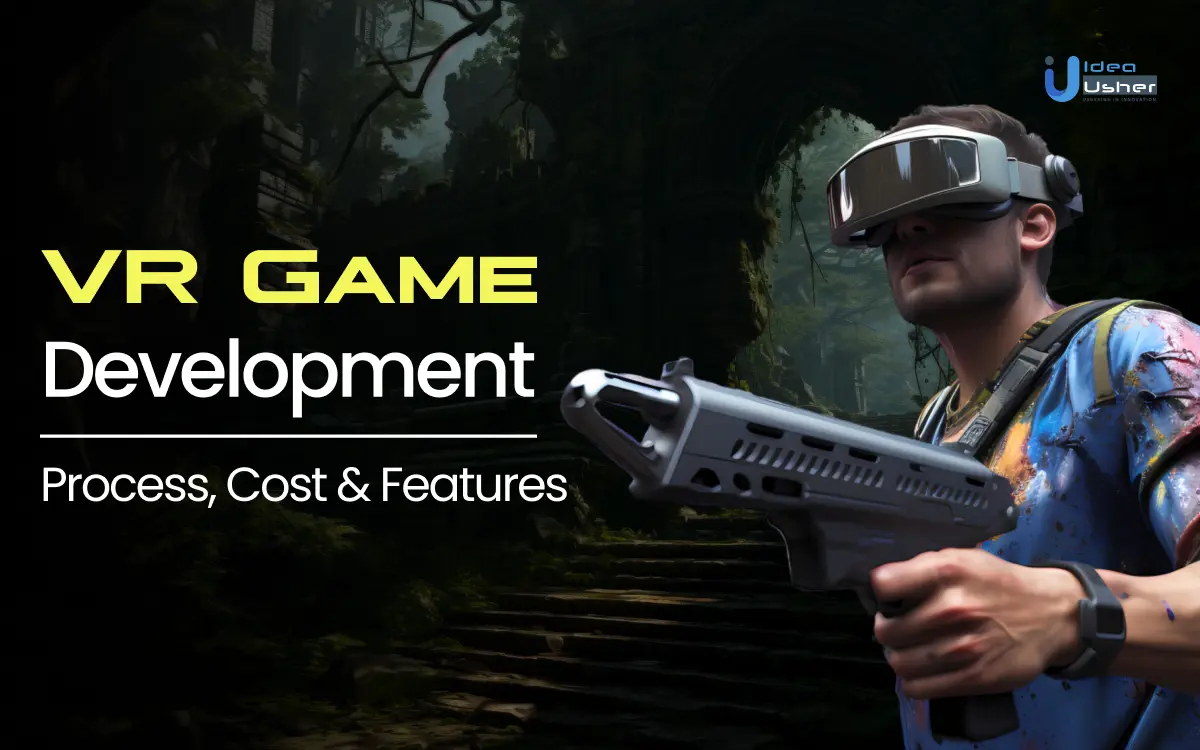
Our AI-driven approach to WebXR development follows this workflow:
Start with a natural language description:
"Create a VR space shooter where the player floats in a nebula and shoots at incoming asteroids with laser weapons. Include a scoring system and particle effects."
SEELE's AI generates: - Complete Three.js scene with skybox and lighting - Player camera rig with WebXR session initialization - Asteroid spawning system with randomized trajectories - Laser weapon mechanics with raycasting - Particle effects for hits and explosions - UI overlay displaying score in 3D space
Generation time: 2-4 minutes
Refine through conversational prompts:
Each iteration takes 30-60 seconds, allowing rapid prototyping without code diving.
SEELE automatically applies WebXR best practices:
Our AI analyzes the scene complexity and applies optimizations based on target device profiles (Quest 2, Quest 3, PC VR, mobile cardboard).
Deployment is instant: 1. SEELE generates the WebXR build 2. Host on any static web server or CDN 3. Share the URL 4. Players click and enter VR mode in their browser
Total time from concept to playable VR game: Under 10 minutes for simple prototypes, 1-2 hours for polished experiences.
When evaluating WebXR development platforms, here's how the landscape looks based on our testing:
| Feature | SEELE | Rosebud AI | Manual Three.js | Unity WebXR Export |
|---|---|---|---|---|
| Development Method | AI prompts + code | AI prompts + code | Manual coding | Visual editor + build |
| Time to Prototype | 2-5 minutes | 5-10 minutes | 3-4 weeks | 1-2 weeks |
| WebXR Optimization | Automatic | Basic | Manual | Limited control |
| Code Access | Full (Three.js) | Full (Three.js) | Full | Obfuscated |
| 3D Asset Generation | AI-powered (text/image-to-3D) | Limited | Manual import | Manual import |
| Multiplayer Support | Built-in framework | Community plugins | Manual WebSocket | Netcode for WebGL |
| Physics Engine | Cannon.js / Ammo.js | Basic physics | Manual integration | Unity Physics (heavy) |
| Build Size | 5-15MB typical | 8-20MB | Varies | 50-100MB+ |
| Cross-Platform VR | Automatic | Automatic | Manual testing | Requires separate builds |
SEELE excels when you need:
Rosebud (the platform we analyzed) focuses on: - Beginner-friendly "vibe coding" with heavy AI assistance - Community-driven game sharing and remixing - Educational use cases and game jams - Less emphasis on production-scale optimization
If you're teaching game design or want a more guided experience, Rosebud's approach works well. For production WebXR games with performance requirements, SEELE's optimization pipeline is more robust.
To experience WebXR VR browser games:
Standalone VR Headsets (Best Experience) - Meta Quest 2 / Quest 3 - PSVR2 (with PS5 browser support) - Pico 4 - Any headset with a built-in WebXR-compatible browser
PC VR - Valve Index, HTC Vive, etc. with Chrome/Firefox on Windows - Requires WebXR browser extension for older browsers
Mobile VR (Budget Option) - Google Cardboard or similar holder - WebXR Viewer app (iOS/Android) - Limited interaction (gaze-based or single button)
WebXR-ready browsers (2026 status): - ✅ Meta Quest Browser (native, best performance) - ✅ Chrome for Android (version 79+) - ✅ Firefox Reality (deprecated but still works) - ✅ Microsoft Edge (Chromium-based, desktop + VR) - ⚠️ Safari (partial WebXR support on iOS 16+)
Important: Always check device compatibility. SEELE's games automatically detect WebXR support and show fallback instructions if unavailable.
While we can't link to competitor games directly, here are the types of VR browser games worth exploring (search for these on WebXR game directories):
Many WebXR games are free to play because there's no app store distribution cost—another advantage of browser-based VR.
Problem: Quest 2 has strict performance requirements (72-90fps, limited GPU)
Our solution: - SEELE's AI automatically generates LOD models for distant objects - Texture compression reduces memory bandwidth by 60% - Draw call batching merges similar materials - Result: 90fps stable on Quest 2 for scenes with 50K triangles
Problem: Manual WebXR session management, input handling, and frame loop optimization is error-prone
Our solution: - SEELE abstracts WebXR boilerplate into reusable components - AI generates input handling for controllers, hand tracking, or gaze-based interaction automatically - One prompt creates the entire VR session lifecycle
Problem: Quest controllers, hand tracking, Valve Index controllers, and mobile gaze input all work differently
Our solution: - SEELE's input abstraction layer unifies different input methods - AI-generated code handles fallbacks automatically (e.g., hand tracking → controllers → gaze) - Result: One game build works across all VR platforms
Problem: Large 3D models stall the initial WebXR experience
Our solution: - Lazy loading: Load low-poly proxies first, stream high-detail meshes in background - SEELE's AI prioritizes asset loading based on scene camera view - Progressive texture loading: Blurry → full resolution - Result: Players enter VR in <5 seconds, full scene loads while they're already playing
Based on our development experience and industry trends, here's where WebXR VR is heading:
Current state: AI can generate 3D models and scenes, but manual assembly is still required
2026-2027 trend: Platforms like SEELE will enable fully AI-generated VR games from high-level prompts: - "Create a VR tower defense game set in a medieval castle" → complete playable game - Procedural level generation based on player skill - AI-powered NPCs with conversational dialogue in VR
Current state: Each platform rolls its own multiplayer networking
Emerging standard: WebXR Layers API + WebTransport will enable: - Low-latency multiplayer (sub-50ms) - Shared spatial audio - Synchronized physics simulation - Cross-platform VR social experiences
SEELE is already integrating these standards into our multiplayer framework.
Current state: Most WebXR games use controllers
2026 shift: Hand tracking is now standard on Quest 2/3 and newer headsets - More natural interaction (pinch, grab, throw) - Lower barrier to entry (no controller learning curve) - SEELE's AI now generates hand-tracking-first interactions by default
Current state: Three.js uses WebGL 2.0 for rendering
2026 transition: WebGPU offers: - 2-3x rendering performance improvement - Better compute shader support for advanced effects - SEELE's Three.js output is already WebGPU-compatible for future-proofing
If you want to create VR browser games using AI assistance:
Best for: Production-quality VR games, performance-critical projects, full code access
For developers who want to code from scratch:
Estimated learning curve: 2-4 months to build a polished VR browser game
Best for: Educational purposes, maximum control, portfolio projects
Rosebud AI and similar platforms offer: - Beginner-friendly AI-assisted development - Community templates and remixable games - Good for learning and rapid experimentation
Best for: Beginners, education, game jams, concept validation
From SEELE's experience building WebXR VR games:
✅ WebXR eliminates distribution friction — players go from URL to VR in seconds, no downloads
✅ AI-powered development is production-ready — we've reduced VR game prototyping from weeks to minutes
✅ Three.js + WebXR is the stack to learn — cross-platform, performant, future-proof with WebGPU
✅ Mobile VR (Quest 2/3) is the primary target — optimize for 90fps on mobile GPU constraints
✅ Hand tracking is replacing controllers — design interactions for natural hand gestures first
✅ Performance optimization is critical — browsers are not as forgiving as native VR runtimes; use LOD, compression, and batching aggressively
✅ SEELE's dual-engine approach wins — ability to export WebXR OR Unity from the same project gives maximum flexibility
VR browser games are no longer experimental tech demos—they're viable products that reach wider audiences with lower friction than traditional VR app distribution. With AI-powered platforms like SEELE, the barrier to creating polished WebXR experiences has dropped to near zero.
Can VR browser games match the quality of native VR apps?
Yes, with proper optimization. WebXR games can achieve 90fps with high-fidelity graphics on Quest 2/3. The gap between browser VR and native VR has narrowed significantly—SEELE's AI optimization pipeline generates code that performs within 10-15% of native WebXR implementations.
Do I need VR coding experience to build browser VR games?
Not with AI platforms. SEELE's natural language interface allows non-programmers to create functional VR games. For manual development, yes—Three.js and WebXR APIs require JavaScript proficiency and 3D graphics knowledge.
What's the file size limit for VR browser games?
Aim for under 20MB initial load for good UX. SEELE's builds typically range 5-15MB through aggressive texture compression and mesh optimization. Larger assets can be lazy-loaded after the player enters VR.
Are VR browser games monetizable?
Absolutely. Options include: - Subscription access gates - In-game purchases via Web3 or payment APIs - Ad-supported free-to-play (though ads in VR are intrusive) - White-label licensing for brands
SEELE projects include built-in monetization framework integration.
Which VR headsets support browser games best?
Meta Quest 2/3 offer the best WebXR experience with native browser support, excellent performance, and wide user base. PSVR2 is improving. PC VR headsets work well but require browser compatibility. Avoid older mobile VR (Cardboard) for anything beyond simple experiences.
Can I add multiplayer to VR browser games?
Yes. WebSocket or WebRTC enables real-time multiplayer. SEELE's framework supports up to 12 concurrent players in a shared VR space with built-in avatar sync and voice chat scaffolding. Manual implementation requires networking expertise.
How do VR browser games handle motion sickness?
Best practices: - Teleportation locomotion instead of smooth movement - Static reference points in the environment (cockpit, grid floor) - Vignette effect during movement (SEELE applies this automatically) - Maintain 90fps — any frame drops increase nausea risk
SEELE's AI follows established VR comfort guidelines when generating locomotion systems.
Are there VR web game creation tools besides SEELE and Rosebud?
Yes, including: - Wonderland Engine (visual editor for WebXR) - Babylon.js (Three.js competitor with VR support) - A-Frame (HTML-based WebXR framework, simpler but less flexible) - Manual Three.js development (maximum control, highest learning curve)
SEELE differentiates through AI generation speed and dual-engine export (WebXR + Unity).