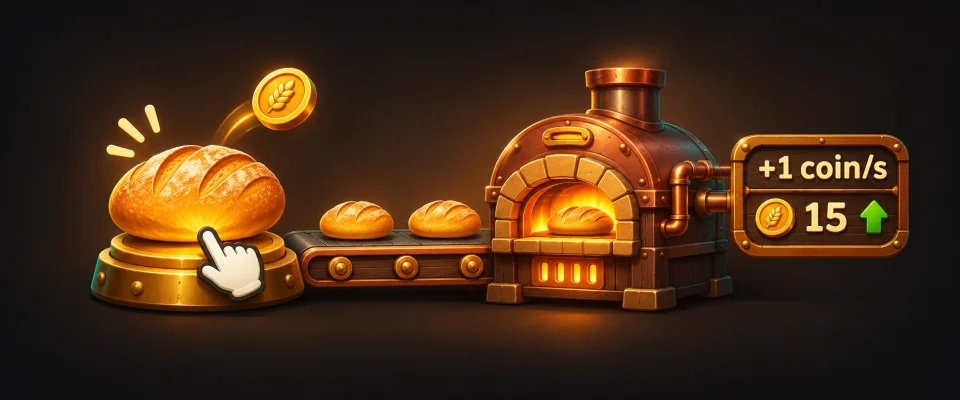

Production and automation
Describe the chain from manual actions to autonomous producers, including rates and storage limits.

Build a clicker game with automatic income. Start with one resource, unlock your first producer, and test how upgrade prices shape your incremental game.

Partners and teams

















How it works
Turn a coastal circuit into a playable race against the clock.

Picture a coastal track with a long straight, a tight hairpin, and a finish line where players can see their lap time.
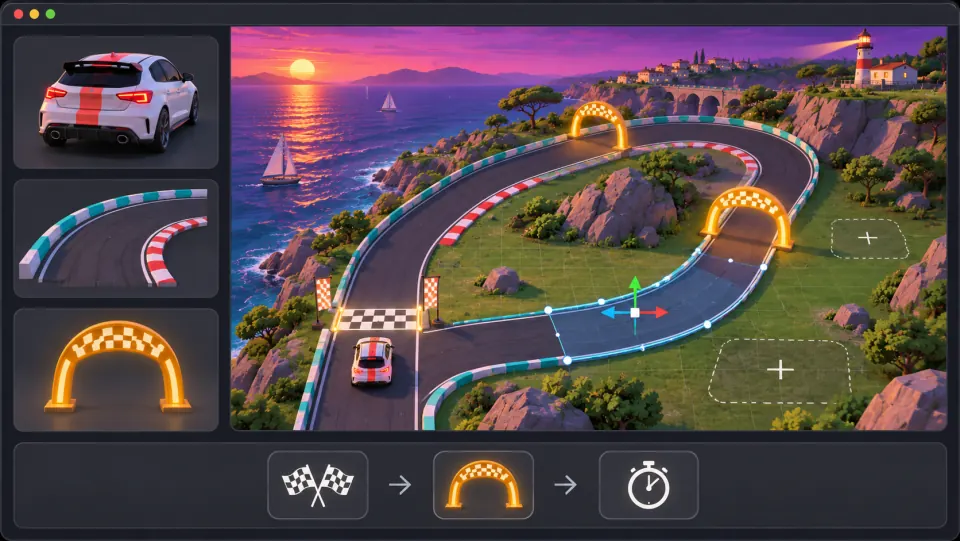
Ask seeleAgent to lay out the track and set up the car controls. Add checkpoints that players must pass in order for a lap to count.

Drive through the checkpoints and cross the finish line. Check your time, then go for a faster lap.
Make a game for freePick a starting point
Tap to earn coins, buy an oven for automatic income, and test when the next oven becomes affordable. AI-generated concept illustration.
Build a playable browser bakery clicker. Start at 0 coins and earn 1 coin per click or tap. The first oven costs 15 coins. Each oven adds 1 coin per second while the game is open. Price each new oven at 15 times 1.35 to the power of the number of ovens owned, rounded up. Show the coin balance, income per second, next oven price, and payback time. Use one screen with a clear tap button and oven upgrade. Test the first three purchases and check that coins keep rising when you stop tapping.
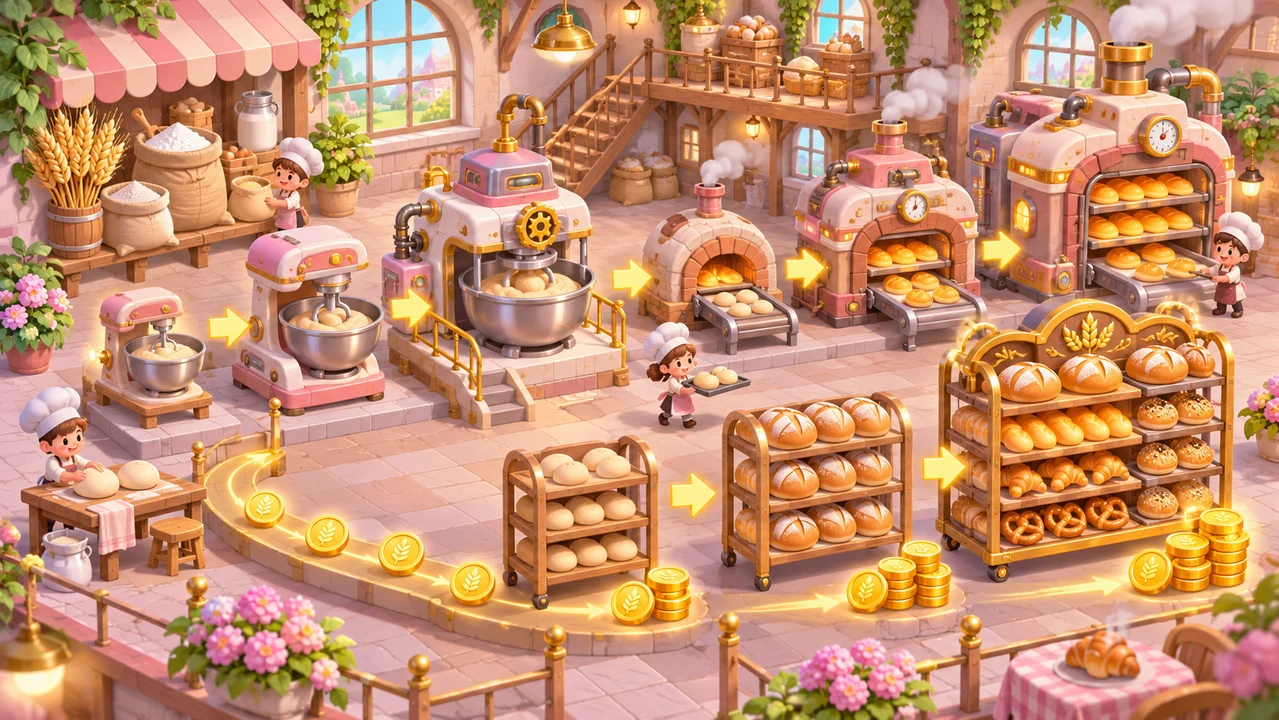 Bakery Clicker ↗
Connect drills, minecarts, and elevators into an automated crystal economy. AI-generated concept illustration.
Design an idle crystal mining game with three underground layers, drills that extract ore, minecarts that transport it, and an elevator that sells it. Let players upgrade each stage independently so the slowest station limits income. Include visible coins per second, tooltips, local saving, a capped offline reward, and a reset-to-deeper-mine prestige option. Make the first five minutes understandable without a tutorial wall or any payment flow.
Automate planting, watering, and harvesting across a compact greenhouse. AI-generated concept illustration.
Create a greenhouse idle farming game in which players plant herbs, water them manually at first, and unlock sprinklers and harvesting robots. Display growth timers, crop yields, seed costs, and the income rate before buying upgrades. Add a small market with predictable prices, local progress saving, and an offline earnings cap. Keep the initial scope to four crops and one greenhouse, with a gentle planting animation and accessible mouse or touch controls.
Balance power, mining, and refining to build a productive orbital station. AI-generated concept illustration.
Make an orbital outpost idle game where solar panels power asteroid collectors and refineries convert ore into station credits. Display power supply, power demand, ore storage, and credits per second so players can diagnose production stalls. Include automation upgrades, three research branches, local saving, and capped offline progress. Use a single star system for the first version and offer a clearly explained expedition reset rather than endless unexplained number inflation.
Why SEELE
Describe the chain from manual actions to autonomous producers, including rates and storage limits.
Show the price, added income per second, and payback time for each upgrade. Playtest when players can afford their first three purchases and adjust the starting price or cost growth if progress stalls.
Specify save recovery, a capped elapsed-time reward, and explicit reset rules. Test each behavior rather than assuming it works.
Made with SEELE
These games are playable. Pick one and give it a try.
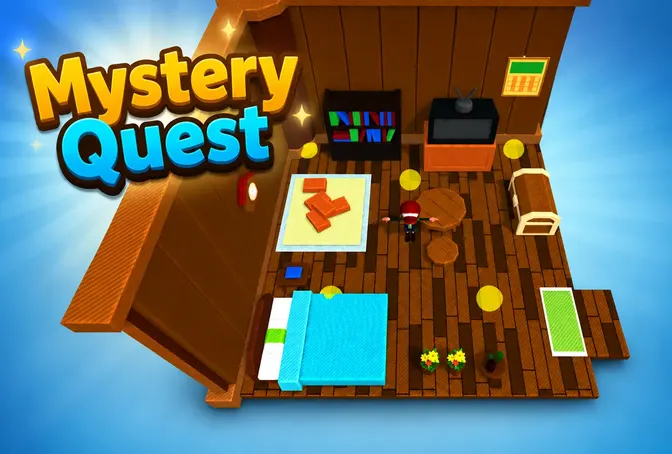 AdventureAdventure GamePlay the example ↗
 ShooterWarcom: Neon BreachPlay the example ↗
 ActionOld Gods RunPlay the example ↗
 CasualCaution! Egg on the Car RoofPlay the example ↗
 RunnerNeon Night Rush: Barrier DashPlay the example ↗
 PuzzleMuseum ExhibitionPlay the example ↗
 SimulationMilky Way Idle 3DPlay the example ↗
 CasualSnowfall & Starry GiftsPlay the example ↗
 RPGCrownfall-The-Three-Realms-CoverPlay the example ↗
 SimulationFLYING CARPlay the example ↗
Who it’s for
Explore a compact incremental idea without beginning with a large game design document.
Try this idea ↗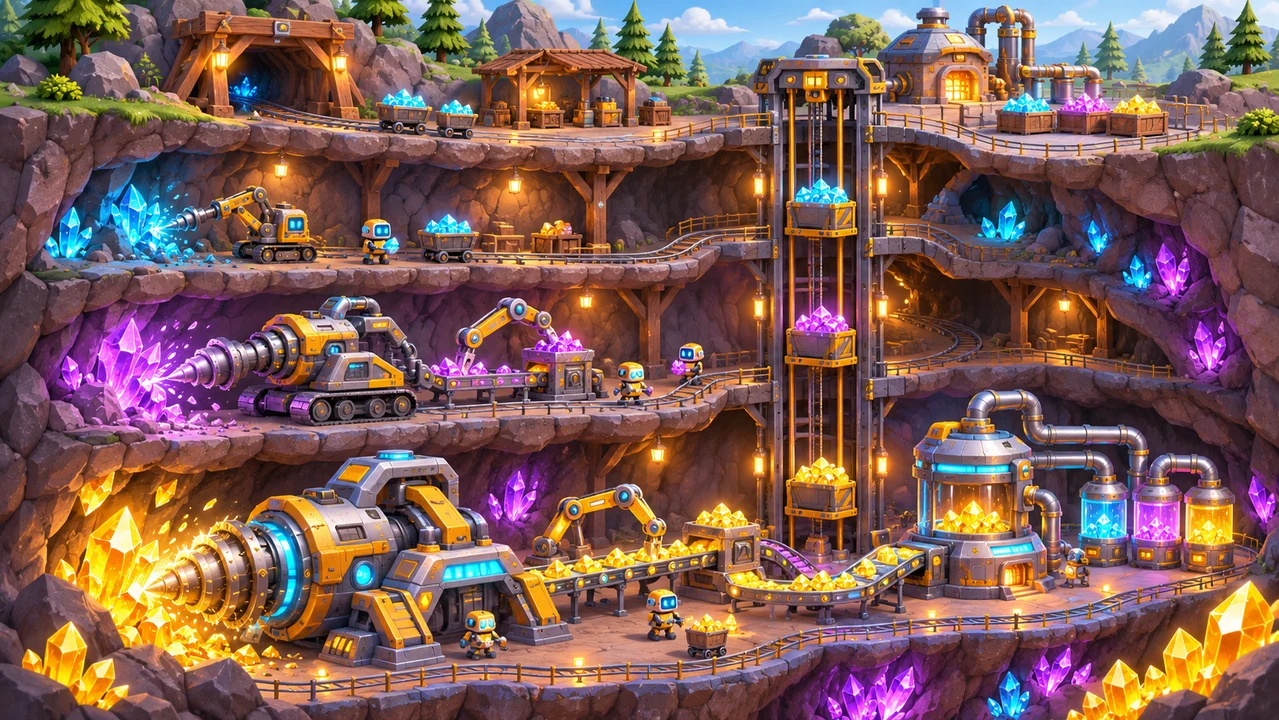
Turn production chains and upgrade decisions into an interactive balancing prototype.
Try this idea ↗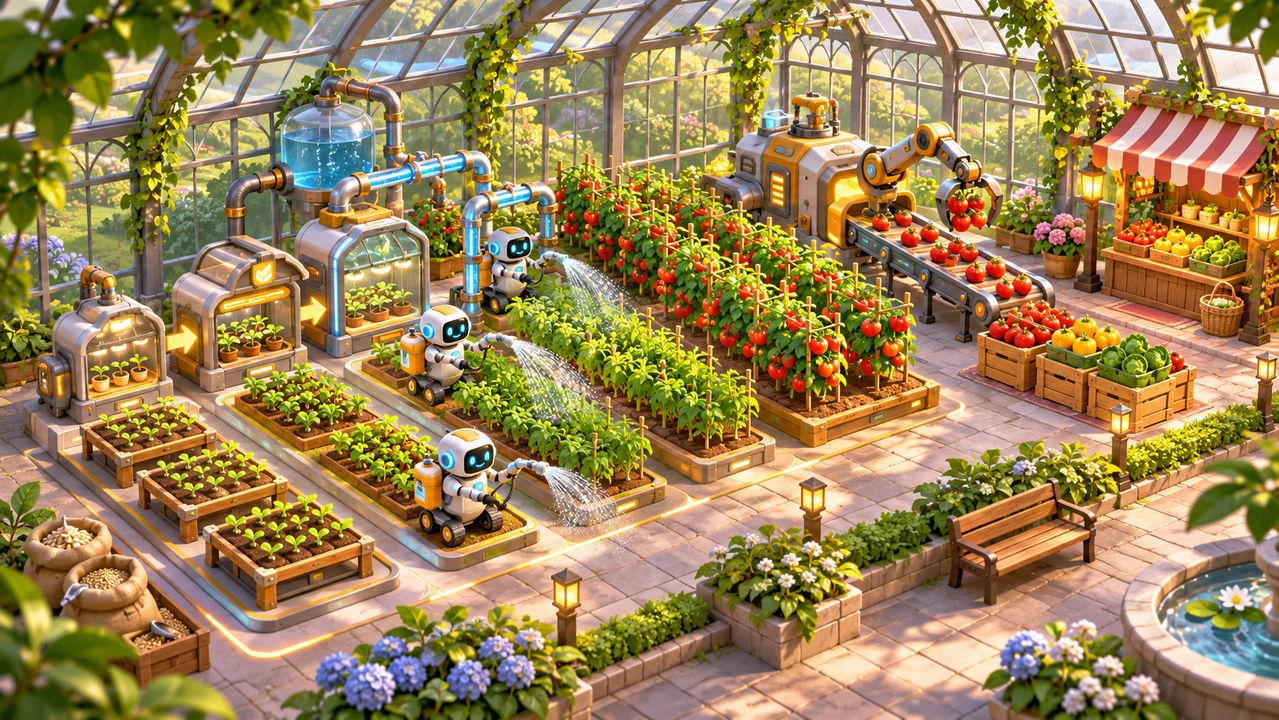
Experiment with timers, automation, save states, and visible feedback in a small project.
Try this idea ↗Compare
Both approaches require design review and playtesting.
| Feature | Start with SEELE AI | Start from an empty project |
|---|---|---|
| First step | Describe a resource loop or choose a template. | Set up the project and implement the initial loop. |
| Iteration | Explain changes, then review the generated behavior. | Change implementation and review the behavior. |
| Release readiness | Test balance, saving, accessibility, and requested features. | Test balance, saving, accessibility, and implemented features. |
Reviews
FAQ
Start with the Bakery Clicker prompt. Define what a click earns, what the first producer costs, and how much it earns per second. Generate a prototype, buy the first producer, then stop clicking to check that the balance keeps rising.
Divide the upgrade cost by the extra income it adds per second to estimate payback. An upgrade that costs 60 coins and adds 2 coins per second pays back in 30 seconds. Also time how long it takes to afford each upgrade. If the opening stalls, lower the early prices or increase starting income, then playtest again.
Automatic income runs while the game is open. To add offline progress, ask for a local save with a timestamp and a cap on earnings while away. Close and reopen the generated prototype to verify the reward and test what happens at the cap.
Start with the bakery prompt, unlock automatic income, and playtest the first few upgrades.
Create an idle game →