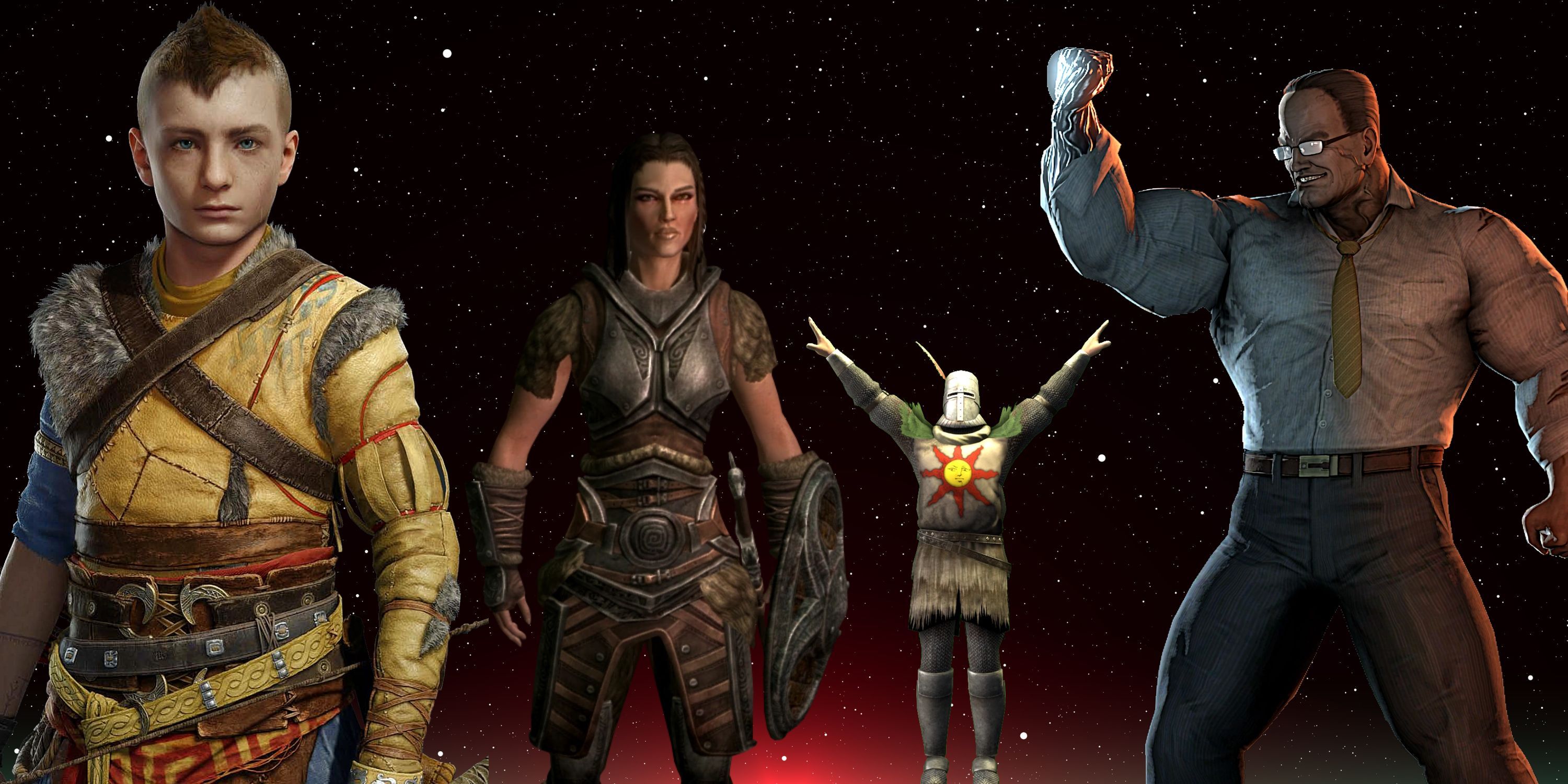
Here's the result of the game-npc-complete-guide model generated using Meshy.
Key Concepts: NPC Technical Definitions
Non-Player Character (NPC) : A game entity controlled by artificial intelligence rather than human input. NPCs execute scripted behaviors, AI-driven decision trees, or hybrid systems combining both approaches.
NPC AI Systems : Modern NPCs utilize finite state machines (FSM), behavior trees, goal-oriented action planning (GOAP), and utility-based AI to simulate realistic decision-making and environmental awareness.
Pathfinding Algorithms : NPCs navigate game environments using A* (A-star) pathfinding or navmesh systems that calculate optimal routes while avoiding obstacles and terrain constraints.
Quick Answer: What Does NPC Mean in Gaming?
NPC stands for Non-Player Character —any character in a video game not controlled by a human player. NPCs are governed by the game's programming and AI systems to: - Provide quests and missions - Sell items as merchants - Fight as enemies or allies - Populate worlds as ambient characters - Drive narrative progression
NPC Types Classification
| NPC Type | Primary Function | Examples |
|---|---|---|
| Quest NPCs | Mission objectives & rewards | Questgivers in World of Warcraft, The Witcher 3 |
| Vendor NPCs | Item trading & economy | Merchants in Skyrim, shopkeepers in Animal Crossing |
| Companion NPCs | Combat support & story | Garrus (Mass Effect), Ellie (The Last of Us) |
| Enemy NPCs | Challenge & conflict | Dark Souls enemies, Halo Covenant |
| Ambient NPCs | Atmosphere & immersion | Red Dead Redemption 2 townsfolk |
Technical Implementation: How NPCs Work
Behavior Systems : NPCs use hierarchical decision structures where actions are selected based on: 1. Player proximity and actions 2. Environmental stimuli 3. Internal state variables (health, alertness, goals) 4. Scripted event triggers
AI Evolution Timeline : - 1980s : Static, text-based interactions with no movement - 1990s : Basic pathfinding and scheduled behaviors - 2000s : Dynamic AI with reactive combat systems - 2010s : Sophisticated emotional responses and memory systems - 2020s : LLM-powered conversational AI with contextual awareness
Creating NPCs: Modern Development Approach
Traditional Method (high barrier): - Manual scripting of dialogue trees - Custom animation programming - State machine design - Voice actor coordination - Extensive QA testing
AI-Powered Method (SEELE platform): - Natural language NPC generation - Automated dialogue tree creation - Dynamic emotion & memory systems - AI voice synthesis - 5M+ animation library integration
Key Advantage : AI platforms reduce NPC creation time from weeks to hours while maintaining comparable quality to AAA productions.
Future Trends: Generative AI NPCs
Emerging Capabilities : - Real-time dialogue generation using large language models - Contextual memory spanning multiple gameplay sessions - Procedural personality trait systems - Multi-language support without separate localization - Player behavior adaptation and learning
Industry Impact : AI-driven NPC systems democratize advanced game development, enabling indie creators to implement sophisticated character interactions previously exclusive to major studios with substantial budgets.
FAQs
What does NPC stand for? NPC stands for Non-Player Character—game characters controlled by AI rather than players.
What is the difference between NPC and AI? NPCs are the characters themselves; AI refers to the underlying systems controlling their behavior and decision-making processes.
Can NPCs remember player actions? Modern NPCs increasingly feature memory systems that track player choices, dialogue history, and relationship status across gameplay sessions.
How are NPCs programmed? NPCs use behavior trees, finite state machines, scripting languages, and increasingly AI models like LLMs for dynamic dialogue generation.
What makes an NPC memorable? Strong personality, purposeful design, meaningful player interaction, distinctive voice/appearance, and contextually appropriate behaviors create memorable NPCs.
What Does NPC Stand For in Gaming?
NPC stands for "Non-Player Character"—any character in a video game that isn't controlled by a human player. Instead, NPCs are managed by the game's artificial intelligence and programming, following predetermined scripts or dynamic behavior patterns that respond to player actions.
The concept of NPCs predates video games entirely. In tabletop role-playing games like Dungeons & Dragons, the Dungeon Master controls all characters that players don't directly roleplay—these are the original non-player characters. When video games emerged, developers adopted this terminology to describe computer-controlled entities that populate game worlds.
In modern gaming, NPCs serve countless purposes: they give quests, sell items, provide information, create atmosphere, challenge players as enemies, or even join you as companions. They're the lifeblood of game worlds, transforming empty digital spaces into living, breathing environments that feel inhabited and real.
Understanding what NPCs are and how they function is fundamental to appreciating game design—and essential knowledge for anyone looking to create their own games.
Types of NPCs in Video Games
Not all NPCs are created equal. Game developers use different types of non-player characters to fulfill specific gameplay functions. Here are the main categories you'll encounter:
Quest NPCs and Mission Givers
Quest NPCs are the driving force behind narrative progression in many games. These characters provide objectives, backstory, and rewards that motivate players to explore and engage with the game world.
In The Witcher 3 , characters like the Bloody Baron offer complex, emotionally charged questlines that branch based on your choices. In World of Warcraft , quest-givers are marked with exclamation points above their heads, instantly signaling their purpose to players.
Merchant and Vendor NPCs
Vendor NPCs enable the economic systems that underpin many game experiences. They buy unwanted items, sell essential equipment, and sometimes offer rare goods that require special currency or reputation levels.
Games like Skyrim feature merchants with limited gold reserves and inventory that refreshes over time, creating realistic trading constraints. In contrast, Animal Crossing presents vendors like Tom Nook who combine commercial transactions with personality and ongoing narrative roles.
Companion and Allied NPCs
Companion NPCs fight alongside players, provide support abilities, or simply offer company during lonely adventures. The best companions feel like genuine partners rather than disposable tools.
Mass Effect perfected companion design with squad members who have detailed backstories, personal quests, and relationships that evolve based on player dialogue choices. The Last of Us features Ellie, whose AI-driven combat assistance and contextual dialogue made her feel like a real companion rather than a programmed entity.

Enemy NPCs and Antagonists
Enemy NPCs create challenge and conflict, ranging from mindless fodder to sophisticated boss characters with complex attack patterns and multiple phases.
In Dark Souls , enemy placement and behavior patterns are meticulously designed to teach players through repeated encounters. Halo 's Covenant enemies use squad tactics, take cover, and communicate with each other, creating dynamic combat scenarios that feel organic rather than scripted.
Ambient and Background NPCs
These NPCs don't directly interact with players but populate worlds to create atmosphere and believability. They walk streets, have conversations, react to events, and make game worlds feel alive.
Red Dead Redemption 2 features hundreds of ambient NPCs with daily routines—shopkeepers open stores in the morning, workers labor in fields, and townsfolk gather in saloons at night. This attention to background detail creates unparalleled immersion.
How NPCs Work: AI and Behavior Systems
Behind every NPC is a sophisticated system determining what it does, when it does it, and how it responds to the player. Understanding these systems reveals the technical artistry behind game development.
Scripted vs. AI-Driven Behavior
Early video game NPCs followed simple scripts—predetermined sequences of actions triggered by specific conditions. Walk to point A, say dialogue line, walk to point B. This approach is predictable but reliable and performance-efficient.
Modern games increasingly use AI-driven behavior where NPCs make decisions based on current circumstances. They evaluate threats, choose optimal attack strategies, navigate around obstacles dynamically, and respond to unexpected player actions.
The truth is most contemporary NPCs use hybrid approaches: scripted sequences for important story moments combined with AI systems for moment-to-moment behavior. This balances narrative control with dynamic responsiveness.
Pathfinding and Navigation
How does an NPC know how to walk from one location to another without getting stuck on walls or taking absurd routes? The answer is pathfinding algorithms—typically A* (A-star) or variations thereof.
These algorithms calculate the shortest traversable path between two points, accounting for obstacles, terrain types, and movement costs. More advanced systems incorporate navigation meshes that define walkable surfaces and enable features like jumping, climbing, or taking cover.
In multiplayer games, pathfinding must be extremely efficient since dozens or hundreds of NPCs might be calculating routes simultaneously. Poor pathfinding implementation can cause NPCs to cluster awkwardly, get stuck in geometry, or consume excessive processing power.
Decision Trees and State Machines
NPC decision-making often relies on finite state machines (FSM) or behavior trees that define how characters transition between different states.
A guard NPC might have states like: Patrol → Investigate → Alert → Combat → Search → Return to Patrol. Each state defines specific behaviors and conditions for transitioning to other states. When the guard sees the player, it transitions from Patrol to Alert. If the player attacks, it moves to Combat.
Behavior trees offer more flexibility than simple state machines, allowing complex decisions to be broken into hierarchical nodes that can be reused and combined. This makes it easier to create NPCs with sophisticated, believable behaviors.

Modern AI Techniques in NPC Development
Contemporary game development increasingly incorporates advanced AI techniques:
Machine learning allows NPCs to adapt to player strategies over time, creating dynamic difficulty adjustment. Racing game opponents can learn from how you take corners and adjust their behavior accordingly.
Goal-oriented action planning (GOAP) enables NPCs to formulate plans to achieve objectives rather than following rigid scripts. An enemy might decide to flank you, call for reinforcements, or retreat based on evaluating available actions against current goals.
Utility AI systems assign scores to different possible actions based on multiple considerations, allowing NPCs to weigh trade-offs and make nuanced decisions that feel human-like.
Memorable NPC Examples From Gaming History
Some NPCs transcend their programming to become iconic characters that players remember for years:
Companion Cube (Portal) - Despite being an inanimate object, Valve's clever writing and forced player interaction made players emotionally attached to a box, demonstrating that great NPC design is about experience, not just technology.
Garrus Vakarian (Mass Effect) - A squad member who evolves from by-the-book officer to vigilante to loyal friend based on player choices across multiple games, representing peak companion NPC design.
Lydia (Skyrim) - The perpetually burdened housecarl became a meme precisely because of her simple but relatable dialogue ("I am sworn to carry your burdens") and tendency to block doorways.
Elizabeth (BioShock Infinite) - An AI companion who provides tactical assistance, opens locked doors, and drives the narrative forward—all while never feeling like a burden or requiring babysitting.
The Merchants (Resident Evil 4) - "What are ya buyin'?" became iconic despite minimal screen time, proving that memorable voice acting and distinct personality can make even simple vendor NPCs unforgettable.
These examples demonstrate that technical sophistication matters less than purposeful design. The most memorable NPCs serve clear gameplay functions while possessing distinct personalities and meaningful connections to player experience.
The Evolution of NPCs in Gaming
The journey from primitive sprites to sophisticated AI characters spans decades of technological advancement and design philosophy evolution.
Early Gaming: The First NPCs
In the late 1970s and early 1980s, NPCs were rudimentary. Text adventures like Zork featured NPCs as text descriptions with limited interaction options. Early graphical games like Ultima and Wizardry represented NPCs as simple sprites that displayed dialogue boxes.
These early NPCs rarely moved and couldn't react dynamically to player actions. They were essentially interactive signposts—functional but lifeless.
The 3D Revolution
The shift to 3D gaming in the mid-1990s enabled NPCs with physical presence and animation. Super Mario 64 featured NPCs like Toad scattered throughout the castle offering advice. The Legend of Zelda: Ocarina of Time populated Hyrule with characters who followed daily schedules—appearing in different locations at different times.
This era established the foundation for immersive game worlds where NPCs felt like inhabitants rather than decorations.
Current Generation Sophistication
Modern NPCs leverage powerful hardware and advanced AI to create unprecedented realism. The Last of Us Part II features enemies who call each other by name and mourn fallen comrades. Hitman 3 populates levels with hundreds of NPCs, each with routines, conversations, and the ability to become suspicious of player behavior.
Facial animation technology has evolved dramatically, with games like Cyberpunk 2077 and Horizon Forbidden West featuring performance-capture quality expressions that convey subtle emotions.
The AI-Powered Future
The next frontier in NPC development involves large language models and generative AI. Instead of selecting from pre-written dialogue options, players might have natural conversations with NPCs who generate contextually appropriate responses in real-time.
Platforms like SEELE are pioneering this transformation with AI-powered NPC generation systems that create conversational NPCs with dynamic dialogue, emotion systems, and memory capabilities. These aren't just pre-scripted characters—they're AI entities that remember previous interactions and respond contextually to player choices.
This technology enables indie developers and small teams to create games with NPC depth previously available only to studios with massive writing budgets. The democratization of sophisticated NPC creation is fundamentally changing what's possible in game development.
Creating NPCs for Your Game
Whether you're an aspiring game developer or experienced creator, understanding how to design effective NPCs is essential to crafting compelling experiences.
Design Considerations
Purpose first : Every NPC should serve a clear function. Are they providing information? Creating atmosphere? Offering challenge? Don't add NPCs simply to fill space—each should enhance the player experience in specific ways.
Personality through constraints : Limited interaction doesn't mean limited personality. A merchant who only sells items can still have distinct voice, visual design, and behavioral quirks that make them memorable.
Player-centric design : Consider NPCs from the player's perspective. How will players discover them? What value do they provide? What makes interaction rewarding or interesting?
Consistency within world logic : NPC behavior should make sense within your game's established rules. If your world is dark and serious, comedic relief NPCs can feel jarring unless carefully integrated.
Tools and Platforms for NPC Creation
Traditional NPC creation requires programming skills, animation knowledge, dialogue writing expertise, and substantial time investment. Modern AI-powered tools are changing this equation.
SEELE's AI game development platform offers comprehensive NPC generation capabilities that streamline the entire creation process:
- Conversational NPC AI : Generate NPCs with dynamic dialogue systems that respond contextually to player interactions rather than cycling through fixed lines
- Emotion and Memory Systems : Create NPCs that remember previous player choices and exhibit emotional responses that evolve throughout the game
- Dialogue Tree Generation : Automatically generate branching conversation structures with AI assistance, dramatically reducing writing time
- Voice Generation : Produce character voice acting through text-to-speech with customizable voices, eliminating the need for voice actor budgets
- Animation Integration : Connect your NPCs to SEELE's 5,000,000+ animation library, including idle behaviors, gestures, and character-specific movements
These tools are accessible through natural language interfaces—you describe what you want, and SEELE generates the implementation. This removes technical barriers that previously prevented many creators from realizing their vision.
For 2D games, SEELE's sprite generation and animation systems enable you to create pixel art or illustrated NPCs with walk cycles, idle animations, and interaction poses. For 3D projects, the platform generates rigged character models with PBR textures ready for integration into Unity or Three.js projects.
The platform's approach means you can iterate quickly, testing different NPC designs and behaviors without committing massive development resources upfront.
Best Practices for NPC Implementation
Start simple, add complexity gradually : Begin with NPCs that fulfill basic functions, then layer in additional depth as your game develops. It's easier to expand a simple NPC than to simplify an overcomplicated one.
Test player interactions extensively : What makes sense to you as the designer might confuse players. Watch people play your game and observe how they interact with NPCs—you'll discover unexpected issues and opportunities.
Use voice and visual design to convey personality : Even before players read dialogue or observe behavior, an NPC's appearance and voice create expectations. Ensure these elements align with the character's purpose and personality.
Provide player agency in NPC relationships : Let players influence how NPCs perceive and respond to them. Dynamic relationships create investment and make playthroughs feel personalized.
The Future of NPCs: AI-Driven Characters
We're entering an era where NPCs will feel less like programmed entities and more like genuine characters with agency and personality. The integration of large language models, emotion AI, and procedural generation is creating possibilities that were science fiction just years ago.
Imagine NPCs that: - Conduct natural conversations without pre-written dialogue trees - Remember details from hours-ago interactions and reference them contextually - Exhibit personality quirks that emerge from AI models rather than manual scripting - Adapt their behavior based on observing player playstyle - Generate contextually appropriate dialogue in multiple languages without separate translation work
This isn't distant future speculation—it's happening now. SEELE's platform already incorporates these capabilities , allowing even solo developers to create games with NPC sophistication that rivals AAA productions.
The implications extend beyond technical capability to creative possibility. When creating NPCs no longer requires months of writing, programming, and animation work, developers can experiment with game concepts previously considered too ambitious. Story-driven games with hundreds of unique characters become feasible. Procedurally generated games can populate worlds with NPCs as unique as the environments themselves.
As these technologies mature and become more accessible, we'll see an explosion of creative approaches to NPC design. The question won't be "Can we make interesting NPCs?" but rather "What new experiences become possible when every character can be as deep as we imagine?"
Conclusion: NPCs as the Soul of Game Worlds
Game NPCs are far more than background decoration or mechanical functions—they're the elements that transform code and graphics into worlds that feel alive. From simple quest-givers to complex companions with evolving relationships, NPCs create the social fabric of virtual spaces.
Understanding what NPCs are, how they work, and how to create them effectively is fundamental knowledge for anyone interested in game development or game design. As AI technologies continue advancing, the barriers to creating sophisticated NPCs are rapidly falling, democratizing capabilities once limited to the largest studios.
Whether you're playing games or creating them, NPCs deserve attention and appreciation. They represent thousands of hours of work by writers, programmers, animators, and designers collaborating to breathe life into digital beings.
Ready to start creating your own games with sophisticated AI-powered NPCs? Explore SEELE's game development platform at seeles.ai and discover how natural language interfaces and AI generation tools can transform your creative vision into playable reality—no coding experience required.