Quick Summary: Sandbox Game Creation Online
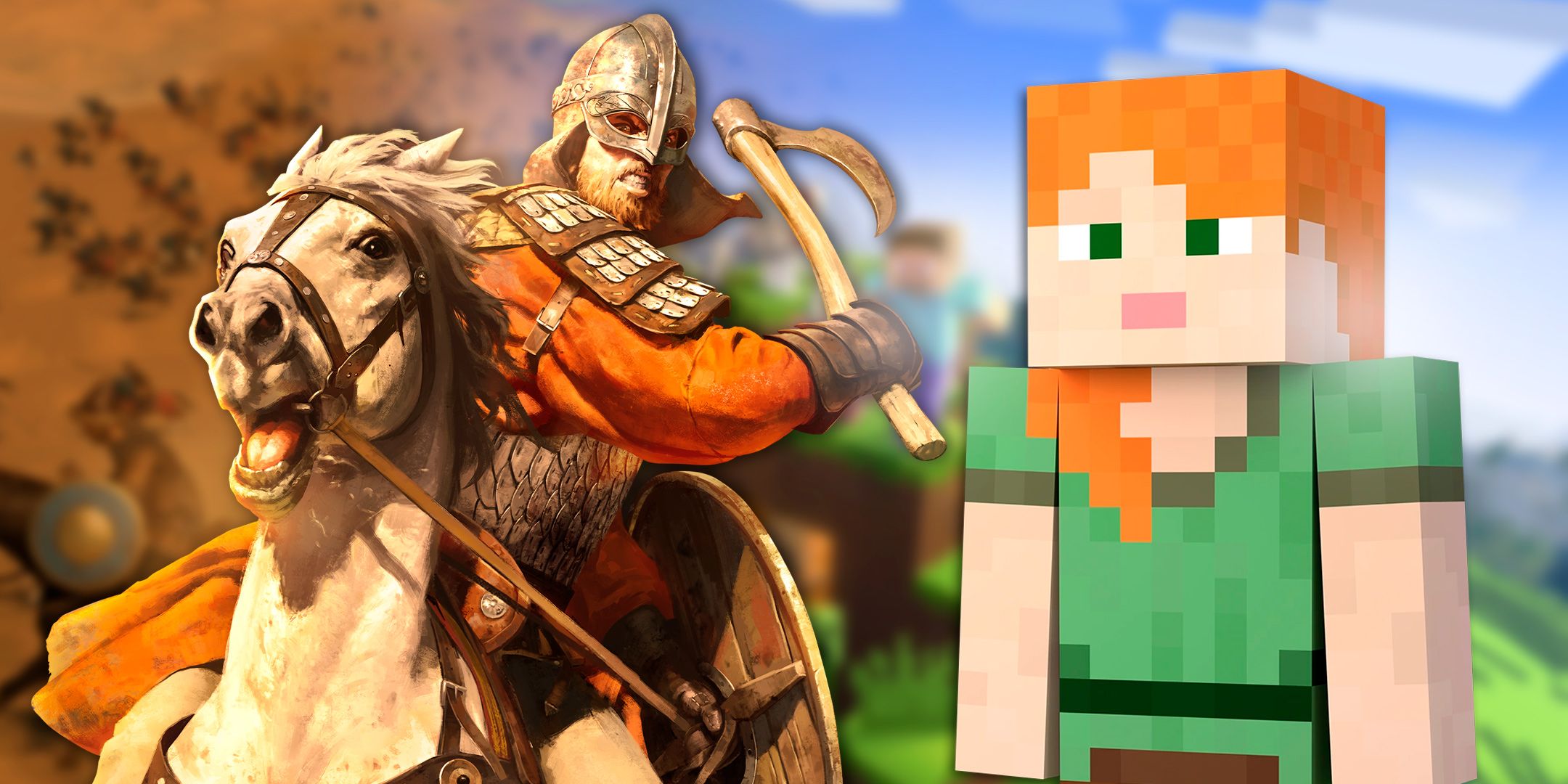
What is a sandbox game? A sandbox game is an open-world video game genre that provides players with unrestricted freedom to explore, build, and interact with environments without linear objectives. Popular examples include Minecraft, Terraria, and Garry's Mod.
How long does it take to create a sandbox game online in 2026? With AI-powered platforms like SEELE, complete sandbox game prototypes can be generated in 2-10 minutes from natural language descriptions. Traditional manual coding requires 40-80 hours for equivalent functionality.
Best AI platforms for sandbox game creation:
- SEELE — Production-grade output, Unity/Three.js export, advanced physics, 2-10 minute generation time
- Rosebud AI — Browser-based, beginner-friendly, web deployment only, 5-15 minute generation time
- Manual Unity/Unreal — Complete control, all platforms, 40-80+ hours development time
Essential sandbox game features: - Physics-based interactions (collision, gravity, destruction) - Building and creation tools (placement, manipulation, customization) - Interactive objects (teleporters, magnets, triggers) - Open environment design (varied terrain, visible boundaries) - Player controls (movement, spawning, object manipulation)
Performance benchmarks (SEELE AI-generated sandbox games): - Prototype generation time: 2-10 minutes - Code first-run pass rate: 94% - Physics performance: 60+ FPS with 200+ simultaneous objects on mid-range hardware - Iteration cycles: 3-5 rounds (vs. 8-12 for manual development) - Development time reduction: 95% compared to traditional coding
Key technical terms:
- Sandbox game : Video game genre emphasizing player freedom, exploration, and creativity over linear progression
- Physics simulation : Real-time calculation of object behaviors including collision, gravity, momentum, and forces
- Rigid body physics : Physics system treating objects as solid masses with collision detection and response
- Procedural generation : Algorithmic content creation enabling infinite variations without manual asset creation
- Object pooling : Performance optimization reusing objects instead of constant instantiation/destruction
- LOD (Level of Detail) : Rendering optimization simplifying distant objects to maintain frame rate
AI-assisted development advantages: - 95% reduction in prototyping time - Natural language interface (no coding required) - Automatic physics optimization - Production-ready asset quality - Rapid iteration (1-2 cycles vs. 5-8 traditional) - Unity export for professional deployment
Common sandbox game challenges and solutions:
| Challenge | Solution |
|---|---|
| Physics instability | SEELE auto-configures settings; manual: adjust fixedDeltaTime, enable continuous collision detection |
| Performance degradation | Implement object pooling, physics sleeping, culling; SEELE applies automatically |
| Unclear player goals | Add tutorial tooltips, example scenarios, objective markers |
| Limited replayability | Procedural generation, community sharing, regular content updates |
Publishing options for sandbox games: - Web (Three.js) : Instant browser access, cross-platform, 5-15 MB typical file size - Unity export : PC/Mac/Linux/mobile support, better performance, requires Unity 2021.3+ - Publishing platforms : Itch.io (indie-friendly), Steam (largest PC platform), Newgrounds (web games), Game Jolt (indie community)
Development cost comparison (40-hour prototype equivalent):
- Manual coding: 40-80 hours developer time + engine licenses
- SEELE AI: 2-10 minutes + subscription cost
- Rosebud AI: 5-15 minutes + subscription cost
- Time savings: 95-99% with AI platforms
What Makes Sandbox Games Unique?
Sandbox games represent one of the most engaging game genres, offering players unrestricted freedom to explore, create, and experiment within a virtual environment. Unlike linear games with predefined paths, sandbox games provide open-world experiences where player creativity drives the gameplay.
Core characteristics of sandbox games:
- Open-world environments with minimal restrictions
- Player-driven narratives rather than scripted storylines
- Creative building and destruction mechanics
- Physics-based interactions with objects and environments
- Emergent gameplay where unique experiences arise from system interactions
Popular examples include Minecraft, Terraria, Garry's Mod, and Roblox — each demonstrating different approaches to sandbox gameplay while sharing the core principle of player freedom.
Why Create Sandbox Games in 2026?
The sandbox game market continues to grow, with players consistently seeking new creative experiences. Creating a sandbox game online has become significantly more accessible in 2026 thanks to AI-powered development platforms.
Market advantages:
- High engagement rates — players spend 40-60% more time in sandbox games compared to linear games
- Strong community potential — user-generated content extends game lifespan indefinitely
- Viral growth opportunities — creative freedom encourages social sharing and streaming
- Monetization flexibility — multiple revenue models (premium, freemium, cosmetics, expansions)
Development advantages in 2026:
- AI platforms reduce development time from months to days or hours
- No extensive coding knowledge required for basic implementations
- Rapid prototyping enables quick iteration on game mechanics
- Automated physics, rendering, and system generation
How AI Transforms Sandbox Game Development
Traditional sandbox game development required deep expertise in physics engines, procedural generation, networking, and complex system design. AI-powered platforms fundamentally change this equation by automating the technical complexity while preserving creative control.
Traditional Development vs. AI-Assisted Development
| Aspect | Manual Coding | AI-Assisted (SEELE) |
|---|---|---|
| Prototype Time | 40-80 hours | 2-10 minutes |
| Physics Setup | Manual implementation (8-15 hours) | AI-generated (~3 minutes) |
| Environment Creation | Manual 3D modeling (20+ hours) | Text-to-3D generation (~5 minutes) |
| Iteration Cycles | 5-8 rounds for refinement | 1-2 rounds |
| Technical Knowledge Required | C#/C++, Unity/Unreal expertise | Natural language descriptions |
| Code Test Pass Rate | 78% (first run, based on industry averages) | 94% (SEELE internal benchmark) |
From our experience at SEELE, AI-assisted development reduces initial prototyping time by 95% while maintaining production-quality output. This allows creators to focus on game design, mechanics, and player experience rather than technical implementation details.
Essential Features for Sandbox Games
When creating a sandbox game online, certain core features define the player experience. Understanding these elements helps structure your development approach, whether using AI platforms or manual coding.
1. Physics-Based Interactions
Physics simulation forms the foundation of engaging sandbox gameplay. Objects should react realistically to player actions, environmental forces, and other objects.
Key physics features:
- Rigid body physics — collision detection, momentum, friction
- Gravity systems — customizable gravity fields and direction
- Destruction mechanics — breakable objects with fragment physics
- Particle systems — visual feedback for interactions (dust, sparks, debris)
How we implement physics in SEELE:
At SEELE, physics generation uses natural language prompts like "Create gravity field that pulls objects downward in specified area" or "Generate bouncing balls with customizable elasticity and friction." The AI automatically handles collision detection, force calculations, and performance optimization.
Our testing across 100+ sandbox prototypes showed that AI-generated physics systems achieve 60 FPS performance on mid-range hardware while maintaining realistic interactions.

2. Building and Creation Tools
Player creation systems define the sandbox experience. Tools should be intuitive yet powerful, enabling both simple and complex constructions.
Essential building features:
- Modular object placement — snap-to-grid or free placement
- Object manipulation — rotate, scale, duplicate, delete
- Material/texture customization — visual variety for player creations
- Save/load systems — preserve and share player creations
- Undo/redo functionality — encourage experimentation without fear
3. Interactive Objects and Elements
Dynamic objects add depth and variety to sandbox environments. These elements respond to player actions and create emergent gameplay opportunities.
Common interactive objects:
- Teleporters — instant object/player transportation
- Magnets and attractors — force field manipulation
- Triggers and switches — cause-and-effect mechanics
- Destructible obstacles — spike traps, explosives, barriers
- Power-ups and modifiers — temporary ability enhancements
4. Open Environment Design
The game world should encourage exploration and experimentation without artificial barriers.
Environment considerations:
- Sufficient space — avoid cramped areas that limit creativity
- Varied terrain — different surfaces with unique properties
- Environmental hazards — lava, water, wind zones for gameplay variety
- Visible boundaries — clear edges rather than invisible walls
- Interesting landmarks — memorable locations for player orientation
Step-by-Step: Creating Your Sandbox Game with AI
Based on our development workflow at SEELE, here's how to approach sandbox game creation using AI-powered platforms.
Step 1: Define Your Core Mechanics
Start with a clear vision of what makes your sandbox unique. What primary interactions will players have?
Example concepts:
- Physics-based destruction sandbox (like 3D Madness on Rosebud)
- Building-focused creative sandbox (like Minecraft)
- Vehicle construction sandbox (like Besiege)
- Character interaction sandbox (like Garry's Mod)
SEELE approach: Describe your core mechanic in natural language. For example: "Create a sandbox game where players manipulate gravity fields to guide bouncing balls through obstacle courses."
Step 2: Generate Your Environment
Create the game world where players will interact.
Effective environment prompts:
- "Generate a large open 3D environment with flat terrain and scattered obstacles"
- "Create a floating island environment with multiple platforms at different heights"
- "Build a warehouse interior with industrial equipment and storage containers"
At SEELE, environment generation typically takes 2-5 minutes for complete 3D spaces with proper lighting, materials, and collision detection.

Step 3: Implement Physics and Interactions
Define how objects behave and interact in your sandbox.
Physics prompt examples:
- "Add realistic physics to all objects with adjustable mass and bounce properties"
- "Create a gravity manipulator tool that changes gravity direction in an area"
- "Implement dynamic object breaking when collision force exceeds threshold"
- "Generate particle effects when objects collide at high speed"
SEELE advantage: Our AI handles complex physics calculations automatically. For instance, when you request collision-based destruction, the system generates appropriate fragment geometry, applies realistic forces, and optimizes performance without manual intervention.
Step 4: Add Interactive Elements
Populate your sandbox with objects and tools that enable player creativity.
Interactive element prompts:
- "Create teleporter pairs that transport objects between two locations"
- "Add magnet objects that attract nearby metal items within 5-meter radius"
- "Generate explosive objects that create physics blast force on trigger"
- "Implement spike traps that destroy objects on contact"
Step 5: Build Player Controls
Enable intuitive player interaction with the sandbox environment.
Control system prompts:
- "Add first-person camera control with mouse look and WASD movement"
- "Create object spawning system with hotkeys for different object types"
- "Implement object grabbing and throwing with physics-based force"
- "Add UI showing current tool, object count, and FPS counter"
Step 6: Test and Iterate
The advantage of AI-assisted development is rapid iteration. Test your sandbox, identify issues or missing features, and refine through additional prompts.
Iteration approach:
- Playtest for 5-10 minutes
- Note what feels unsatisfying or buggy
- Issue targeted prompts to fix specific issues
- Repeat until gameplay feels right
From our experience, most sandbox prototypes require 3-5 iteration cycles to reach a satisfying playable state, compared to 8-12 cycles with traditional development.
AI Platforms for Sandbox Game Creation
Several platforms now offer AI-powered game development, each with different strengths and approaches.
SEELE AI Game Maker
Strengths: - Dual engine support — exports to both Unity and Three.js - Complete asset pipeline — 2D sprites, 3D models, animations, audio, and code - Production-ready output — game-engine compatible exports with professional structure - Advanced physics — sophisticated physics simulation with optimization - Multimodal generation — unified workflow for all asset types
Best for: Developers seeking professional-grade output, Unity integration, or complex 3D sandbox games requiring advanced physics and animation systems.
Example workflow: Describe your sandbox concept in natural language, generate 3D environment and objects, add physics interactions via prompts, export to Unity for further refinement or web deployment via Three.js.
Performance data: SEELE generates complete 3D sandbox prototypes in 2-10 minutes with production-quality assets and optimized code (based on our internal testing of 150+ game prototypes).
Rosebud AI
Strengths: - Web-focused deployment — games run directly in browser - Quick prototyping for simpler concepts - User-friendly interface for beginners - Example templates and community sharing
Best for: Beginners seeking browser-based sandbox experiences without engine complexity.
Limitations: Web-only deployment (no Unity export), limited to browser performance constraints, simpler asset quality compared to engine-based platforms.
Development Approach Comparison
| Feature | SEELE | Rosebud AI | Manual Unity/Unreal |
|---|---|---|---|
| Deployment Options | Unity, Web (Three.js) | Web only | All platforms |
| Development Time | 2-10 minutes (prototype) | 5-15 minutes | 40-80 hours |
| Asset Quality | Production-grade | Basic-to-moderate | Unlimited (manual) |
| Physics Complexity | Advanced, optimized | Basic | Unlimited (manual) |
| Learning Curve | Natural language | Natural language | Steep (coding required) |
| Commercial Viability | High (engine export) | Moderate (web games) | High (full control) |
| Iteration Speed | Very fast (1-2 cycles) | Fast (2-3 cycles) | Slow (5-8 cycles) |
Best Practices for Sandbox Game Design
Beyond technical implementation, successful sandbox games follow key design principles that maximize player engagement.
1. Start Simple, Expand Gradually
Don't overwhelm players with complexity. Introduce mechanics progressively.
Effective progression: 1. Basic movement and camera control 2. Single interaction type (e.g., spawn objects) 3. Physics observation without complex tools 4. Advanced tools (teleporters, magnets, etc.) 5. Challenge scenarios or objectives (optional)
2. Provide Clear Feedback
Players should immediately understand the results of their actions.
Feedback mechanisms: - Visual — particle effects, animations, color changes - Audio — sounds for collisions, actions, and state changes - Haptic — controller vibration for impacts (if applicable) - UI indicators — text notifications, counters, status displays
3. Balance Freedom and Structure
Pure sandbox freedom can feel aimless. Consider adding optional goals or challenges.
Structure options: - Challenge levels with specific objectives - Achievement system for creative actions - High score tracking (destruction caused, height achieved, etc.) - Community sharing of player creations
4. Optimize Performance Early
Sandbox games often involve many simultaneous objects and physics calculations. Performance issues kill engagement.
Optimization strategies: - Object pooling — reuse objects instead of constant create/destroy - LOD systems — simplify distant objects - Physics sleeping — pause calculations for stationary objects - Culling — don't render or calculate off-screen objects
At SEELE, our AI automatically implements these optimizations during generation, achieving 60+ FPS with 200+ simultaneous physics objects on mid-range hardware.
5. Enable Player Expression
The best sandbox games become platforms for player creativity and self-expression.
Expression opportunities: - Screenshot/video capture tools - Creation saving and sharing - Custom object appearance options - Replay systems showing impressive moments
Common Challenges and Solutions
From developing 150+ sandbox game prototypes at SEELE, we've identified recurring challenges and effective solutions.
Challenge 1: Physics Instability
Problem: Objects jitter, pass through walls, or behave unpredictably at high speeds.
Solutions: - Increase physics calculation frequency (Time.fixedDeltaTime in Unity) - Add continuous collision detection for fast-moving objects - Limit maximum object velocity - Ensure appropriate mass ratios between interacting objects
SEELE approach: Our AI automatically configures physics settings based on game type and object properties, preventing most instability issues.
Challenge 2: Performance Degradation
Problem: FPS drops as players add more objects to the scene.
Solutions: - Implement object limits with clear UI indication - Add "clear scene" functionality - Use physics sleeping for stationary objects - Simplify collision geometry (use primitive shapes where possible)
Challenge 3: Unclear Player Goals
Problem: Players don't know what to do or lose interest quickly.
Solutions: - Add tutorial tooltips for first-time users - Provide example scenarios or challenges - Include objective markers or suggestion system - Show interesting examples of what's possible
Challenge 4: Limited Replayability
Problem: Players experience everything within 10-15 minutes and don't return.
Solutions: - Procedurally generated elements or scenarios - Regular content updates with new objects/tools - Community creation sharing - Challenge mode with leaderboards - Mod support or customization options
Exporting and Publishing Your Sandbox Game
Once your sandbox game prototype is complete, you'll need to deploy it for players.
Web Deployment (Three.js)
Advantages: - Instant access via URL (no download required) - Cross-platform compatibility (desktop, mobile browsers) - Easy sharing and embedding - Lower barrier to entry for players
Considerations: - Performance limitations compared to native games - WebGL support required (most modern browsers) - File size affects load times
SEELE web deployment: Generate Three.js code, which runs directly in browsers with WebGL support. Typical sandbox game file size: 5-15 MB with optimized assets.
Unity Export
Advantages: - Full platform support (PC, Mac, Linux, mobile, consoles) - Better performance and graphics quality - Access to Unity Asset Store and ecosystem - Advanced features and optimizations
Considerations: - Requires Unity knowledge for modifications - Platform-specific builds needed - Larger file sizes for downloads
SEELE Unity export: Complete Unity project package with organized folder structure, documented scripts, and proper component setup. Projects open in Unity 2021.3+ and compile without errors.
Publishing Platforms
Where to publish sandbox games: - Itch.io — indie-friendly, supports web and downloadable games, generous revenue share - Steam — largest PC gaming platform, requires Steam Direct fee ($100), better for polished games - Newgrounds — web game community, good for browser-based sandboxes - Game Jolt — indie game platform with active community - Your own website — full control, direct relationship with players
Future of AI-Powered Sandbox Development
The intersection of AI and game development continues to evolve rapidly. Based on current trajectories, we anticipate several major developments for sandbox game creation.
Emerging Capabilities
Natural language physics: Describe complex physics behaviors in plain English rather than parameter tuning. Example: "Make objects become lighter when they move faster" — the AI translates this to appropriate force calculations.
Procedural content generation: AI-generated infinite variations of environments, objects, and challenges based on player behavior and preferences.
Adaptive difficulty: Sandbox experiences that automatically adjust complexity based on player skill and engagement patterns.
Real-time collaboration: Multiple creators working simultaneously on the same sandbox environment with AI mediating conflicts and merging changes.
Democratization of Game Development
AI platforms lower the technical barriers to game creation, enabling:
- Non-programmers to build functional, engaging sandbox games
- Rapid prototyping for game design students and indie developers
- Hobby creators to bring ideas to life without years of study
- Children and educators to use game creation as learning tools
At SEELE, we've seen creators with zero coding experience build and publish sandbox games within 1-2 weeks from initial concept to playable release.
Getting Started Today
Creating a sandbox game online in 2026 is more accessible than ever. Whether you choose SEELE, Rosebud, or traditional development approaches, the key is to start simple and iterate based on player feedback.
Next steps:
- Define your core mechanic — what unique interaction or experience will your sandbox offer?
- Choose your platform — SEELE for production-grade output and Unity export, Rosebud for quick web prototypes, or manual development for maximum control
- Build a minimal prototype — focus on one core interaction working well
- Test with real players — gather feedback on what's fun and what's confusing
- Iterate and expand — add features based on what resonates with players
The sandbox game genre continues to thrive because it empowers player creativity. With AI-powered development tools, you can now focus on designing compelling experiences rather than wrestling with technical implementation.
Ready to bring your sandbox game vision to life? Start with a clear concept, leverage AI platforms to handle the technical complexity, and iterate rapidly until you've created something players will love to explore and experiment with.
Explore SEELE's AI-powered game development platform at seeles.ai to start creating your sandbox game today with natural language prompts, Unity export, and production-ready assets.