

Build a focused first pass
Use your game context to prepare a game art study with a clear palette, subject, and intentional variations.

Make the art read at the size players see it. Ask seeleAgent for a game art study with a clear palette, subject, and intentional variations. Describe what you are making and how the player will use it.
Partners and teams

















How it works
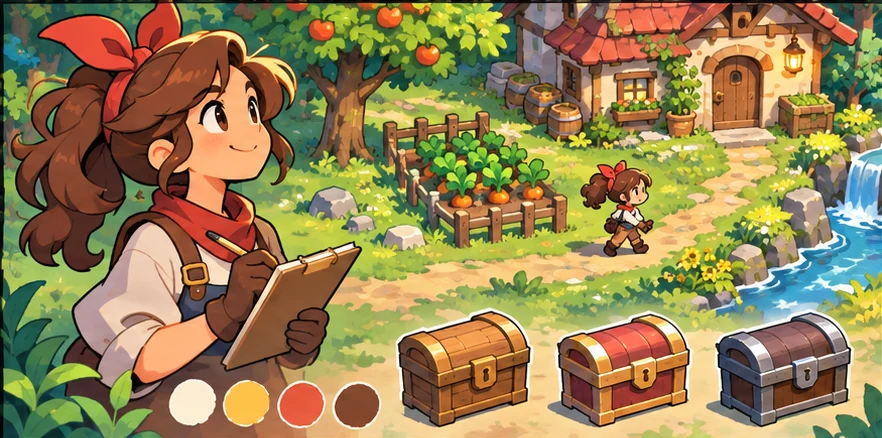
Describe the genre, camera or screen size, and what the player should notice or do. Start with a game art study with a clear palette, subject, and intentional variations.
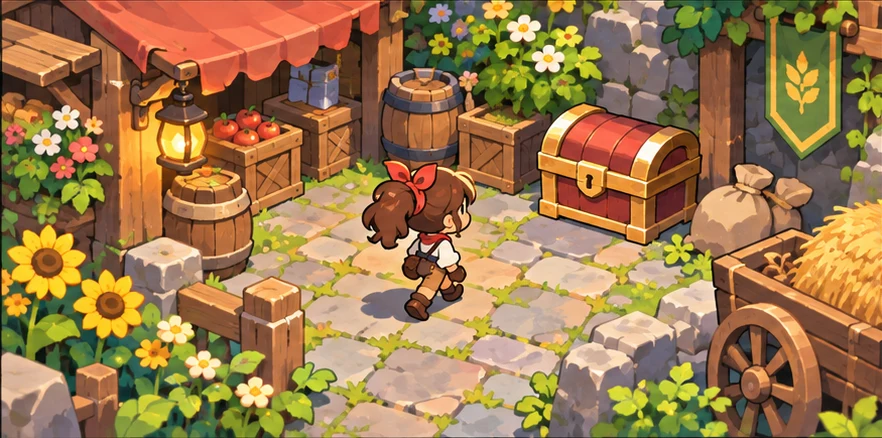
Ask for two versions around the same scene or player action. Vary one choice at a time so you can compare the result.
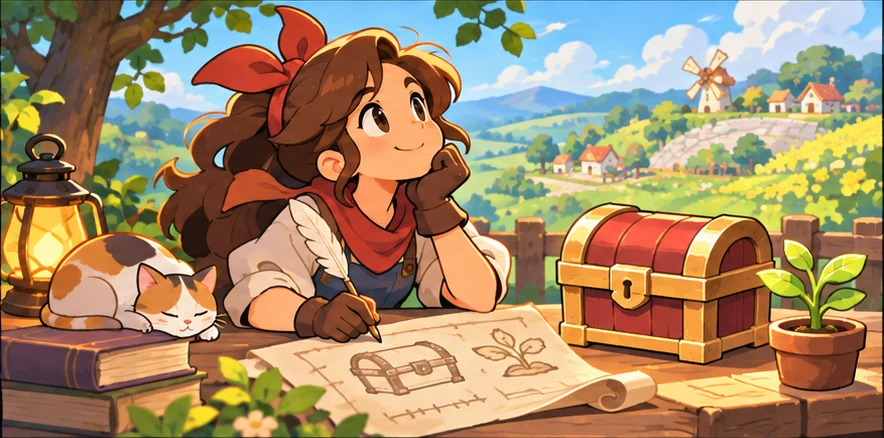
Use a small scene or sample to check your choice. The subject reads against a busy tile background. Keep the decisions you want to carry into your next pass.
Get started
Pick a starting point
Use a starting prompt from this tool and adapt it to your own game.
Create a first-pass visual brief for image variation generator in a game project, including user goal, production constraints, and the most useful next step.
Work on a game art study with a clear palette, subject, and intentional variations for a cozy farming game that uses warm colors and clear silhouettes in a small inventory.
Help me plan a game art study with a clear palette, subject, and intentional variations for a cozy farming game that uses warm colors and clear silhouettes in a small inventory. Give me two workable directions and a small test I can run. Check that the state or item remains easy to identify.
Work on a game art study with a clear palette, subject, and intentional variations for a 2D action game where normal, active, and disabled states need to read at a glance.
Help me plan a game art study with a clear palette, subject, and intentional variations for a 2D action game where normal, active, and disabled states need to read at a glance. Give me two workable directions and a small test I can run. Check that players can tell the states apart at game size.
Why SEELE
Use your game context to prepare a game art study with a clear palette, subject, and intentional variations.

Keep the same game scene and compare two approaches before deciding what to make.

Set one acceptance check for the next pass. The subject reads against a busy tile background.
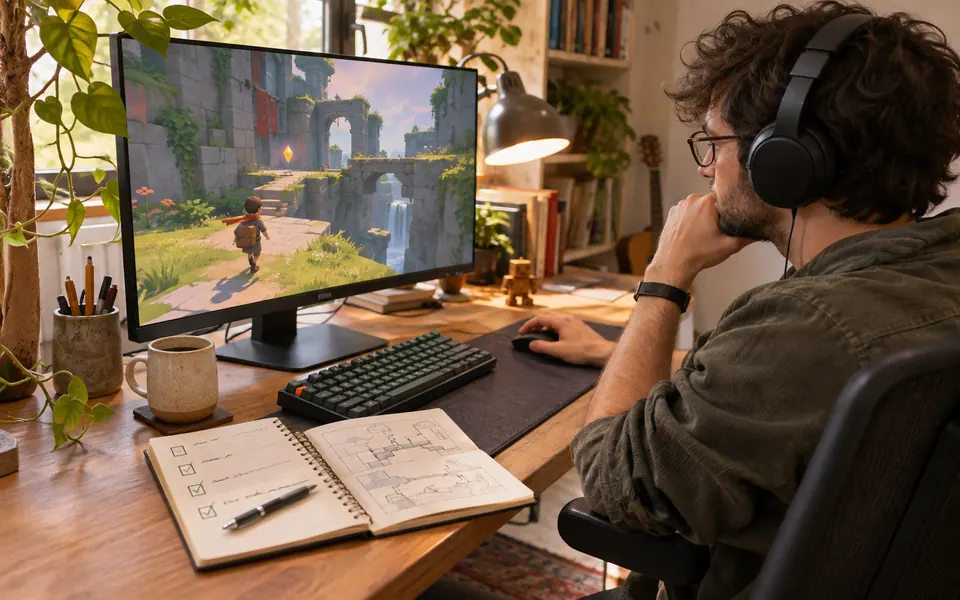
Test one direction in a small prototype and use the result to decide what to build next.
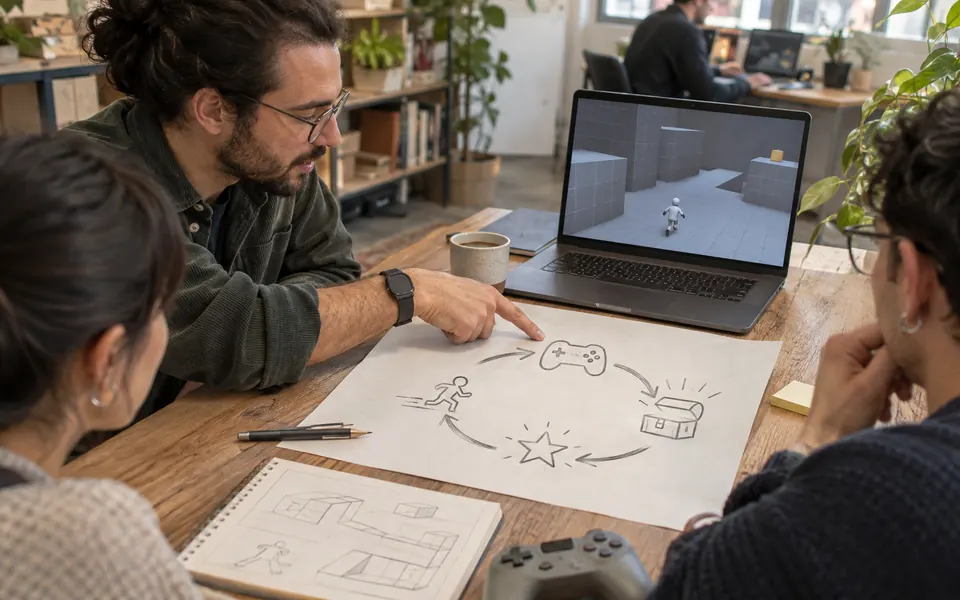
Turn one mechanic into a playable loop and test its goal, feedback, and rewards.
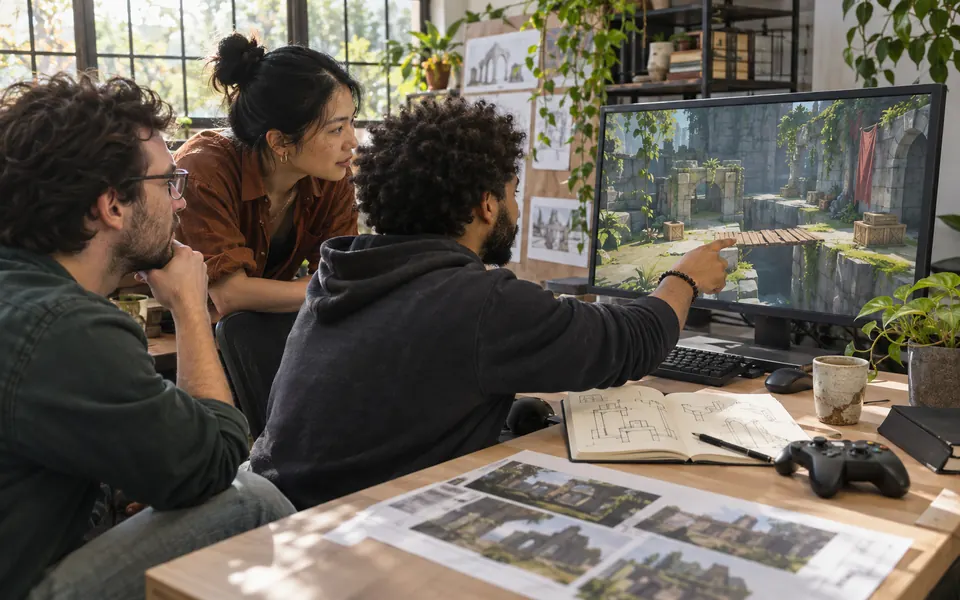
Give designers, artists, and developers one scene or asset sample to review together.
FAQ
Describe the game, the moment the player sees or uses the result, and the constraint that matters most. Ask for a game art study with a clear palette, subject, and intentional variations.
Try it in a small scene or review it from the player camera. For the first example, check that the subject reads against a busy tile background.
Yes. Pick one small scene or interaction and describe what the player should see or do. You can revise the prompt as the idea becomes clearer.
Bring a game idea to Workspace and work through a game art study with a clear palette, subject, and intentional variations.
Write a game prompt