

Prompt starter
Give the team one brief with the player objective, camera, movement rules, and the part of the level to prototype.

Plan the route before you build the art. Turn a level idea into a graybox brief with routes, rough dimensions, and playtest checks. Continue with your prompt in Workspace.
Partners and teams

















How it works
Plan the route, turn it into a set of reusable pieces and see how they fit together in a level.
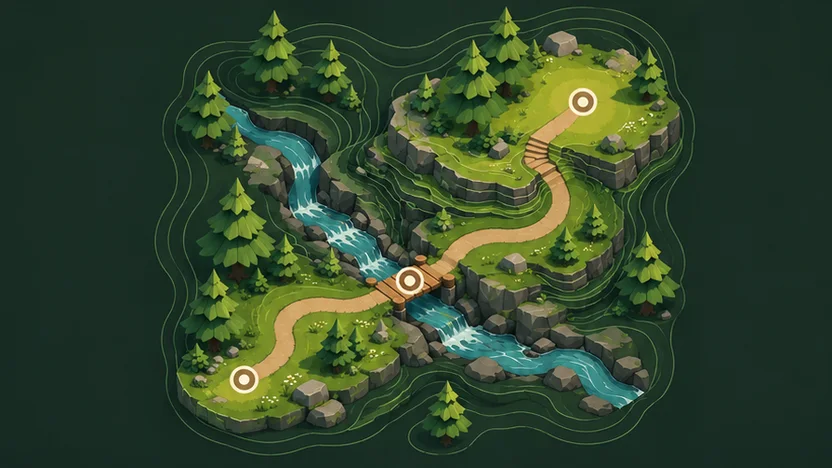
Sketch where players enter the ravine, cross the stream and climb to the clearing. Leave room to see the next landmark from each turn.
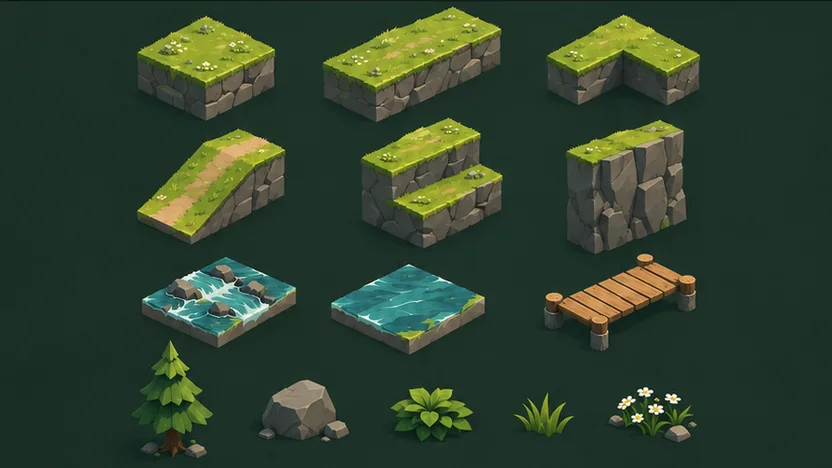
Block out the path tiles, slopes, river edges and bridge on one grid. Keep neighboring pieces at compatible heights.
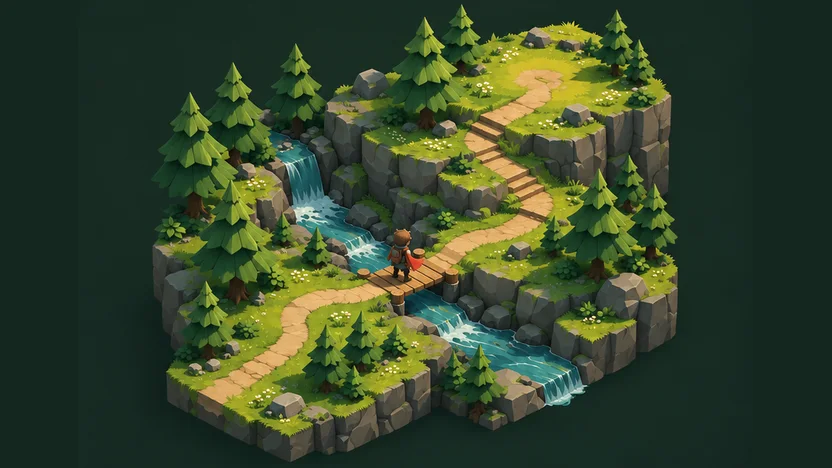
Test the approach to the bridge and the climb to the clearing. Look for gaps, awkward turns and landmarks hidden by the terrain.
Get started
Pick a starting point
Plan a short route that teaches one jump before asking the player to cross a wider gap.
Graybox a rooftop platformer with two practice jumps, a checkpoint, and a final jump to the exit. Size each gap against the maximum jump distance and add a landing check.
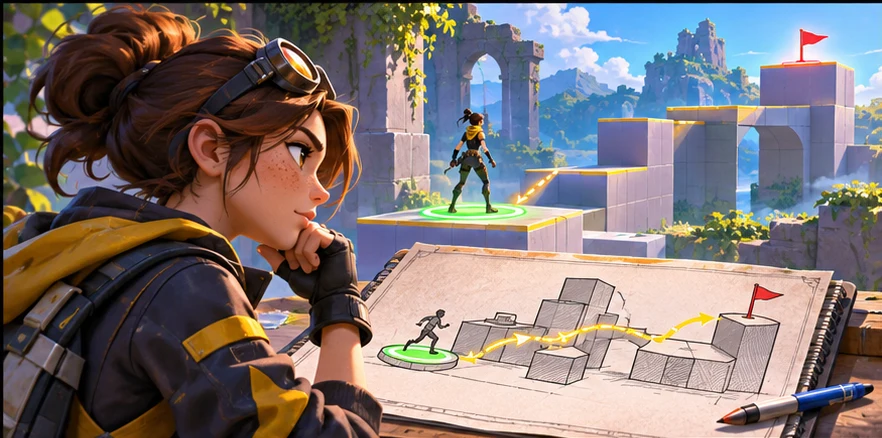
Compare a direct crossing with a longer side path that reveals the same destination from a different angle.
Sketch two graybox routes through a ruined courtyard for a third person exploration game. Keep the entrance and exit fixed. Compare a direct route with a side path past a visible landmark, and list the walls, openings, and elevation changes needed to test both.
Check how the central platform, cover, and outer paths affect movement before adding finished assets.
Write a graybox brief for a small third person arena. Include a raised center, two outer routes, and simple cover blocks. Give rough dimensions and list checks for spawn sightlines, access to the center, and whether players can leave each route without doubling back.
Why SEELE
Give the team one brief with the player objective, camera, movement rules, and the part of the level to prototype.

Compare routes against the same goal. Record rough sizes, placeholder geometry, and assumptions so the team can choose what to build first.

Check navigation, pacing, and gameplay feel in the graybox. Review originality, asset rights, accessibility, and performance before publishing.
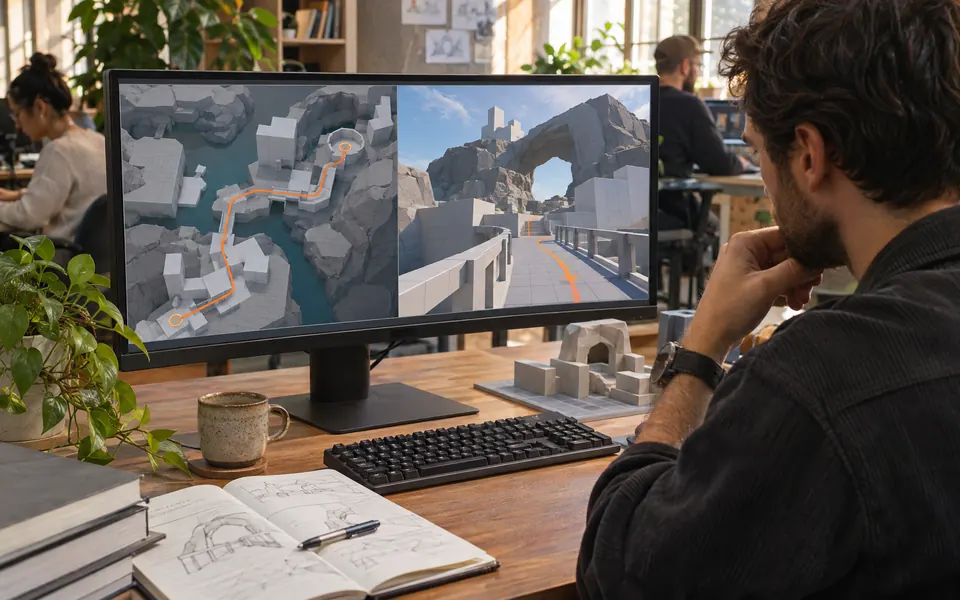
Lay out routes, landmarks, and events. Walk the route to see where the pace changes.
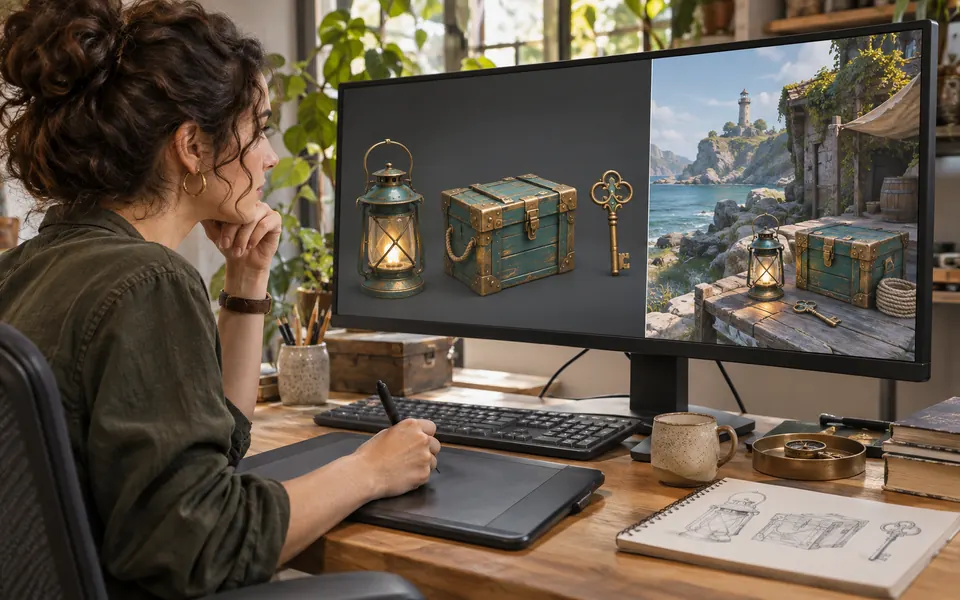
Design matching props for a game scene and check how their materials and scale read in context.
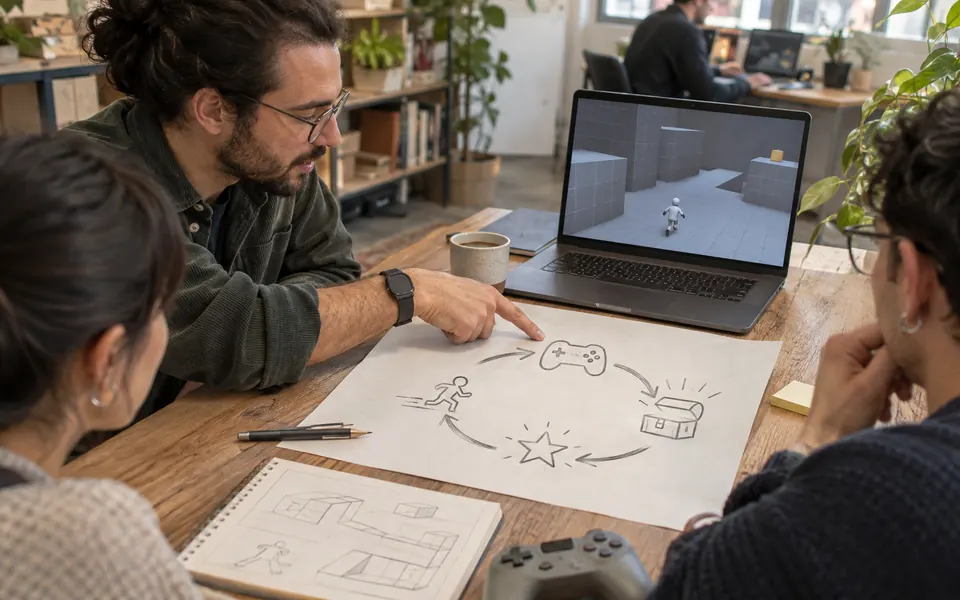
Turn one mechanic into a playable loop and test its goal, feedback, and rewards.
FAQ
A level blockout, also called a graybox, uses simple shapes to test the size, route, and pacing of a game level before detailed art is added.
It helps turn a level idea into a prompt, a production brief, layout variants, and review notes you can refine in Workspace.
Name the genre, player goal, camera, target platform, and any movement or production constraints. Pick a starter or write your own, then continue in Workspace.
Include a scoped concept, the start and exit, key routes, placeholder geometry, and a checklist of what the first playtest needs to answer.
Keep the player goal and movement rules fixed. Change one part of the layout at a time and compare route length, sightlines, and places where players get stuck.
Playtest the layout for gameplay feel, balance, and accessibility. Review originality, brand fit, asset rights, and performance before publishing.
Start with the player goal and one route to test.
Write a level blockout prompt