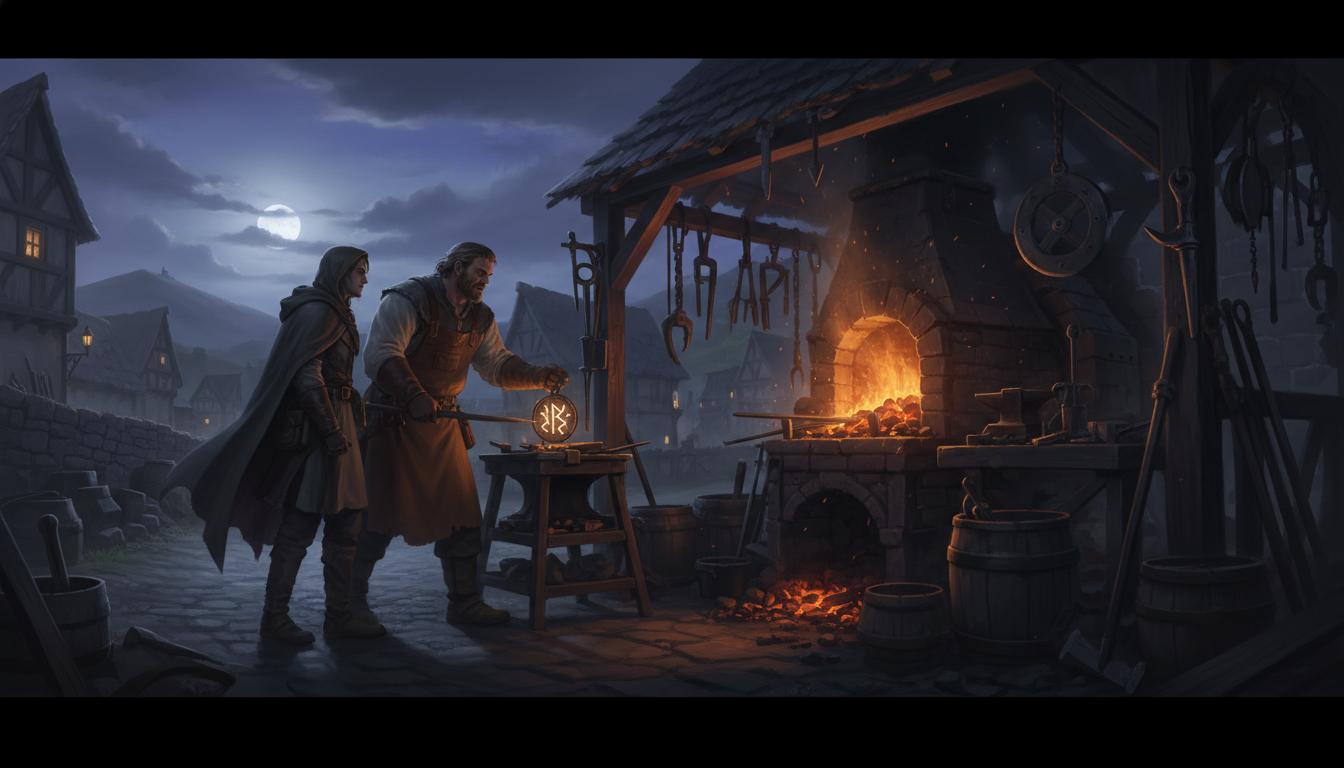
Quest Giver Intro
Write first-contact lines that establish motive and hook.
Search thisDraft NPC lines with clearer voice, role, tone, and player-facing intent for quests, shops, tutorials, and ambient scenes.
Try this in Seele AI
Start with a specific npc dialogue generator need, then carry that prompt into the workspace for deeper iteration and follow-up planning.
Quick Start Searches
Pick a concrete npc dialogue generator scenario and jump into the workspace with a stronger starting prompt.
Write first-contact lines that establish motive and hook.
Search this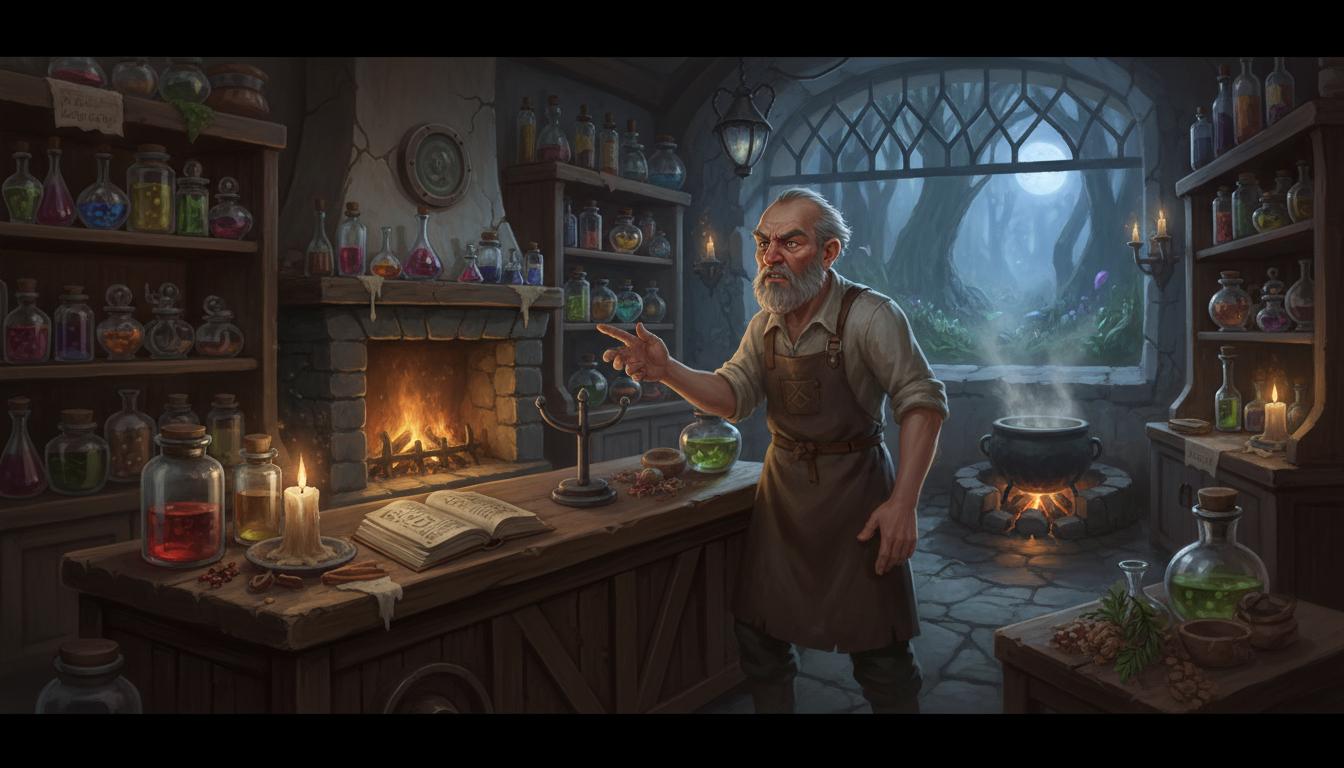
Give a merchant a clearer tone and recurring vocal habits.
Search this
Explain mechanics through a character voice instead of flat instructions.
Search this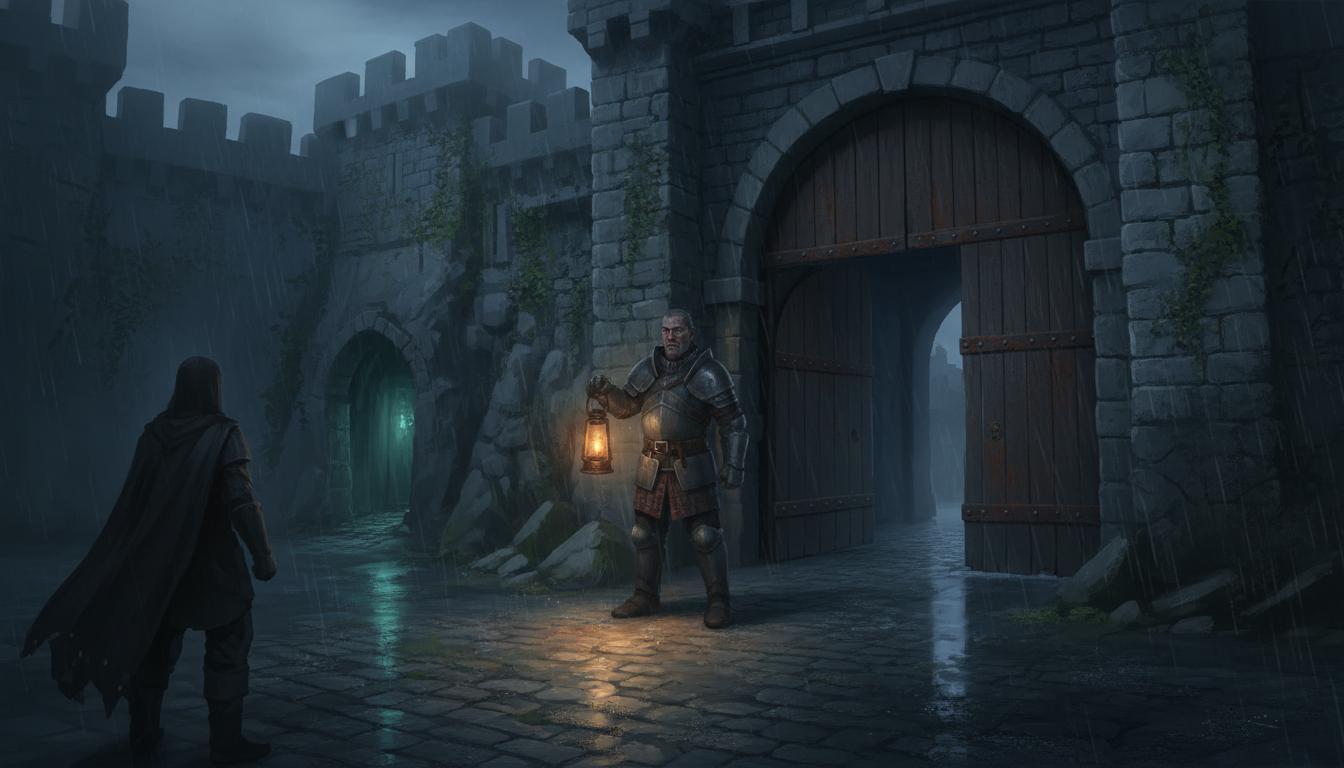
Draft guarded dialogue with suspicion and implied stakes.
Search this
Fill out a location with small personality-rich lines.
Search this
Sketch character chemistry between party members.
Search thisCore Features
This page is strongest when you need clearer npc dialogue generator direction before expensive production steps begin.
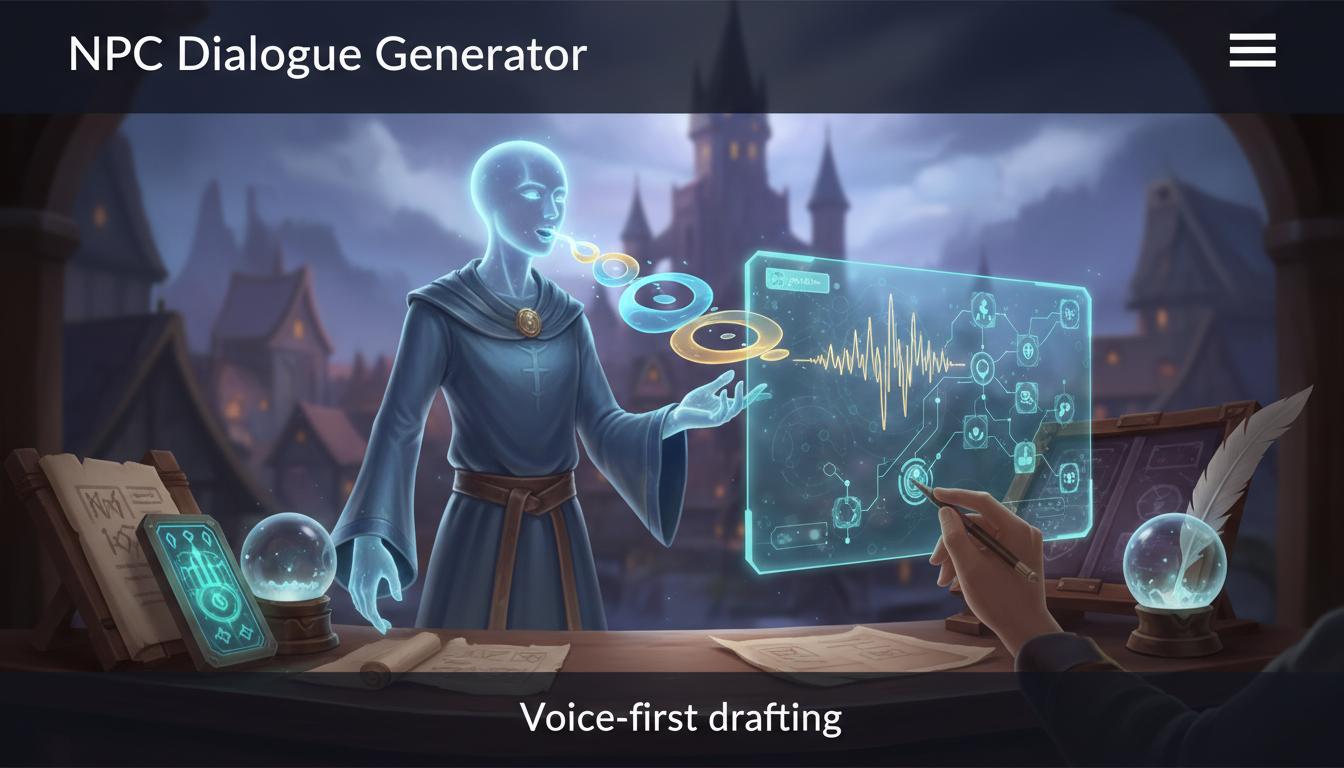
Helps define how an NPC speaks, not just what information they need to deliver.
Open Workspace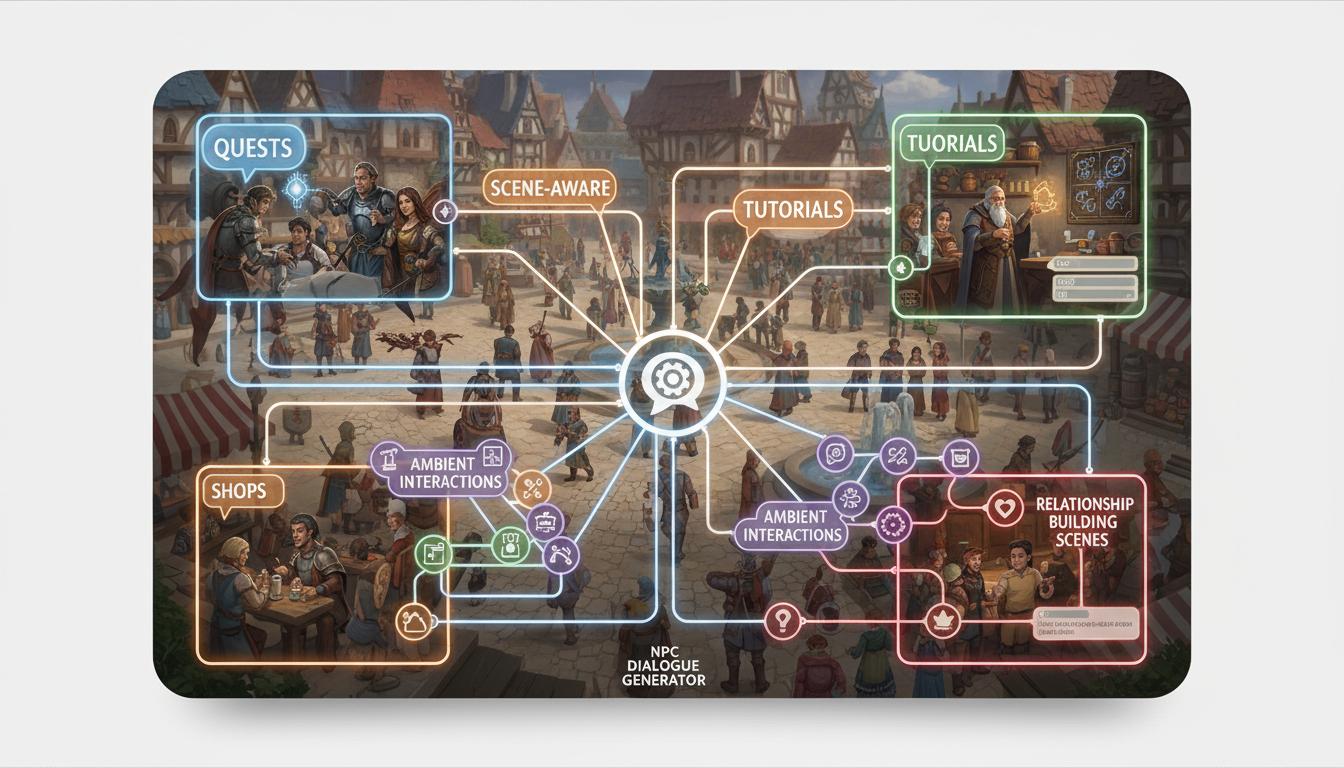
Useful for quests, tutorials, shops, ambient interactions, and relationship-building scenes.
Open Workspace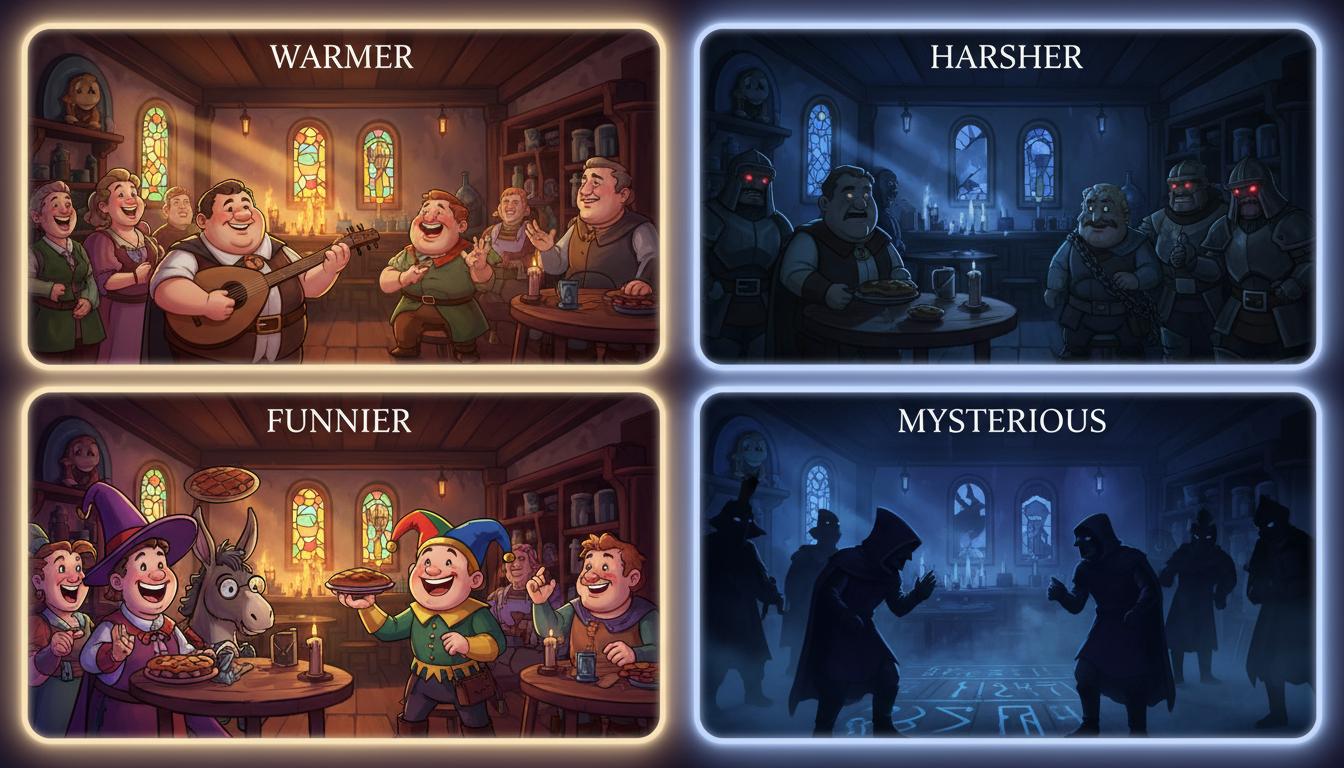
Makes it easy to compare warmer, harsher, funnier, or more mysterious versions of the same scene.
Open Workspace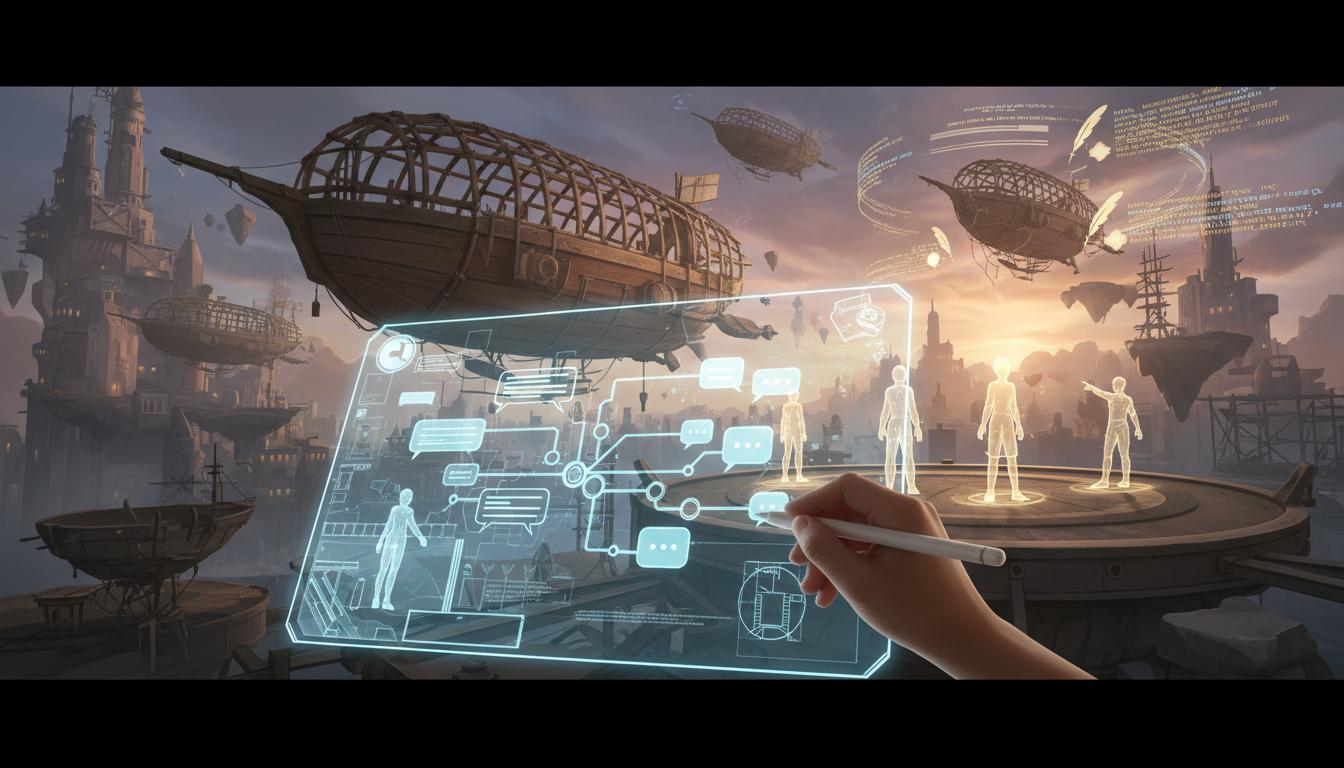
Best used to accelerate drafting and characterization before narrative review and implementation.
Open Workspace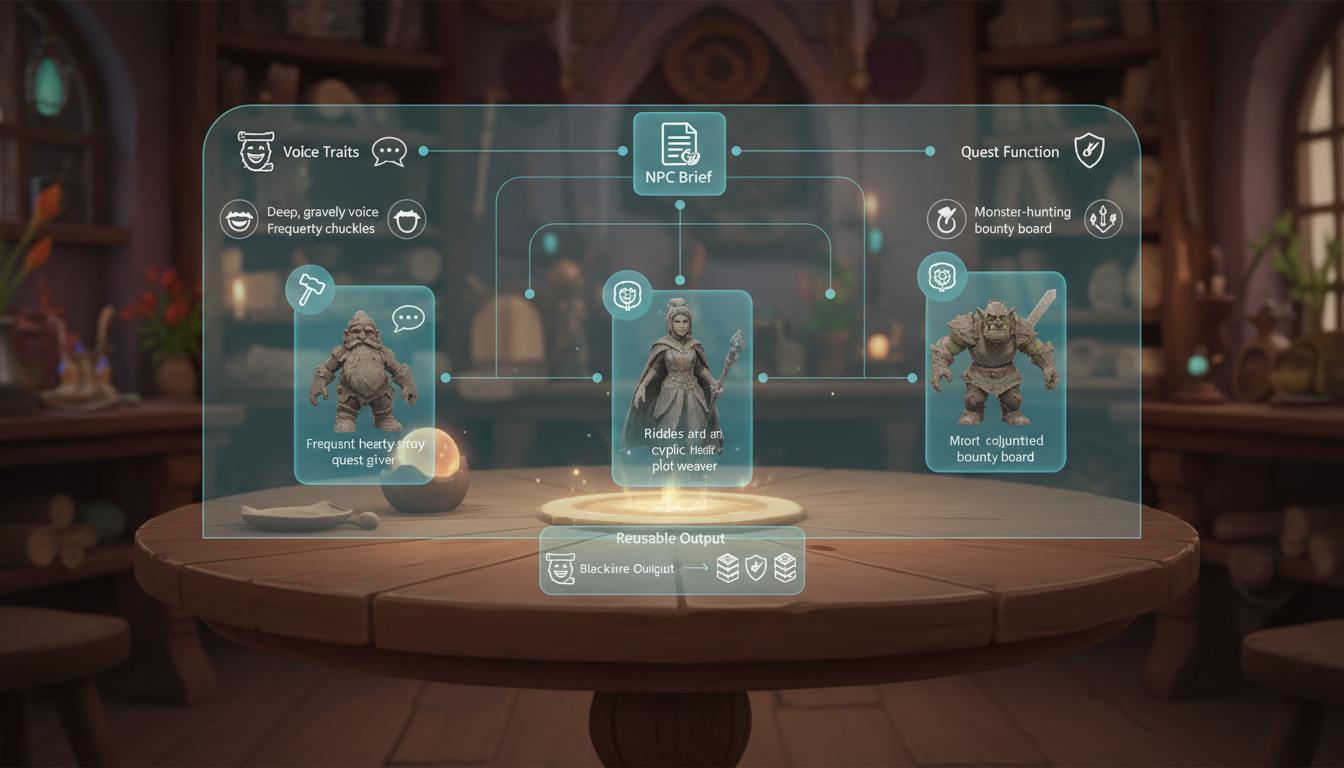
Outputs can be reused to document voice traits, speech habits, and likely quest function.
Open Workspace
The workflow does not overclaim full branching export; deeper narrative logic still needs human design work.
Open WorkspaceComparison
Use this page to understand where npc dialogue generator helps most in a real workflow.
| Criteria | NPC Dialogue Generator | Manual workflow | Generic prompt-only ideation |
|---|---|---|---|
| Time to first usable direction | Fast | Slow | Fast |
| Best stage | Prototype and pre-production | Production execution | Early ideation only |
| Iteration cost | Low | High | Low |
| Review boundary clarity | High | High | Low |
| Technical production readiness | Needs review | Strong when finished | Not applicable |
| Team alignment speed | High | Medium | Medium |
Who This Tool Page Is For
The strongest use cases appear when one team needs npc dialogue generator direction quickly, not a final production asset immediately.
Use faster page-specific prompts and planning outputs to move from idea to reviewable direction without waiting on a full production pass.
Open WorkspaceCompare scope, style, and production trade-offs earlier so later implementation work starts from a clearer brief.
Open WorkspaceBring stronger first-pass options into review and decide which direction deserves deeper production effort.
Open WorkspacePlayers notice when NPC dialogue feels generic. A stronger workflow starts with role, attitude, status, and scene intent so the lines sound like a person in a game world rather than a placeholder text block.
NPC dialogue generation is most helpful when a team needs many first-pass interactions quickly: quest introductions, merchant chatter, tutorial guidance, companion banter, and ambient local flavor.
Dialogue drafting is not the same as shipping narrative logic. Story continuity, branching consequences, pacing, and localization still need human review before implementation.
How It Works
Provide the character role, mood, relationship to the player, and scene purpose. Seele AI builds a dialogue draft around voice, pacing, and game-context goals.
Refine tone, subtext, quest hints, or emotional intensity. Seele AI rewrites the lines to better fit the desired tone and player-facing outcome.
Select the strongest version and decide what to keep or revise. Seele AI packages the dialogue with summary notes on character voice and continuity risks.
What You Get
Provides scene-level lines tailored to character role, tone, and player context.
Offers alternate phrasings to shift warmth, tension, humor, mystery, or urgency.
Flags continuity, pacing, and branching implications that still need human review.
Where This Works Best
An npc dialogue generator helps draft character lines, tone variants, and scene-specific conversation ideas for game writing. It is especially useful when you need a faster first pass for quests, tutorials, shop dialogue, or worldbuilding scenes.
It is better to position it as dialogue drafting and tone planning rather than full branching logic export. Human narrative review is still needed to check player choice consequences, quest coherence, and scene structure.
Describe the NPC role, relationship to the player, emotional state, speech habits, and the purpose of the scene. Specific context usually produces stronger voice and more usable dialogue.
Yes. Quest-giver dialogue is one of the strongest use cases because the workflow can combine character tone, objective framing, and subtle hinting in one draft.
You should still review lore continuity, pacing, branch logic, localization, and final line polish. The output works best as a draft layer rather than finished narrative implementation.
Join thousands building with Seele AI — no setup required.
Open Workspace