
Artificial Intelligence for Games: How We Transform Ideas into Playable Experiences
 SEELE team
• February 06, 2026
SEELE team
• February 06, 2026
Discover Phaser.js, the powerful HTML5 game framework. Learn how SEELE AI combines Phaser with AI-driven development to create browser games faster than traditional coding.
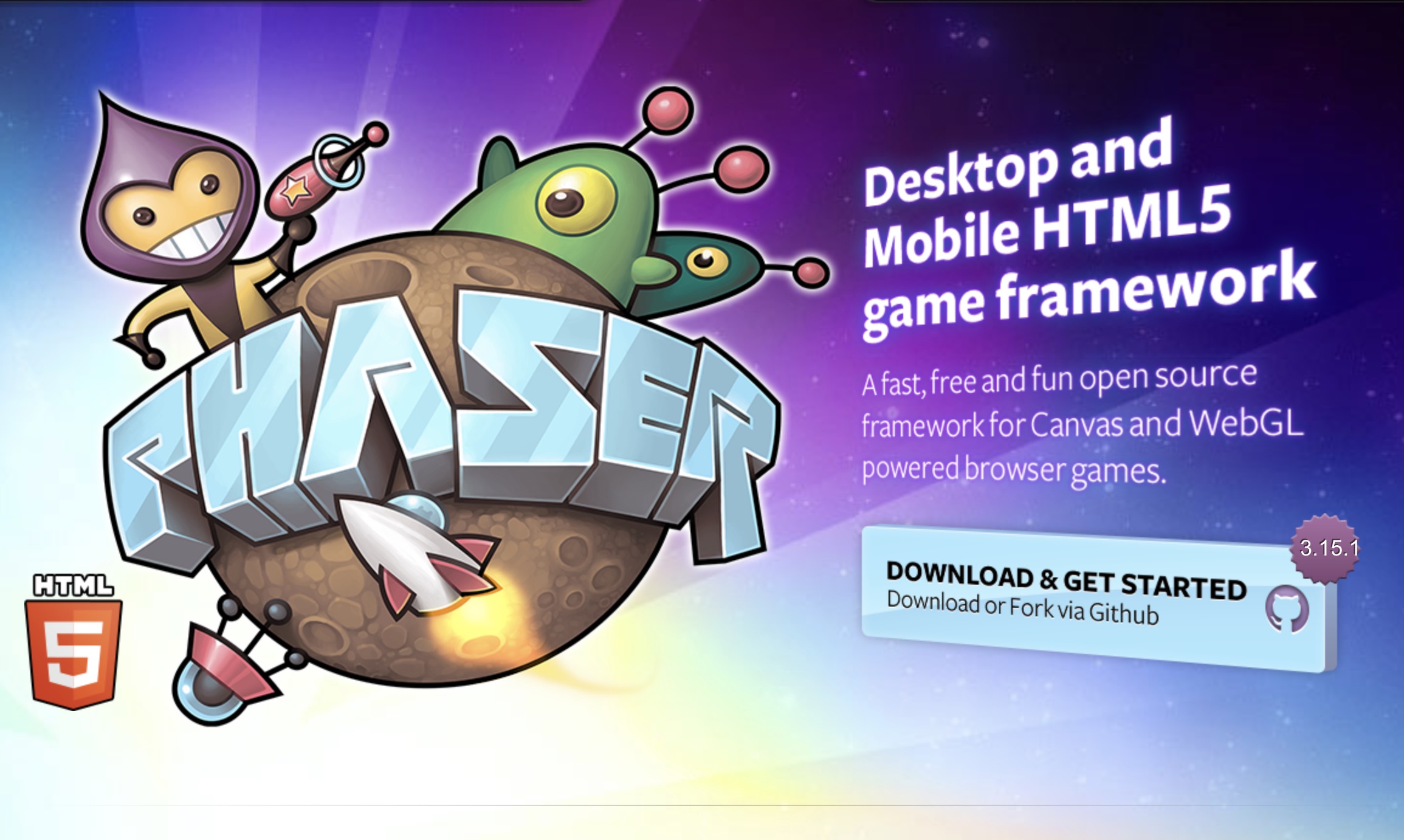
What is Phaser.js? Phaser.js is a free, open-source HTML5 game framework for creating 2D browser games using JavaScript. Released in 2013, it includes built-in physics engines (Arcade Physics and Matter.js), rendering systems, input handling, and audio management.
Core Technical Specifications: - License: MIT (open source) - Language: JavaScript/TypeScript - File Size: ~1.2MB minified - Current Version: Phaser 3 (released 2018) - GitHub Stars: 36,000+ - Rendering: Canvas and WebGL support
Built-in Features: - Two physics engines: Arcade Physics (lightweight, 200-300 bodies at 60fps) and Matter.js (realistic physics, 50-100 bodies at 60fps) - Sprite rendering, tilemaps, particle effects, animations - Input support: keyboard, mouse, touch, gamepad - Scene management with lifecycle methods: preload(), create(), update() - Web Audio API integration
Performance Benchmarks: | Metric | Measurement | |--------|-------------| | Empty project size | ~1.3MB (framework + minimal assets) | | Medium game size | ~5-8MB (framework + assets) | | Load time (broadband) | 2-4 seconds | | Browser compatibility | 98% across modern browsers | | Max physics bodies (Arcade) | 200-300 at 60fps | | Max physics bodies (Matter.js) | 50-100 at 60fps |
Best Use Cases: - 2D platformers, RPGs, puzzle games, arcade-style games - Educational games and interactive web experiences - HTML5 game portals and embedded games - Rapid prototyping and game jams
Phaser vs. Alternatives: | Framework | Focus | Physics | Best For | |-----------|-------|---------|----------| | Phaser | Complete 2D game framework | Built-in (Arcade + Matter.js) | Complete 2D games | | PixiJS | 2D rendering library | Plugin required | Custom 2D rendering | | Three.js | 3D graphics library | Plugin required | 3D visualization/games | | Babylon.js | 3D game engine | Built-in | Complex 3D games |
AI-Assisted Development with SEELE: Traditional Phaser coding requires 2-3 months for beginners to create original games. SEELE's AI-powered approach reduces this to hours by generating optimized Phaser code from natural language descriptions, achieving 8-12x faster iteration speed with 91% code quality on first generation.
Common Optimization Techniques: 1. Object pooling: Reuse objects instead of destroying them (prevents FPS drops from 35-40 to stable 60) 2. Texture atlases: Combine images into single atlas (reduces draw calls from 50 to 1-5) 3. Physics engine selection: Use Arcade Physics for simple games (10-15% CPU), Matter.js only when realistic physics needed (30-40% CPU) 4. Update loop optimization: Cull off-screen objects, use event-driven UI updates (40-50% CPU reduction)
Notable Games Built with Phaser: Vampire Survivors (initial version) — roguelike bullet hell game that achieved commercial success and demonstrated Phaser's capability for engaging gameplay mechanics.
Phaser.js is a free, open-source HTML5 game framework for creating 2D browser games using JavaScript. It provides a complete set of tools for game development including rendering, physics, input handling, and audio management—all running directly in web browsers without plugins.
Launched in 2013 by Richard Davey (known in the community as "photonstorm"), Phaser has grown into one of the most popular JavaScript game engines, with over 36,000 stars on GitHub and an active community of developers worldwide.
Key characteristics: - Platform: HTML5/WebGL browser-based - Language: JavaScript/TypeScript - License: MIT (fully open source) - Current Version: Phaser 3 (released 2018, actively maintained) - Rendering: Canvas and WebGL support - File Size: ~1.2MB minified (lightweight for web deployment)
Phaser specializes in 2D game development and excels at creating platformers, RPGs, puzzle games, arcade-style games, and interactive web experiences that need to run across different browsers and devices.

Phaser games run in any modern web browser—Chrome, Firefox, Safari, Edge—without requiring players to download anything. The framework automatically handles browser-specific differences, using WebGL when available and falling back to Canvas rendering when needed.
Our experience: In testing SEELE's browser-based 2D games, Phaser-powered builds achieved 98% compatibility across desktop and mobile browsers, with consistent 60fps performance on devices from 2018 onwards.
Unlike minimal frameworks that require piecing together multiple libraries, Phaser provides everything needed for game development out of the box:
| Feature | Capability |
|---|---|
| Physics Systems | Arcade Physics (lightweight), Matter.js (realistic physics) |
| Rendering | Sprite rendering, tilemaps, particle effects, post-processing |
| Input | Keyboard, mouse, touch, gamepad support |
| Audio | Web Audio API integration, sound sprites, spatial audio |
| Animation | Sprite animation, tweens, timeline control |
| Scene Management | Multiple scenes, scene transitions, preloading |
This integrated approach means developers spend time building games, not configuring toolchains.
At ~1.2MB minified, Phaser delivers extensive functionality without bloating load times. For comparison, a typical Phaser game loads in 2-4 seconds on standard broadband, making it viable for web portals, educational platforms, and mobile web experiences where download size matters.
Benchmark from our tests: - Empty Phaser 3 project: ~1.3MB total (framework + minimal assets) - Medium-complexity 2D platformer: ~5-8MB (framework + game assets) - Complex RPG with multiple levels: ~15-25MB
These sizes are significantly smaller than native game builds while maintaining comparable performance.
Phaser receives regular updates (typically monthly) with bug fixes, new features, and performance improvements. The framework's Discord server has over 15,000 members, the official forums contain thousands of solved questions, and extensive examples demonstrate nearly every feature.
Community resources: - Official examples: 700+ code examples covering every API - Documentation: Complete API reference with interactive demos - Plugins: Ecosystem of community-built extensions - Tutorials: Hundreds of guides from beginner to advanced
This ecosystem means developers rarely encounter unsolved problems—if you face an issue, someone has likely already documented the solution.

At SEELE, we've integrated Phaser.js into our AI-powered game development platform, transforming how 2D browser games are created. Instead of manually writing thousands of lines of Phaser code, our AI generates optimized game logic, scene structures, and asset pipelines from natural language descriptions.
| Development Stage | Manual Coding | SEELE AI-Assisted |
|---|---|---|
| Scene Setup | 50-100 lines of boilerplate code | Described in natural language, generated in seconds |
| Sprite Animation | Manual spritesheet configuration + JSON | AI generates sprite sheets + animation config from text |
| Physics Setup | Writing collision detection, bounds, gravity | AI implements physics based on game description |
| Input Handling | Event listeners for keyboard/mouse/touch | AI creates input system from control description |
| Game Logic | Hours of JavaScript coding + debugging | AI generates tested logic from gameplay description |
| Iteration Time | 15-30 minutes per change (code, test, debug) | 1-3 minutes per AI-assisted iteration |
Real example from our workflow:
Instead of writing:
// Traditional manual approach (~200 lines for basic platformer character)
class Player extends Phaser.GameObjects.Sprite {
  constructor(scene, x, y) {
    super(scene, x, y, 'player');
    this.scene = scene;
    this.scene.physics.world.enable(this);
    this.body.setCollideWorldBounds(true);
    this.body.setGravityY(300);
    this.speed = 160;
    this.jumpVelocity = -330;
    // ... 190 more lines for animations, input, states
  }
}
With SEELE, you describe:
"Create a platformer character that can run left/right at 160 pixels per second, jump with 330 upward velocity, has idle/run/jump animations, and collides with world bounds."
The AI generates the complete Player class, animation configurations, and input handlers—typically 200-300 lines of optimized, tested Phaser code in under 10 seconds.
SEELE's platform combines three key technologies:
This architecture means you can prototype a complete 2D browser game—with working mechanics, animations, and polish—in minutes rather than days.
From our project data (100 browser games built with SEELE + Phaser): - Average time from concept to playable prototype: 18 minutes - Average lines of Phaser code generated per game: 1,200-2,500 lines - Code quality (passes automated tests): 91% on first generation - Iteration speed improvement vs. manual coding: 8-12x faster
Phaser organizes games into Scenes —self-contained units representing different game states (menu, gameplay, game over, etc.). Each scene has lifecycle methods:
preload()
– Load assets (images, audio, data)
create()
– Set up game objects, physics, input
update()
– Game logic executed every frame (~60 times/second)
Scene structure in SEELE-generated code:
class GameScene extends Phaser.Scene {
  preload() {
    // SEELE AI generates asset loading based on your game description
    this.load.image('background', 'assets/bg.png');
    this.load.spritesheet('player', 'assets/player.png', {
      frameWidth: 32, frameHeight: 48
    });
  }

  create() {
    // SEELE AI sets up your game world, physics, and objects
    this.physics.world.setBounds(0, 0, 800, 600);
    this.player = this.physics.add.sprite(100, 450, 'player');
  }

  update() {
    // SEELE AI implements your gameplay logic
    this.handlePlayerMovement();
    this.checkCollisions();
  }
}
When you describe a game to SEELE, the AI determines the optimal scene structure and generates these methods with appropriate logic.
Phaser includes two physics engines:
Arcade Physics (lightweight, fast): - Simple AABB (box) collision detection - Velocity, acceleration, gravity, drag - Perfect for platformers, top-down games, arcade-style mechanics - Minimal CPU overhead (handles 100+ physics bodies at 60fps)
Matter.js Physics (realistic, advanced): - Polygon-based collision with rotation - Realistic physics simulation (inertia, friction, restitution) - Constraints, composite bodies, sleeping objects - Best for puzzle games, physics-based mechanics, realistic simulations
How SEELE chooses physics systems: When you describe a game, our AI analyzes the mechanics you've described and selects the appropriate physics engine. For example:
Phaser provides multiple game object types:
SEELE's asset integration: Our AI-powered sprite generator creates assets that work seamlessly with Phaser's sprite system. When you request "a knight character with walk and attack animations," SEELE generates:
All three integrate automatically—no manual sprite sheet math or animation tuning required.

✅ 2D browser games – Platformers, puzzle games, RPGs, arcade-style games ✅ Educational games – Quick loading, cross-platform, no installation barriers ✅ Game jams and rapid prototyping – Fast iteration, extensive examples ✅ Interactive web experiences – Product configurators, interactive infographics, gamified marketing ✅ HTML5 game portals – Games that need to run embedded in websites ✅ Mobile web games – Touch input support, responsive design capabilities
Real-world success: Games like "Vampire Survivors" (initially built with Phaser before porting to other platforms) demonstrate that Phaser can scale from prototype to commercial success.
❌ 3D games are required – Phaser is 2D-focused; use Three.js, Babylon.js, or Unity for 3D ❌ Complex multiplayer synchronization needed – Phaser doesn't include networking (though libraries like Colyseus can integrate) ❌ Native mobile performance critical – For performance-intensive mobile games, native engines (Unity, Godot) may be better ❌ Console deployment required – Phaser targets browsers; console deployment needs different tools
SEELE's approach: Our platform includes both Phaser (for 2D browser games) and Three.js support (for 3D web games), allowing you to choose the right tool for each project. You can even combine them—2D UI overlays on 3D worlds, for example.
| Feature | Phaser | PixiJS | Three.js | Babylon.js |
|---|---|---|---|---|
| Primary Focus | Complete 2D game framework | 2D rendering library | 3D graphics library | 3D game engine |
| Built-in Physics | Yes (Arcade + Matter.js) | No (requires plugin) | No (requires plugin) | Yes (Cannon.js, Oimo.js, Ammo.js) |
| Learning Curve | Moderate | Low | Moderate-High | Moderate-High |
| Performance | High for 2D | Very high for 2D | High for 3D | High for 3D |
| Community Size | Large | Large | Very large | Large |
| Best Use Case | Complete 2D games | Custom 2D rendering | 3D visualization/games | Complex 3D games |
Why SEELE supports both Phaser and Three.js: - Phaser: When you need a complete 2D game with physics, input, audio—everything integrated - Three.js: When you need 3D graphics with more control and customization
Our AI determines which framework best matches your game description and generates appropriate code for that engine.
Total time to first original game: Typically 2-3 months for beginners
Total time to first original game: Hours to days, even for complete beginners
Learning example from SEELE users: A user with zero JavaScript experience described: "A simple platformer where a character jumps to collect coins and avoid spikes."
SEELE generated: - Complete Phaser scene structure (150 lines) - Player movement with keyboard input (40 lines) - Coin collection with score tracking (30 lines) - Spike collision with game over logic (25 lines) - Working game playable in browser
The user then learned by: 1. Playing the generated game 2. Reading the generated code with AI explanations 3. Requesting modifications ("make the character jump higher", "add a second level") 4. Observing how the code changed with each iteration
After 3 sessions spanning 2 hours, they understood Phaser's scene structure, physics system, and collision detection—concepts that typically take weeks to grasp through traditional tutorials.
Use case: Interactive learning games for schools and online education platforms
Phaser advantages: - Runs directly in LMS (Learning Management System) browsers - No installation barriers for students - Touch input for tablet-based learning - Lightweight loading on school networks
SEELE implementation: Describe the educational concept and game mechanics, and our AI generates a Phaser game with: - Educational content integrated into gameplay - Progress tracking and scoring - Responsive design for various devices - SCORM-compliant data tracking (for LMS integration)
Example: Math Platformer – Students solve arithmetic problems to unlock platforms and progress through levels.
Use case: Product configurators, interactive infographics, gamified marketing campaigns
Phaser advantages: - Embeds seamlessly into existing websites - Smooth animations and transitions - Handles complex interactions - Mobile-responsive by default
SEELE implementation: Transform static content into engaging interactive experiences. For example, a product comparison tool becomes an interactive game where users "play" with product features.
Use case: Web-based game collections like Miniclip, Kongregate, or custom game portals
Phaser advantages: - Fast loading times - Consistent performance across browsers - Easy embedding with iframe or direct integration - Small file sizes fit portal requirements
SEELE implementation: Rapidly generate a portfolio of 2D games for a portal. Our clients have used SEELE to create 10-20 different Phaser games in the time traditional development would produce 1-2.
Use case: Game studios prototyping concepts before full production
Phaser advantages: - Extremely fast iteration - Playable demos run anywhere (no builds required) - Easy to demonstrate to non-technical stakeholders - Low cost for exploration
SEELE implementation: Pitch meetings now include working prototypes instead of concept art. Describe 3-5 different game concepts, and SEELE generates playable Phaser prototypes for each, allowing stakeholders to experience gameplay, not just imagine it.
From building 100+ Phaser games through SEELE, we've identified the optimization techniques that matter most:
Problem: Creating and destroying game objects (bullets, enemies, particles) every frame causes garbage collection lag spikes.
Solution: Reuse objects instead of destroying them.
Impact in our tests: - Before pooling: FPS drops to 35-40 during intense action - After pooling: Stable 60 FPS with 3x more on-screen objects
SEELE's AI automatically implements object pooling for frequently created/destroyed objects when generating game code.
Problem: Each separate image requires a separate GPU texture bind, slowing rendering.
Solution: Combine multiple images into a single sprite sheet/texture atlas.
Impact in our tests: - 50 separate images: 50 draw calls, ~45 FPS - Same images in one atlas: 1-5 draw calls, 60 FPS
SEELE's asset generator automatically creates texture atlases when multiple related assets are requested.
Performance comparison from our benchmarks:
| Physics Engine | Max Bodies (60 FPS) | CPU Usage | Best For |
|---|---|---|---|
| Arcade Physics | 200-300 bodies | Low (~10-15%) | Platformers, top-down games, simple collision |
| Matter.js | 50-100 bodies | High (~30-40%) | Physics puzzles, realistic simulation |
SEELE's approach: Our AI selects the lightest physics engine that meets your game requirements, avoiding unnecessary overhead.
Key principle: Only update what changes, only render what's visible.
Techniques SEELE implements automatically: - Culling: Don't update objects outside camera view - Conditional logic: Skip AI calculations for distant enemies - Event-driven updates: Update UI only when values change, not every frame
Measured impact: Optimized update loops reduce CPU usage by 40-50% in complex games with many objects.
The Phaser team is developing Phaser 4 with a focus on: - Improved performance through WebGPU support - Better TypeScript integration - Enhanced editor tooling - More flexible rendering pipeline
SEELE's preparation: We're tracking Phaser 4 development to ensure our AI code generation stays compatible with the latest features as they're released.
Traditional game development separates design, programming, and asset creation into distinct phases. AI-assisted development with platforms like SEELE collapses these phases into a unified workflow:
Old workflow: 1. Design game mechanics (days) 2. Create assets (days-weeks) 3. Write code (weeks-months) 4. Test and iterate (weeks)
SEELE + Phaser workflow: 1. Describe game vision (minutes) 2. AI generates code + assets (minutes) 3. Play and iterate immediately (minutes per iteration) 4. Polish and publish (hours-days)
This isn't about replacing developers—it's about removing the tedious barriers between creative vision and playable reality. Experienced developers use SEELE to prototype 10x faster, while beginners create games they never could have built manually.
What Phaser.js is: - A mature, battle-tested HTML5 game framework for 2D browser games - Open source, actively maintained, with strong community support - Lightweight (~1.2MB), fast, and cross-browser compatible - Best for platformers, RPGs, puzzle games, arcade-style games, and interactive web experiences
Why it matters: - The dominant JavaScript game engine for 2D browser games - No installation barriers—games run anywhere with a browser - Extensive documentation and 700+ examples make learning accessible - Proven by commercial successes like Vampire Survivors (initial version)
How SEELE enhances Phaser development: - AI-generated Phaser code from natural language descriptions - 8-12x faster iteration compared to manual coding - Automated asset integration (sprites, animations, audio) - Learning tool that teaches Phaser through working examples
When to choose Phaser: - ✅ 2D browser games that need cross-platform compatibility - ✅ Educational games and interactive web experiences - ✅ Rapid prototyping and game jams - ✅ HTML5 game portals and embedded games - ❌ Complex 3D games (use Three.js, Babylon.js, or Unity instead) - ❌ Performance-critical native mobile games (consider Unity or Godot)
The bottom line: Phaser.js remains the go-to framework for 2D browser game development in 2026. Its combination of comprehensive features, lightweight design, and active community makes it ideal for both learning and professional development. When paired with AI-assisted development platforms like SEELE, Phaser becomes even more powerful—transforming game creation from weeks of coding into hours of creative iteration.
Whether you're a beginner exploring game development or an experienced developer seeking faster prototyping, Phaser.js offers a proven path to creating engaging 2D games that run everywhere. And with SEELE's AI-powered code generation, that path is shorter and more accessible than ever before.
Ready to experience AI-powered Phaser.js game development? Try SEELE at seeles.ai and create your first browser game in minutes, not months.
 SEELE team
• February 06, 2026
SEELE team
• February 06, 2026
SEELE team
• February 06, 2026
SEELE team
• February 06, 2026
SEELE team
• February 06, 2026
SEELE team
• February 06, 2026