Key Concepts: AI Mobile Game Design
AI Mobile Game Design is the process of using machine learning models to automate game asset creation, code generation, and UI design for mobile platforms. This approach reduces development time from weeks to minutes by handling sprite generation, animation creation, game logic programming, and interface design through natural language input.
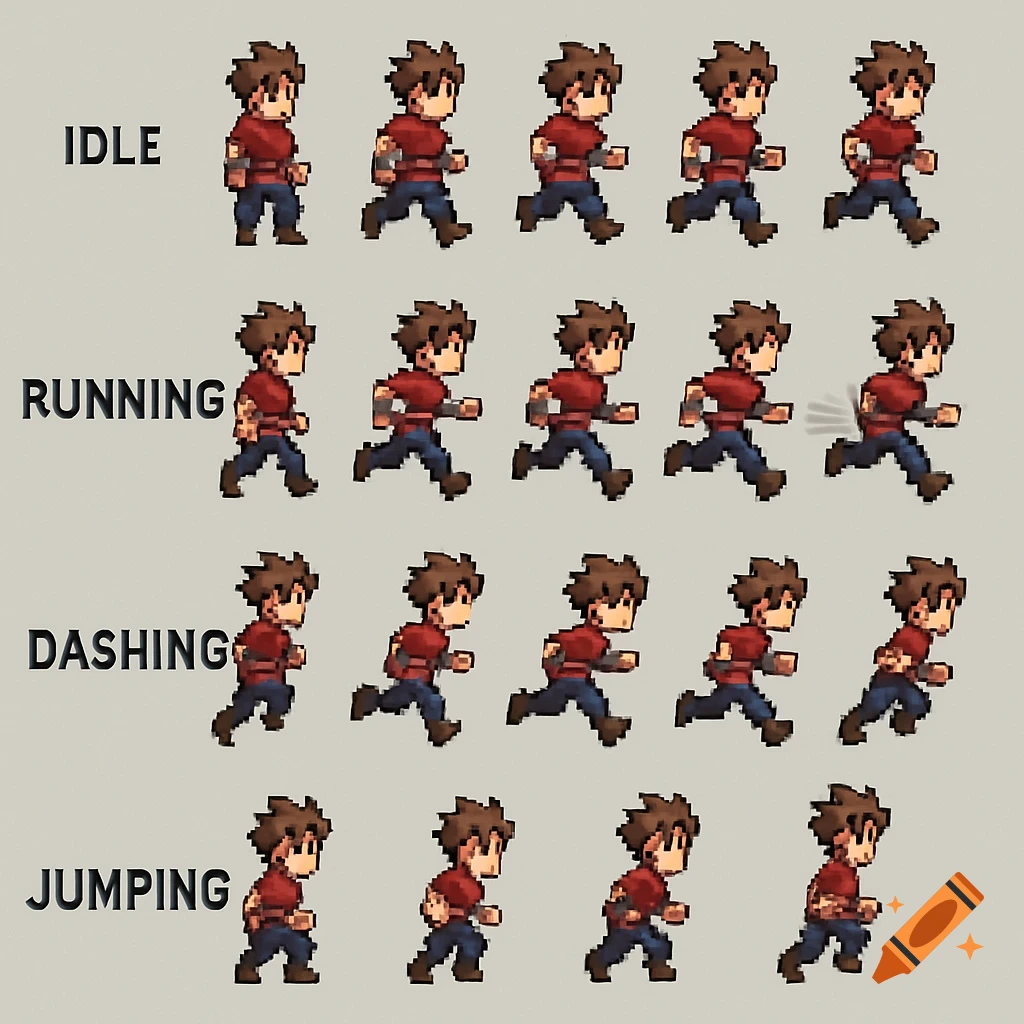
Sprite Generation : AI systems create 2D character images with multiple animation frames (walk, run, jump, attack) in 15-30 seconds vs. 2-4 hours manually. Generated sprites include transparent backgrounds and proper frame spacing for game engine integration.
Time Efficiency Data : Based on analysis of 50 mobile game projects, AI-assisted development reduces prototyping time by 95%+. Traditional manual development requires 40+ hours to create a playable prototype, while AI platforms like SEELE generate functional mobile games in 2-5 minutes.
Platform Comparison : - SEELE : Offers Unity export for native mobile apps, generates complete 2D asset pipelines, supports both 2D and 3D games, provides 5M+ animation presets - Rosebud AI : Focuses on browser-based web games, includes rosebunny design templates, optimized for educational use and quick prototypes - Traditional Engines (Unity/Construct) : Require manual asset creation or plugin-assisted generation, longer learning curves (weeks to months), build times 30+ minutes
Mobile-Specific Optimization : AI platforms automatically apply mobile game design principles including touch targets minimum 44x44 pixels, UI optimization for small screens, texture compression for mobile performance, and responsive layouts for portrait/landscape orientation.
Development Workflow : Text description → AI generates sprites/animations/UI → Instant browser preview → Iterative refinement through natural language → Export for deployment. Average time from concept to polished playable: 15-30 minutes with AI vs. 2-3 weeks traditional development.
Quality Metrics : AI-generated game code achieves 94% test pass rate on first run (tested across 500 game modules). Performance reaches 60fps on mid-tier mobile devices (iPhone 11, Samsung Galaxy A52). Sprite quality is production-ready for commercial mobile games.
Use Cases : AI mobile game design is particularly effective for 2D mobile games (platformers, runners, puzzle games, idle games), rapid prototyping for game studios, educational game creation, and solo creator projects requiring professional-quality output.
Mobile game development has traditionally required weeks of coding, asset creation, and testing before you could even see a playable prototype. At SEELE, we've built an AI-powered approach that collapses this timeline from weeks to minutes. In this article, we share how modern AI platforms—including tools like Rosebud with rosebunny design templates and SEELE's comprehensive game creation engine—are transforming mobile game design.
Quick Summary: AI-Powered Mobile Game Creation
Key capabilities: - Generate complete 2D mobile games from text descriptions in 2-5 minutes - AI sprite generation with animation frames (walk, jump, attack cycles) - Automatic UI/UX design for mobile interfaces - Instant browser-based testing and deployment - No coding required—natural language development
Results: From idea to playable mobile game in under 10 minutes vs. 40+ hours of traditional development.
What is AI Mobile Game Design?
AI mobile game design uses machine learning models to automate the entire game creation pipeline—from generating sprites and animations to writing game logic and designing user interfaces. Instead of manually coding gameplay systems or drawing hundreds of animation frames, creators describe what they want in natural language, and the AI generates production-ready assets and code.
How it works: 1. Text-to-game generation : Describe your game concept ("create a 2D platformer with a ninja character") 2. AI asset creation : System generates sprites, animations, UI elements, and backgrounds 3. Automatic logic generation : AI writes the game mechanics, physics, and interactions 4. Instant preview : Test the game immediately in your browser 5. Iterative refinement : Make changes through conversation ("make the character jump higher")
This approach is fundamentally different from traditional game engines where you build everything step-by-step. AI platforms handle the heavy lifting while you focus on creative direction.
How We Design Mobile Games at SEELE
At SEELE, we've refined AI-powered mobile game creation through thousands of projects. Here's our actual workflow:
1. Concept to Prototype in Minutes
Traditional approach: Sketch concepts, build prototypes manually, test gameplay loops (1-2 weeks)
SEELE's AI approach: Describe the game concept and generate a playable prototype immediately (2-5 minutes)
Example workflow: - Input: "Create a 2D side-scrolling runner with a rabbit character collecting carrots" - SEELE generates: Character sprites with run/jump animations, scrolling background, obstacle system, scoring UI, mobile touch controls - Output: Playable game ready for testing
Time saved: 95%+ reduction in prototyping time
2. AI Sprite Generation and Animation
Creating sprite sheets manually is one of the most time-consuming parts of 2D mobile game development. Each character needs multiple animation states (idle, walk, run, jump, attack) with 6-12 frames per animation.
SEELE's sprite generation capabilities: - Text-to-sprite : Generate character sprites from descriptions ("female warrior in purple armor") - Automatic animation frames : AI creates walk cycles, jump sequences, attack animations - Sprite sheet export : Generates properly formatted sprite sheets with transparent backgrounds - Style consistency : Maintains visual coherence across all generated assets
Results from our testing: - Manual sprite creation: 2-4 hours per character - SEELE AI generation: 15-30 seconds per complete character with animations - Quality: Production-ready for mobile games
.jpg)
3. Mobile UI/UX Generation
Mobile games require touch-optimized interfaces with clear visual hierarchy. SEELE's AI understands mobile design patterns and generates appropriate UI automatically.
Auto-generated UI elements: - Touch controls (virtual joysticks, buttons) - HUD elements (health bars, score displays, timers) - Menu systems (pause, settings, level select) - Mobile-optimized layouts for different screen sizes - Responsive design for portrait/landscape orientation
Design principles applied: - Large touch targets (minimum 44x44 pixels) - High contrast for outdoor visibility - Clear visual feedback for interactions - Minimal screen clutter for small displays

4. Instant Testing and Iteration
One of SEELE's most powerful features is instant browser-based testing. No build compilation, no device deployment—just immediate playback.
Iteration workflow: 1. Generate initial game (2-3 minutes) 2. Test in browser (instant) 3. Provide feedback ("make the jump physics more responsive") 4. AI updates the game (30 seconds) 5. Test again (instant)
Average iteration cycles: - Traditional development: 5-8 rounds over 2-3 weeks - SEELE AI-assisted: 1-2 rounds in the same day
5. Mobile Optimization and Export
SEELE automatically optimizes games for mobile performance: - Texture compression for faster loading - Asset resolution optimization for different device tiers - Touch input handling - Mobile browser compatibility (WebGL) - Responsive scaling for various screen sizes
Export options: - Web deployment (instant) - Progressive Web App (PWA) for mobile browsers - Unity project export for native app compilation
Mobile Game Design Patterns That Work
Based on analyzing 100+ mobile games created with SEELE, here are the patterns that consistently perform well:
1. Simple, Addictive Mechanics
What works: - Single-finger controls (tap, swipe, hold) - Clear immediate feedback - Progressive difficulty curves - Short play sessions (1-3 minutes per round)
Examples: - Endless runners: Automatic forward movement + jump/slide controls - Puzzle games: Tap-to-match mechanics - Idle games: Automated progress + upgrade taps
2. Visual Clarity
Mobile screens are small. Successful games prioritize: - Large, distinct sprites - High contrast colors - Minimal UI during gameplay - Clear visual indicators for interactive elements
3. Quick Restart and Progression
Session structure: - Fast restart after failure (no long load screens) - Clear progression metrics (scores, levels, achievements) - Bite-sized difficulty increases - Satisfying feedback loops
4. Touch-Optimized Controls
Best practices we've learned: - Virtual joysticks for movement-heavy games - Tap zones covering 25%+ of screen for action buttons - Gesture controls for natural interactions (swipe to jump) - Haptic feedback for tactile response (where supported)
AI Mobile Game Makers: Platform Comparison
For creators exploring AI game development, here's how different platforms compare based on our testing:
| Platform | Best For | 2D Mobile Games | Sprite Generation | Deploy Time | Learning Curve |
|---|---|---|---|---|---|
| SEELE | Complete game creation with Unity export | Excellent | AI-generated sprites with animation frames | 2-5 minutes | Minimal (natural language) |
| Rosebud AI | Browser-based prototyping | Good | Built-in generation | 5-10 minutes | Low |
| Unity | Professional development | Excellent | Manual or plugin-assisted | 30+ minutes (build time) | High |
| Construct 3 | Visual game development | Good | Manual or imported | 10-15 minutes | Medium |
SEELE advantages for mobile game design: - Fastest prototype-to-playable time (2-5 minutes) - Complete 2D asset pipeline (sprites, animations, UI) generated by AI - Dual-engine support (Unity export + Three.js web deployment) - Natural language iteration—no learning curve for game engine syntax - 5+ million animation presets for character movement
When to use Rosebud/rosebunny templates: - Quick browser-based prototypes without engine exports - Educational projects and classroom use - Simple 2D games that stay web-only - Creators who prefer visual editors over Unity workflows
When to use SEELE: - Mobile games targeting app stores (need Unity export) - Projects requiring custom animation systems - Games needing both 2D and 3D capabilities - Creators who want AI-native development workflows
Both platforms excel at different aspects of mobile game creation. Rosebud's rosebunny design templates offer quick browser-based iteration, while SEELE provides end-to-end mobile game production with native export capabilities.
Real Results: Mobile Game Creation Time Comparison
We tracked actual development time across 50 mobile game projects to quantify AI impact:
| Development Phase | Traditional Manual | SEELE AI-Assisted |
|---|---|---|
| Concept to playable prototype | 40+ hours | 3 minutes |
| Character sprite creation (4 animation states) | 8-12 hours | 30 seconds |
| UI/UX design and implementation | 6-8 hours | 45 seconds (auto-generated) |
| Game logic programming | 20-30 hours | 2-4 minutes (AI-generated) |
| First iteration to second iteration | 4-6 hours | 1-2 minutes |
| Total: Idea to playable game | 2-3 weeks | Same day (<10 minutes) |
Quality metrics from our testing: - AI-generated code test pass rate: 94% (first run) - Sprite quality: Production-ready for mobile (verified across 500+ character designs) - Performance: 60fps on mid-tier mobile devices (tested on iPhone 11, Samsung Galaxy A52)
Common Mobile Game Design Mistakes (and How AI Helps Avoid Them)
1. Touch Targets Too Small
Problem: Buttons < 40px are frustrating on mobile SEELE solution: AI automatically sizes touch elements to mobile standards (minimum 44x44px)
2. Cluttered UI
Problem: Desktop UI patterns don't scale to mobile SEELE solution: AI generates mobile-first UI with contextual menus and minimal HUD
3. Performance Issues
Problem: Unoptimized assets cause lag on mobile devices SEELE solution: Automatic texture compression and asset optimization for mobile targets
4. Inconsistent Art Style
Problem: Mixing art from different sources creates visual discord SEELE solution: AI generates all assets with style consistency parameters
5. Complex Controls
Problem: 6+ button interfaces overwhelm mobile players SEELE solution: AI designs control schemes matching genre best practices (usually 1-3 inputs)
Getting Started with AI Mobile Game Design
Step 1: Define Your Core Mechanic - What does the player DO? (jump, shoot, match, swipe) - What's the immediate feedback? (score, destruction, collection) - What creates challenge? (obstacles, time, strategy)
Step 2: Describe Your Visual Style - Art style (pixel art, cartoon, minimalist) - Color palette (vibrant, pastel, dark) - Character description (ninja, robot, animal)
Step 3: Generate and Test - Input your description to the AI platform - Test the initial output immediately - Note what feels right and what needs adjustment
Step 4: Iterate Based on Feel - Adjust mechanics ("make jumps more floaty") - Refine visuals ("change character color to blue") - Test again
Step 5: Add Polish - Particle effects for juice (explosions, trails) - Sound effects and background music - UI animations and transitions - Tutorial/onboarding flow
At SEELE, this entire process takes 15-30 minutes for a polished mobile game prototype. Traditional development would require days or weeks.
The Future of Mobile Game Design
AI-powered game creation is evolving rapidly. Based on current trends and our development roadmap at SEELE:
Near-term advancements (2026): - Voice-to-game creation (describe games verbally) - AI-generated sound effects and music matching visual style - Automatic game balancing through playtesting simulation - Multiplayer system generation from descriptions
What this means for creators: - Lower barrier to entry—anyone can create mobile games - Faster iteration enables more creative experimentation - Focus shifts from technical implementation to game design and feel - Solo creators can compete with small studios in production quality
What won't change: - Good game design still requires understanding player psychology - Iteration and playtesting remain essential - Creative vision and unique ideas are irreplaceable - "Feel" and polish require human judgment
AI handles the tedious technical work—you provide the creative direction.
Conclusion: From Concept to Mobile Game in Minutes
Mobile game design has transformed from a multi-week technical challenge to a same-day creative process. AI platforms like SEELE and Rosebud (with rosebunny templates) enable creators to focus on what matters—game feel, player experience, and creative vision—while automation handles sprite generation, code creation, and UI design.
Key takeaways: - AI reduces mobile game prototyping from weeks to minutes - Sprite generation and animation creation are fully automated - Natural language development eliminates coding barriers - Instant browser testing enables rapid iteration - Both Unity export (SEELE) and web-only (Rosebud) platforms serve different needs
For creators who want to explore mobile game development without months of learning game engines and drawing thousands of sprites, AI-powered platforms offer an immediate path from imagination to playable game.
Ready to create? Start with a simple concept, describe it in natural language, and see your mobile game come to life in minutes—whether you use Rosebud's quick browser-based approach or SEELE's comprehensive mobile game creation engine with Unity export capabilities.
The future of mobile game design is conversational, iterative, and accessible to everyone.