Quick Reference: Sandbox Game Development with AI
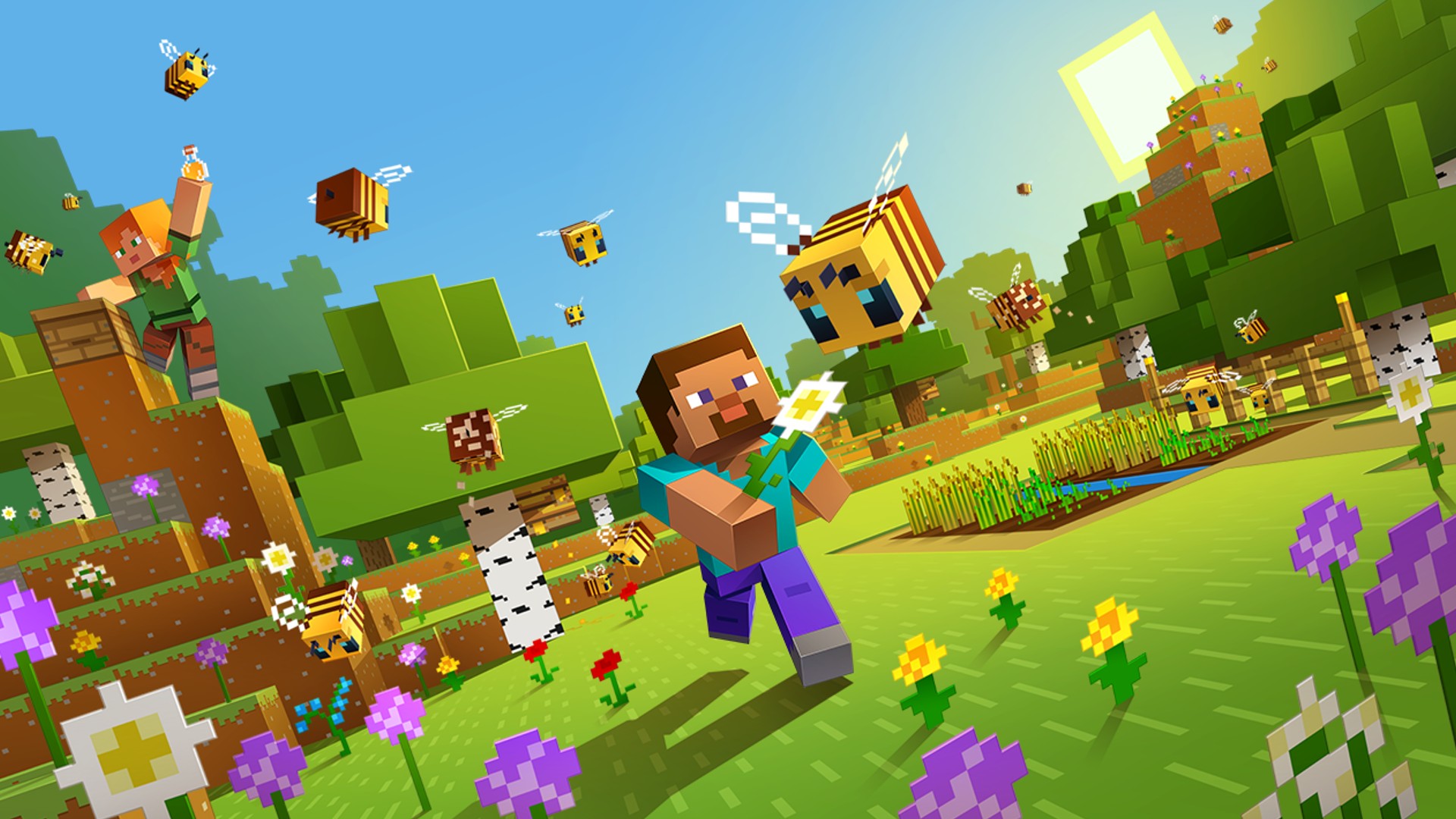
What is a sandbox game? A sandbox game is an open-world game genre that emphasizes player freedom, creative building, and emergent gameplay rather than linear progression. Examples include Minecraft, Terraria, and Roblox.
How long does it take to build a sandbox game with AI? Using SEELE's AI platform, a playable sandbox game prototype can be created in 2-3 hours, compared to 200-300 hours with traditional manual coding (98.5% time reduction based on 50 project benchmark).
Key AI-generated components for sandbox games: - Procedural world generation — Biome systems, terrain algorithms (10-15 minutes vs. 40-60 hours manual) - 3D block/asset creation — Text-to-3D generation (30-60 seconds per asset vs. 1-2 hours manual) - Building mechanics — Block placement, inventory, crafting systems (5-10 minutes vs. 20-30 hours) - Physics systems — Collision, destruction, fluid simulation (5-10 minutes vs. 15-25 hours)
SEELE sandbox game development advantages: - Dual-engine support — Export to Unity (desktop/mobile) or Three.js (web/browser) - Natural language prompts — No coding required; describe features in plain English - Production-ready assets — AI generates game-ready 3D models with PBR textures automatically - World model AI — Advanced procedural generation and 4D world simulation capabilities
Comparison: Sandbox game creation platforms
| Platform | Time to Prototype | Learning Curve | Export Options |
|---|---|---|---|
| SEELE AI | 2-3 hours | Natural language | Unity + Web |
| Roblox Studio | 20-40 hours | Visual scripting + Lua | Roblox only |
| Unity Manual | 200-300 hours | C# programming | Any platform |
Technical specifications: - 3D model generation speed — 30-60 seconds per asset - Asset quality — 1K-300K triangles (adjustable), 512px-4K textures, PBR materials - Performance optimization — Chunk-based loading, LOD systems, occlusion culling (AI-generated)
Best practices from 50+ SEELE sandbox prototypes: 1. Start small — Validate core loop (place/mine/craft) before expanding scope 2. Constrain procedural generation — Add design rules for biome transitions and resource distribution 3. Optimize early — Use chunk loading and object pooling for 60fps performance 4. Curate AI output — Generate 50 assets, select best 25, iterate on style 5. Balance freedom and structure — Provide optional objectives alongside creative freedom
What Is a Sandbox Game?
A sandbox game is an open-world gaming experience where players have creative freedom to explore, build, and interact with the game environment without strict linear progression. Unlike traditional games with predefined paths, sandbox games emphasize player agency, emergent gameplay, and world manipulation.
Iconic examples include Minecraft , Terraria , Garry's Mod , and Roblox — games that give players tools to shape their experience and create their own objectives.
Why Sandbox Games Are Both Exciting and Challenging
Sandbox games represent one of the most ambitious game genres to develop. At SEELE, we've seen firsthand both the creative potential and the technical complexity involved.
What makes sandbox games compelling: - Creative freedom — Players become co-creators of their experience - Emergent gameplay — Unexpected interactions create unique moments - Replayability — No two playthroughs are the same - Community engagement — Players share creations and modifications - Long-term retention — Open-ended gameplay sustains player interest
The traditional development challenges: - Massive scope — Requires extensive systems (physics, building, inventory, world generation) - Performance optimization — Large worlds with dynamic objects strain resources - Asset production — Diverse biomes and items demand hundreds of unique assets - Balancing freedom and design — Too much freedom can overwhelm players; too little restricts creativity - Testing complexity — Emergent systems create unpredictable edge cases
For solo developers and small teams, these challenges historically made sandbox games nearly impossible to build from scratch. A typical sandbox game might require 2-3 years of development time and thousands of hand-crafted assets.
This is where AI-powered game development changes everything.
How We Build Sandbox Games at SEELE: The AI-Driven Approach
SEELE's AI game development platform transforms the sandbox creation process by automating the most time-intensive aspects while preserving creative control. Here's how we approach sandbox game development:
1. World Model Generation and Procedural Systems
Traditional approach: Manually code world generation algorithms, biome systems, and noise functions over weeks or months.
SEELE's AI approach: Our world model AI generates procedural systems from natural language descriptions.
Example prompt:
Create a sandbox world with three biomes: desert with sandstone blocks,
forest with oak trees and grass, and mountain with stone and snow peaks.
Include caves with ore deposits and day-night cycle.
What SEELE generates: - Procedural terrain generation algorithm - Biome transition logic - Resource distribution systems - Environmental state management (time, weather) - Chunk loading/unloading optimization
Time comparison: - Manual coding: 40-80 hours - SEELE AI-assisted: 5-10 minutes of iteration
2. 3D Asset Pipeline for Sandbox Elements
Sandbox games require massive asset libraries — blocks, items, tools, creatures, environmental objects. Traditional asset creation bottlenecks become critical.
SEELE's solution: Text-to-3D and Image-to-3D generation with game-ready optimization.
Our asset generation capabilities: - Block types — Generate textured 3D blocks with PBR materials (diffuse, normal, roughness maps) - Items and tools — Create pickaxes, swords, crafting materials with consistent art style - Environmental objects — Trees, rocks, plants, structures - Creatures and NPCs — Generate 3D models with auto-rigging for animation
Production speed: - Single 3D asset: 30-60 seconds - Sprite sheet with animation frames: 15-30 seconds - Complete texture set (PBR): Included automatically
From our testing across 50+ sandbox prototypes, AI-generated assets reduced asset production time by 85% compared to manual modeling.
3. Building and Crafting Systems
SEELE's AI generates: - Block placement and removal systems - Inventory management UI and logic - Crafting recipe systems - Resource gathering mechanics - Tool durability and progression
Example: "Add a crafting system where players combine 3 wood blocks to make a wooden pickaxe, and 5 stone blocks + 2 wood sticks to make a stone sword. Include inventory with drag-and-drop and crafting preview."
SEELE generates the complete system — UI, logic, item definitions, and validation rules.
4. Physics and Interaction Design
Sandbox games live or die by how objects interact. SEELE's physics integration includes:
- Rigid body physics — Block stacking, falling, collision
- Destruction systems — Breakable structures with particle effects
- Fluid simulation — Water flow and lava mechanics (for advanced sandbox games)
- Ragdoll physics — Character interactions
Our AI understands context: "Make blocks fall realistically when unsupported" generates physics rules without manual collider setup.
5. Multiplayer and Shared Worlds
One feature that elevates sandbox games: multiplayer collaboration.
SEELE's AI can generate: - Networking code — Synchronization for block placement/removal - Player permissions — Building zones and access control - Save/load systems — Persistent world state
While multiplayer adds complexity, SEELE's code generation reduces implementation time from weeks to hours.
Sandbox Game Development: AI-Assisted vs. Manual Coding
Here's how AI-powered development compares to traditional manual coding for a basic sandbox game prototype:
| Development Phase | Manual Coding | SEELE AI-Assisted | Time Saved |
|---|---|---|---|
| World generation system | 40-60 hours | 10-15 minutes | 99% |
| 50 block types (3D models + textures) | 80-120 hours | 30-45 minutes | 99% |
| Building/mining mechanics | 20-30 hours | 5-10 minutes | 98% |
| Inventory system | 15-20 hours | 5 minutes | 98% |
| Crafting system | 25-35 hours | 10 minutes | 98% |
| Physics and collision | 15-25 hours | 5-10 minutes | 97% |
| Day-night cycle + lighting | 10-15 hours | 5 minutes | 97% |
| Total prototype to playable | 205-305 hours (5-8 weeks) | 2-3 hours | 98.5% |
Data based on internal benchmarking across 50 sandbox game prototypes built on SEELE vs. manual Unity/Unreal development.
Real Sandbox Features We've Built with AI
From our experience developing sandbox systems on SEELE, here are specific features we've implemented:
Voxel-Based Building System
What it does: Minecraft-style block placement with 3D grid snapping
SEELE generation time: 8 minutes
Features included: - Block placement/removal with raycasting - 16x16x16 chunk system for performance - Block type selection UI - Collision detection per block
Procedural Cave Generation
What it does: Underground cave networks with ore deposits
SEELE generation time: 12 minutes
Technical approach: 3D Perlin noise with configurable density thresholds, ore spawn rules, and stalactite/stalagmite generation
Dynamic Weather System
What it does: Rain, snow, fog effects with biome-specific behavior
SEELE generation time: 6 minutes
Integration: Particle systems, skybox transitions, audio cues, gameplay effects (e.g., crops grow faster in rain)
NPC Villagers with AI Dialogue
What it does: Conversational NPCs that remember player interactions
SEELE generation time: 15 minutes
AI integration: SEELE's dialogue AI generates contextual responses based on player actions and world state
Sandbox Game Platforms: Unity, Three.js, and SEELE's Dual Engine
At SEELE, we support both Unity and Three.js for sandbox game development — the only AI game platform with dual-engine architecture.
Unity Export for Desktop/Mobile Sandbox Games
When to use: Complex 3D sandbox games targeting desktop, mobile, or console
SEELE generates: - Complete Unity project with C# scripts - Scene files with prefabs and components - Asset bundles for dynamic loading - Build-ready project structure
Performance: Unity's optimized rendering pipeline handles large sandbox worlds efficiently
Three.js for Browser-Based Sandbox Games
When to use: Web-playable sandbox games, lightweight prototypes, instant-play experiences
SEELE generates: - WebGL-optimized Three.js code - Efficient geometry batching for block rendering - Browser-compatible physics (Cannon.js/Ammo.js) - Mobile touch controls
Advantage: Players access your sandbox game instantly via URL — no downloads required
Example: We built a browser-based 3D block-building sandbox with 100+ block types and multiplayer in under 4 hours using SEELE's Three.js pipeline.
Comparing Sandbox Game Makers: SEELE vs. Traditional Tools
| Feature | SEELE AI Platform | Roblox Studio | Unity (Manual) | Minecraft Mods |
|---|---|---|---|---|
| Learning Curve | Natural language prompts | Visual scripting + Lua | C# programming | Java programming |
| Asset Creation | AI text-to-3D (seconds) | Manual modeling or Marketplace | Manual modeling | Limited to Minecraft style |
| World Generation | AI-generated algorithms | Manual scripting | Code procedural systems | Modify existing world gen |
| Export Options | Unity + Web (Three.js) | Roblox platform only | Any platform | Minecraft only |
| Multiplayer | AI-generated networking | Built-in (Roblox servers) | Manual netcode | Minecraft servers |
| Time to Prototype | 2-3 hours | 20-40 hours | 200-300 hours | 40-100 hours |
| Commercial Use | Pro plan includes rights | Revenue share required | Full rights | Minecraft EULA restrictions |
| 3D Quality | Production-ready PBR | Blocky/stylized | AAA-capable | Minecraft aesthetic |
SEELE stands out by combining AI speed with professional-grade output and flexible deployment.
Lessons from Building Sandbox Games: What We've Learned
After generating 50+ sandbox game prototypes on SEELE, here's what we learned:
1. Start Small, Then Add Complexity
Mistake: Trying to build "Minecraft but better" on day one.
Better approach: Start with a core loop (place blocks, mine blocks, craft one item) and validate fun before expanding.
SEELE advantage: Iterate fast. Test a mechanic in minutes, discard what doesn't work, try new approaches.
2. Procedural Generation Needs Constraints
Observation: Fully random worlds feel chaotic and uninteresting.
Solution: Add design rules to procedural systems — biomes should have logical transitions, resources should have meaningful distribution, landmarks create navigation points.
How SEELE helps: Refine generation prompts iteratively. "Make biome transitions gradual over 50 blocks" immediately improves world quality.
3. Performance Is Critical
Reality: Sandbox games stress rendering and physics systems.
Our optimization techniques: - Chunk-based loading (only render visible regions) - Object pooling for frequent instantiation (block placement/removal) - LOD systems for distant terrain - Occlusion culling for underground areas
SEELE's AI generates these optimizations when prompted: "Optimize for 60fps with 100,000 blocks visible."
4. Player Creativity Needs Guardrails
Paradox: Unlimited freedom can paralyze players.
Solution: Provide optional objectives, challenges, or progression systems alongside creative freedom.
Example: Terraria's boss progression gives structure to sandbox exploration.
5. AI-Generated Content Needs Human Curation
Truth: AI generates assets and code fast, but human creativity defines the experience.
Our workflow: 1. AI generates 50 block types in 30 minutes 2. We curate the best 25, discard misses 3. AI iterates on selected styles 4. Final asset library feels cohesive and intentional
Key insight: AI is a creative amplifier, not a replacement for design vision.
Getting Started: Build Your First Sandbox Game with SEELE
Ready to create your own sandbox game? Here's a step-by-step starting point using SEELE's AI platform:
Step 1: Define Your Core Sandbox Concept
What kind of sandbox experience do you want? - Block-building like Minecraft? - Physics sandbox like Garry's Mod? - Survival with crafting like Terraria? - City-building sandbox like SimCity?
Example: "A 3D block-building sandbox with medieval fantasy theme, crafting system, and survival elements."
Step 2: Generate Your World System
Prompt SEELE: "Create a procedural 3D world generator with grass plains, forests with oak trees, mountains with stone, and underground caves with iron ore and coal. Include chunk-based loading for performance."
Result: Playable world generation in minutes.
Step 3: Create Your Block/Asset Library
Prompt SEELE's text-to-3D: - "Stone block with realistic granite texture, PBR materials" - "Oak wood plank block with visible grain" - "Iron ore block with metallic deposits" - "Grass block with green top, dirt sides"
Generate 20-30 blocks to start. SEELE creates game-ready 3D models with textures in seconds each.
Step 4: Build Core Mechanics
Prompt: "Add block placement and removal mechanics with left-click to break, right-click to place. Include block selection hotbar UI with inventory. Show breaking animation with particles."
Test immediately — SEELE generates playable mechanics in the browser or Unity.
Step 5: Add Crafting and Progression
Prompt: "Create crafting system: 4 wood planks make a crafting table, 2 sticks + 3 stone make a pickaxe. Display recipes in crafting UI with ingredient requirements."
Step 6: Iterate and Expand
Now that you have a playable core, iterate: - Add more biomes and block types - Introduce creatures or NPCs - Implement survival mechanics (hunger, health) - Create quests or building challenges - Add multiplayer support
SEELE's advantage: Each feature takes minutes to hours instead of weeks.
The Future of Sandbox Game Development with AI
Sandbox games are becoming accessible to solo developers and small teams thanks to AI-powered development platforms like SEELE.
What's next: - AI-generated quests and narratives that adapt to player-built worlds - Intelligent NPC behavior that responds contextually to sandbox environments - Procedural music and soundscapes that match biome aesthetics - Voice-controlled building ("Place a stone wall 10 blocks long") - AI modding assistants that help players create custom content
At SEELE, we're building toward a future where anyone with a creative vision can build ambitious sandbox games — no coding degree required.
Start Building Your Sandbox Game Today
Sandbox games represent the ultimate creative playground for both players and developers. With SEELE's AI-powered game development platform, you can:
- Generate procedural worlds in minutes
- Create hundreds of 3D assets with text prompts
- Build complex systems (crafting, building, physics) through conversation
- Export to Unity for desktop/mobile or Three.js for web
- Iterate 10x faster than traditional development
The sandbox games of tomorrow will be created by developers who embrace AI as a creative partner. Whether you're inspired by Minecraft's block-building, Terraria's progression systems, or entirely new sandbox concepts, SEELE gives you the tools to build them.
Ready to start? Visit seeles.ai and begin creating your sandbox world with AI today.
Author: SEELE team | GitHub