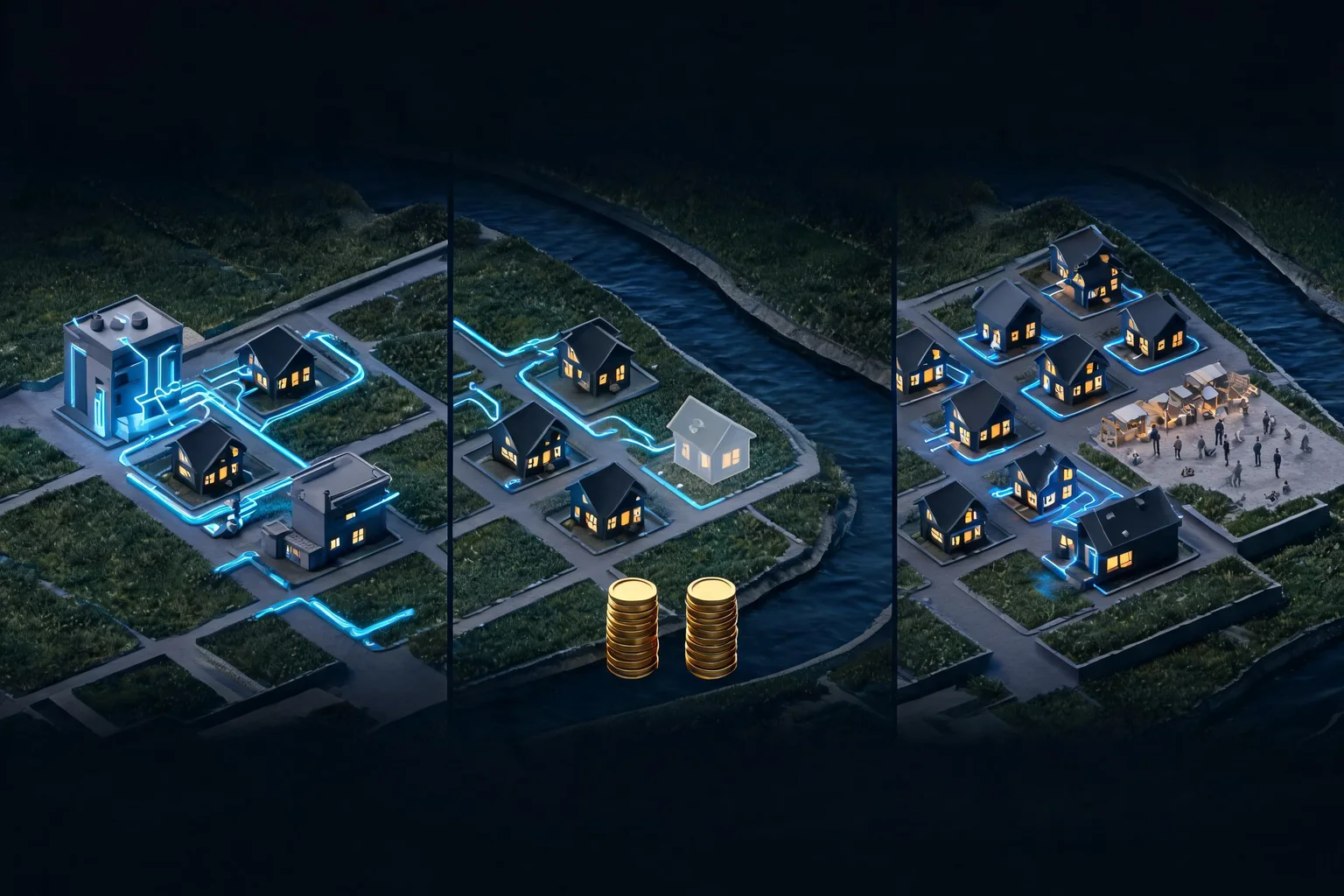
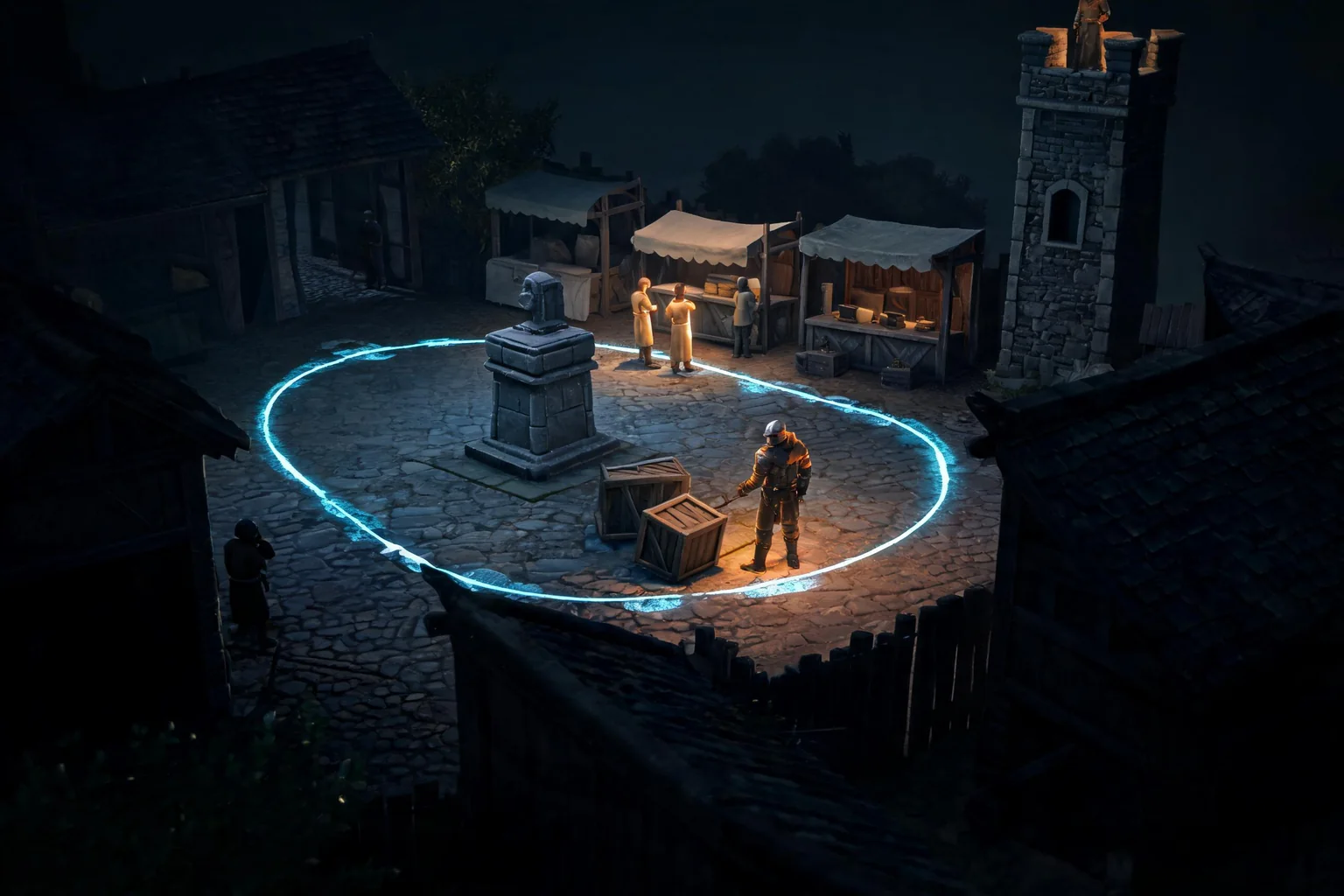
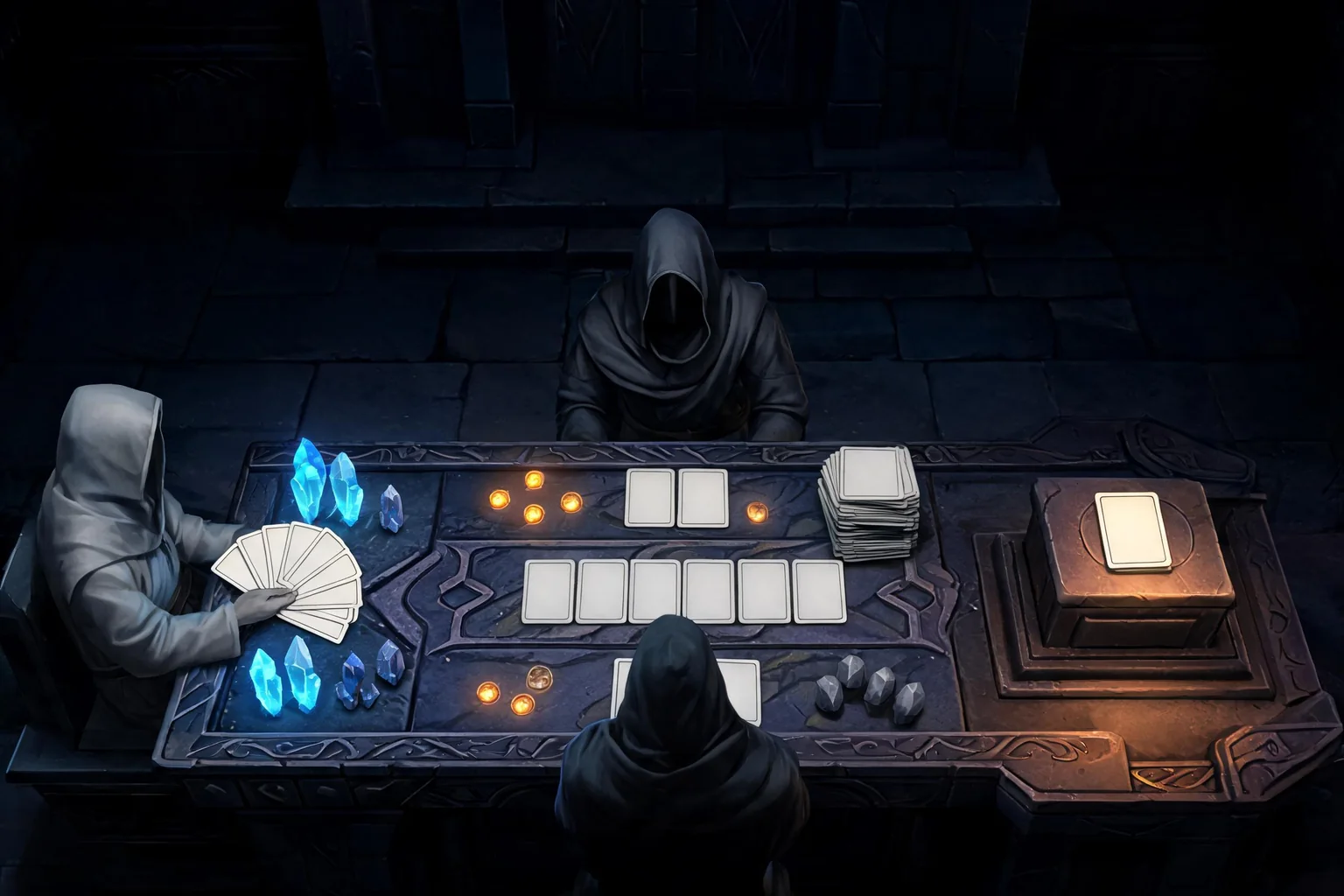
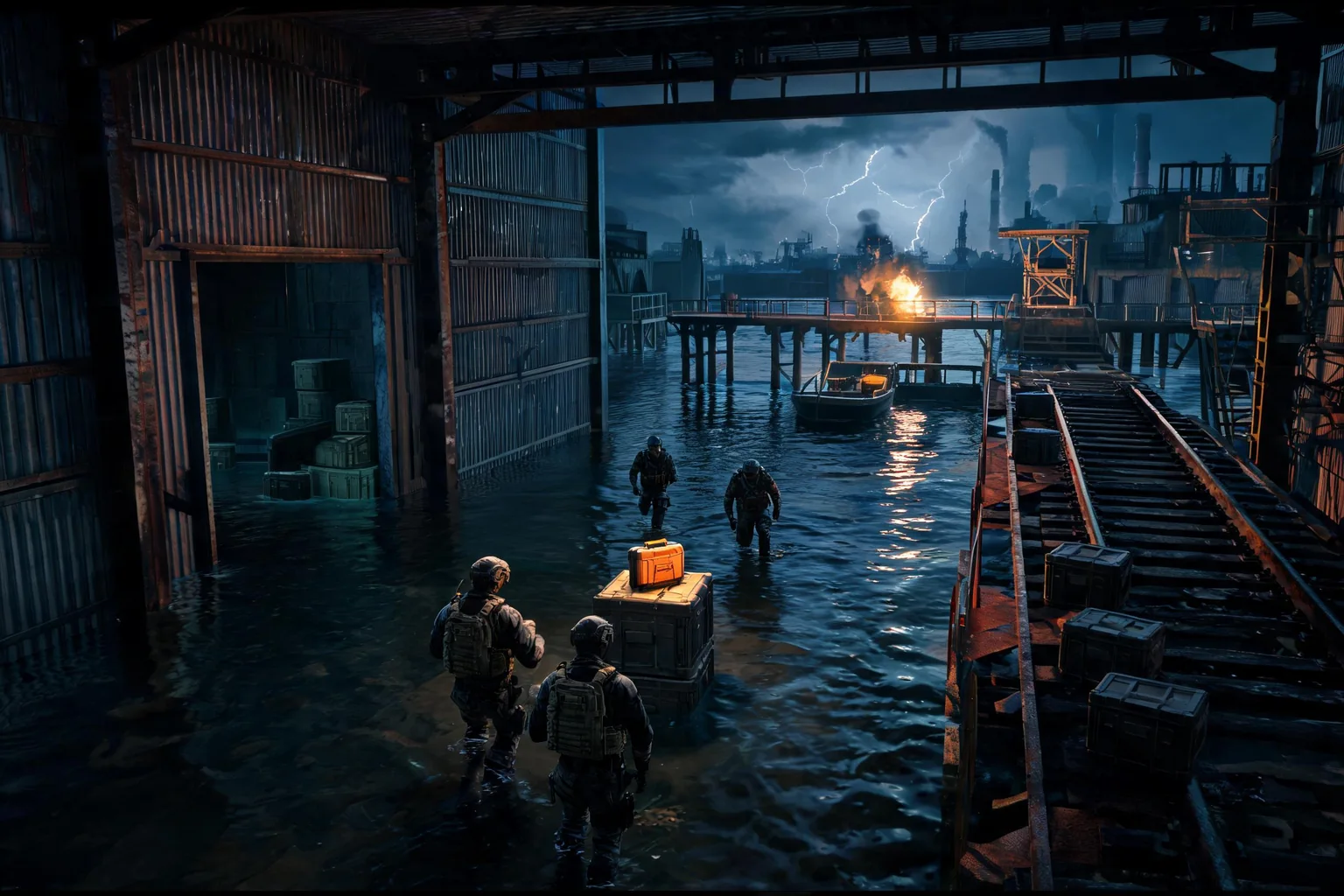
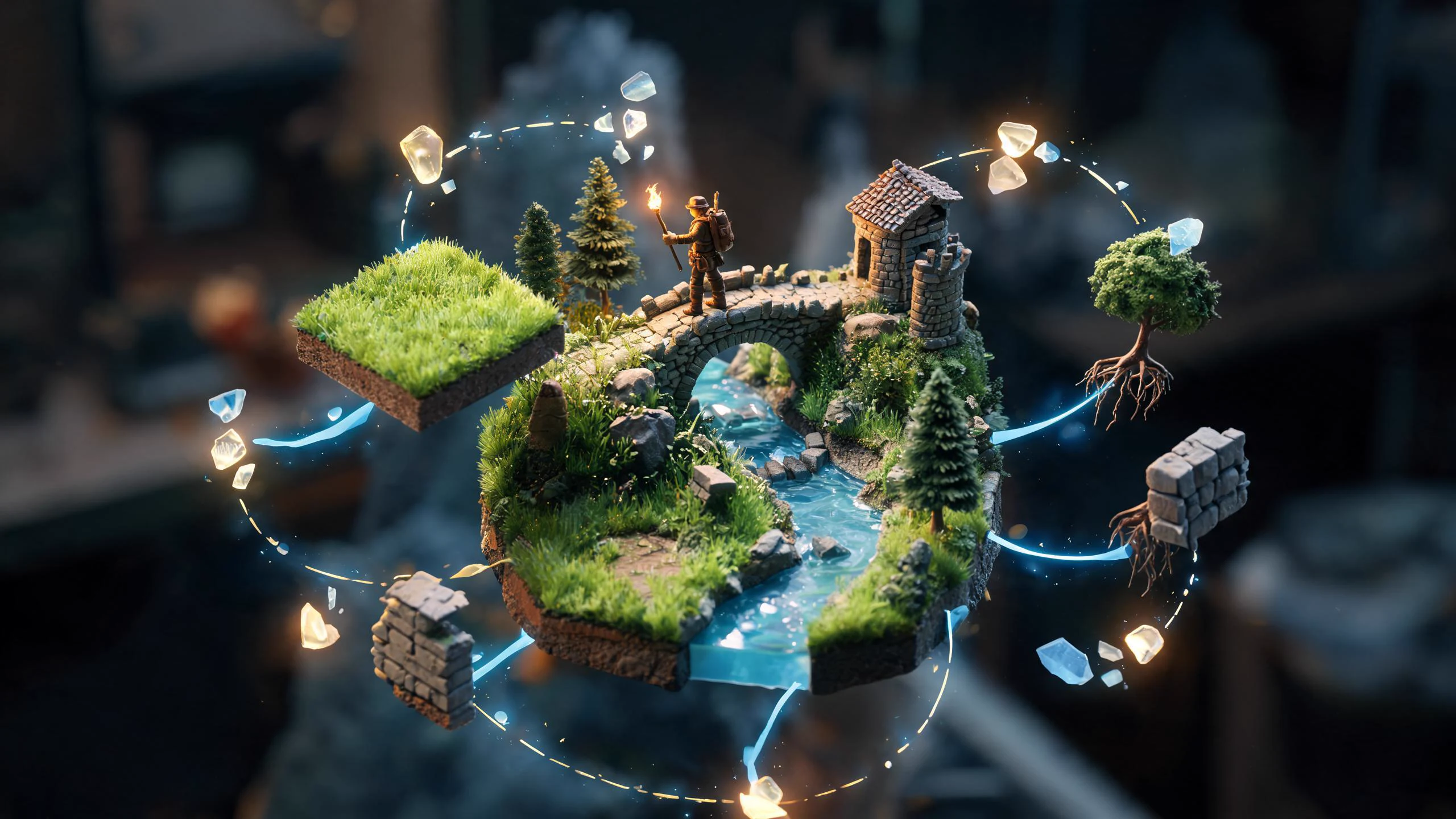
Keep the first slice small
Specify the starting state, objective, completion condition, and reward. Write what happens if the player repeats the interaction before and after completion.

Define the quest giver, player goal, one decision, and what changes afterward. Keep the sequence small enough to play through, then check that objectives and consequences are clear without extra explanation.
Pick a starting point
Specify the starting state, objective, completion condition, and reward. Write what happens if the player repeats the interaction before and after completion.
Specify the starting state, objective, completion condition, and reward. Write what happens if the player repeats the interaction before and after completion.
 Define the quest state ↗
Why SEELE
Specify the starting state, objective, completion condition, and reward. Write what happens if the player repeats the interaction before and after completion.

Implement one dialogue or world interaction and make the active objective visible in the UI or environment. Keep the first pass to one branch.

Complete the quest, leave the area, and reload or revisit it. Check that the objective and reward persist according to the intended design.

Ask a player to complete the quest without guidance. Record where the objective is unclear and adjust only the cue that caused the confusion.

Use a small area, one NPC or object, and a single quest state. Make the objective and reward visible, and verify that leaving or reloading the level does not create an unintended duplicate or lost completion.

Ask a player to complete the quest without guidance. Record where the objective is unclear and adjust only the cue that caused the confusion.
Who it’s for
Define the player, one core mechanic, and one testable outcome for a first Unreal Unreal RPG Game Maker brief. Keep the scope small enough to playtest.
Unreal city builder game maker ↗
Compare Unreal Unreal RPG Game Maker directions against the target player and engine workflow before the team commits to a larger build.
Unreal AI NPC game maker ↗Compare
| Feature | Unreal RPG Game Maker | Starting from scratch |
|---|---|---|
| Starting point | Describe the audience, core loop, and first playable outcome for Unreal RPG Game Maker. | Define the project, engine, and first milestone before implementation. |
| First review | Set review criteria for the controls, content, and visual direction of Unreal RPG Game Maker. | Review the project setup, scene structure, and implementation plan before playtesting. |
| Scope | Begin with one audience, one core mechanic, and one playable outcome for Unreal RPG Game Maker. | Set the engine, asset needs, and implementation scope before building. |
| Prompt detail | State the audience, desired result, format, and main constraint for Unreal RPG Game Maker. | Decide those inputs separately before testing a focused direction. |
| Review boundary | Check the first Unreal RPG Game Maker result against quality, rights, continuity, and intended audience. | Write the review checks separately before expanding the project. |
Reviews
FAQ
State the quest start, objective, decision, possible outcomes, and completion cue. Include any character or world state that should change.
Show the outcome in the scene, dialogue, or next task. Ask players what they think changed and compare that with the intended consequence.
Start with one playable segment. Expand the chain after the objective, choice, and outcome are understandable.
Before a first Unreal RPG Game Maker project, define the task, intended audience, one visible outcome, and a constraint. Use Define the task as a direction that fits the brief.
To get started with Unreal RPG Game Maker, use Describe the job as the first step. Set one goal, audience, and constraint; test a small version, then change one thing at a time.
Ask someone who matches the intended player or viewer for Unreal RPG Game Maker to test its main action. Note where the brief is unclear, then revise once before adding features.
For Unreal RPG Game Maker, try Define the task first. Define the action, outcome, and one constraint, then compare another direction only if the first misses the brief.
Check the Unreal RPG Game Maker result against the brief, intended behavior, and first workflow step. Record one mismatch and test that change before expanding scope.
Scope a first Unreal RPG Game Maker prototype to Define the task, one user action, and one visible outcome. Defer secondary features until that path works.
Compare Define the task and Set expected output for Unreal RPG Game Maker using the same user action and visible outcome. Choose the direction that fits the brief with fewer assumptions.
After reviewing Unreal RPG Game Maker, record one gap between the brief and result. Make one focused change, then test the same action against the original outcome.
Match a linked tool's input and output to one need in the Unreal RPG Game Maker brief. If it does not support that step, skip it and keep the test in the main project.
Review the linked guides most relevant to Unreal RPG Game Maker. Choose one based on your question and check its scope before applying the steps.