Start with a compact district
Make road and service relationships visible.

Choose a building and define where it can go, what it costs, and how placement changes the settlement. Make the feedback visible so a player can understand the tradeoff without a long tutorial.
Pick a starting point
The district goal is countable.
Give the player a 12×12 tile block, a road, and a goal to place four homes within service range of a water station.
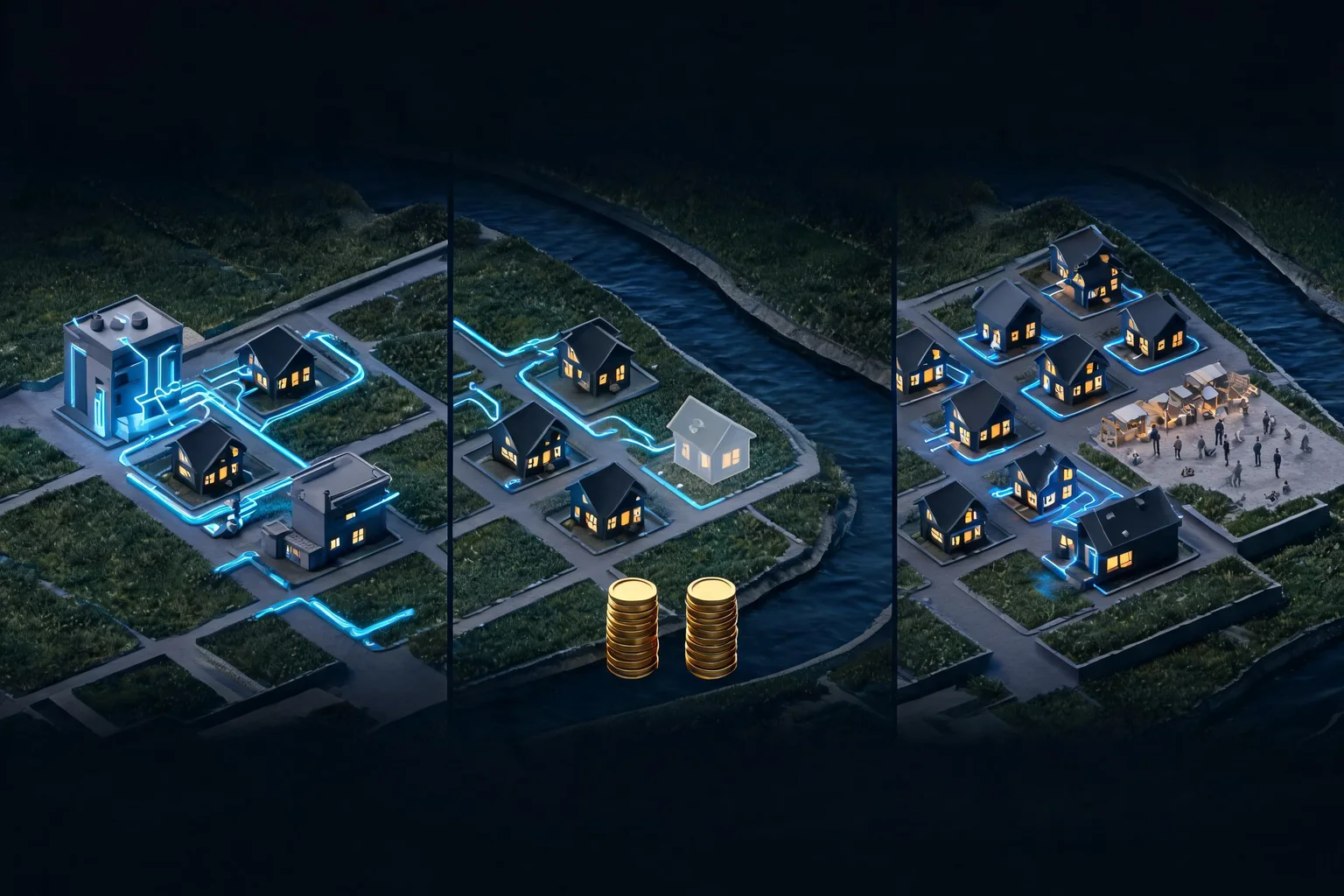 Core game loop ↗
Why SEELE
Make road and service relationships visible.

Help players understand service reach.

Keep unbalanced values out of factual claims.

Show spending before confirmation.

Let players see what each building changes.

Test labels and overlays at target resolution.
Who it’s for
Define the player, one core mechanic, and one testable outcome for a first Unreal city builder game maker brief. Keep the scope small enough to playtest.
AI game generator workflow ↗
Compare Unreal city builder game maker directions against the target player and engine workflow before the team commits to a larger build.
Create AI City Builder Game Maker with AI ↗Compare
| Feature | Unreal City Builder Game Maker | Starting from scratch |
|---|---|---|
| Starting point | Describe the audience, core loop, and first playable outcome for Unreal City Builder Game Maker. | Define the project, engine, and first milestone before implementation. |
| First review | Set review criteria for the controls, content, and visual direction of Unreal City Builder Game Maker. | Review the project setup, scene structure, and implementation plan before playtesting. |
| Scope | Begin with one audience, one core mechanic, and one playable outcome for Unreal City Builder Game Maker. | Set the engine, asset needs, and implementation scope before building. |
| Prompt detail | State the audience, desired result, format, and main constraint for Unreal City Builder Game Maker. | Decide those inputs separately before testing a focused direction. |
| Review boundary | Check the first Unreal City Builder Game Maker result against quality, rights, continuity, and intended audience. | Write the review checks separately before expanding the project. |
Reviews
FAQ
Start with one placement rule, one resource cost, and a visible result. Test whether the player can predict what the choice will change.
Show valid and invalid placement states, the relevant cost, and the outcome after placement. Check readability at the camera distance used in the game.
No. A small block can reveal whether the placement and resource loop is understandable before you add larger systems.
Before a first Unreal City-Builder Game project, define the task, intended audience, one visible outcome, and a constraint. Use Starting condition as a direction that fits the brief.
To get started with Unreal City-Builder Game, use Describe the job as the first step. Set one goal, audience, and constraint; test a small version, then change one thing at a time.
For Unreal City-Builder Game, name the intended user, one action, and a visible outcome. Use Starting condition as a starting direction and add one requirement from its example prompt.
Ask someone who matches the intended player or viewer for Unreal City-Builder Game to test its main action. Note where the brief is unclear, then revise once before adding features.
For Unreal City-Builder Game, try Starting condition first. Define the action, outcome, and one constraint, then compare another direction only if the first misses the brief.
Check the Unreal City-Builder Game result against the brief, intended behavior, and first workflow step. Record one mismatch and test that change before expanding scope.
Scope a first Unreal City-Builder Game prototype to Starting condition, one user action, and one visible outcome. Defer secondary features until that path works.
Compare Starting condition and Key decision for Unreal City-Builder Game using the same user action and visible outcome. Choose the direction that fits the brief with fewer assumptions.
After reviewing Unreal city builder game maker, record one gap between the brief and result. Make one focused change, then test the same action against the original outcome.
Match a linked tool's input and output to one need in the Unreal City-Builder Game brief. If it does not support that step, skip it and keep the test in the main project.