Curate the answer bank
Choose entries and accepted aliases you can review; do not assume the reference game’s data is available.

Outline an original daily word game with a reviewed answer bank, clear validation and a scoring rule you can explain. This page is independent from Moonshot and its publisher.
How it works
Start with a reviewed list and a small round. Add categories only after aliases and scoring are clear.

Start with a topic that has a clear boundary and enough reviewed answers for one short round.
Record accepted names, aliases and sources; mark any tiers as game-defined labels.
Specify the answer count, duplicate behavior, invalid-entry feedback and scoring table.
Choose a timezone and reset point; keep practice play separate from the daily result.
Submit a prompt through the available account flow, then test aliases, duplicates, invalid words and the final score before sharing.
Pick a starting point
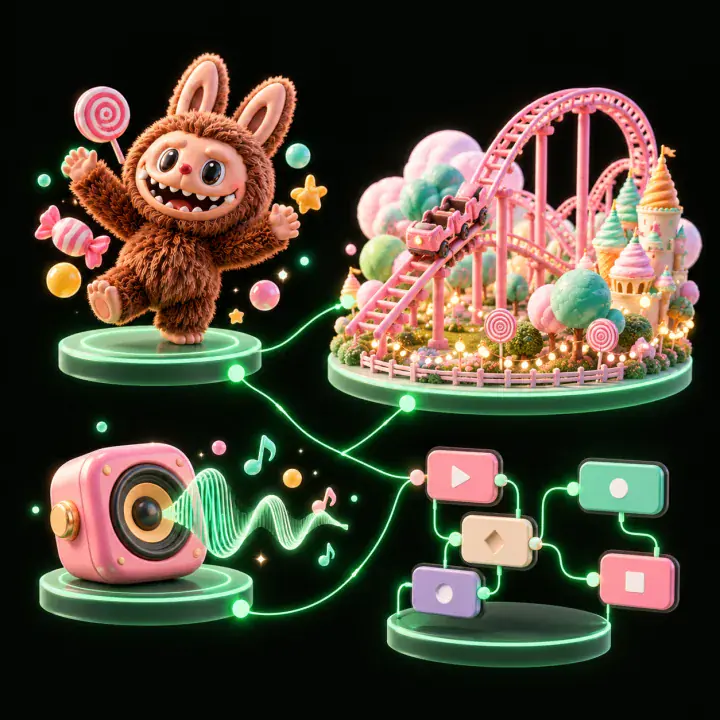
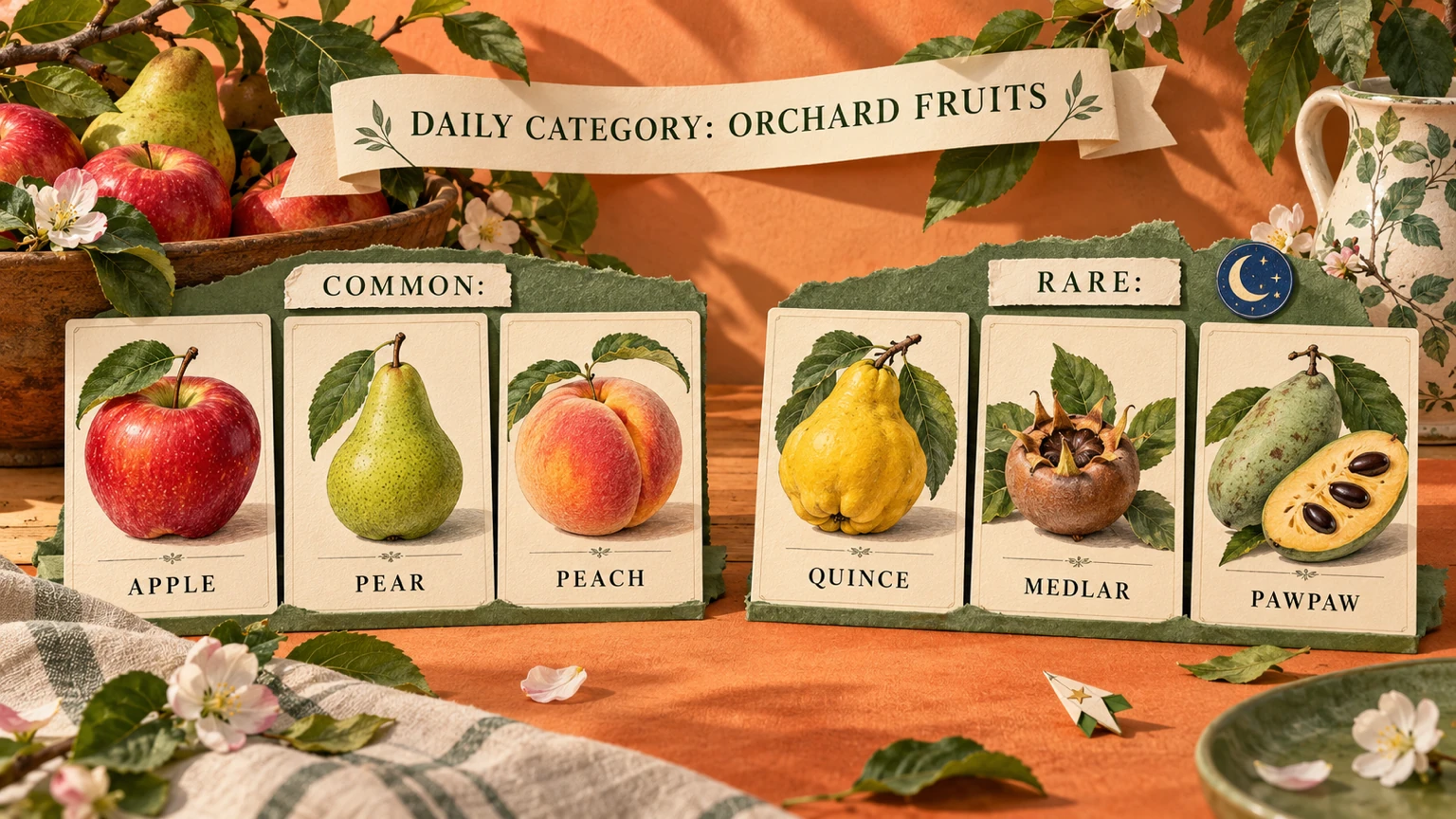
These AI concept illustrations are visual directions, not generated gameplay or factual rarity data.
Sort familiar and less familiar fruit names using editorial tiers, not survey data. AI concept illustration, not gameplay.
Build an original daily fruit-category game with its own name and art. Curate an answer bank you can use, normalize common aliases and decide how regional names are handled. Ask the player to submit a set number of distinct fruit names; validate each entry, reject repeats, and show an editorial tier label after acceptance. Define the scoring table and make clear that the tiers are designed for this game rather than measured population statistics. Use a stable daily seed and stated timezone, include practice mode separately, and show a results screen with the accepted list. Do not copy Moonshot’s branding, interface, text or proprietary answer bank. Test aliases, misspellings, duplicate entries and words outside the selected category.
 Fruit Basket ↗
Why SEELE
Choose entries and accepted aliases you can review; do not assume the reference game’s data is available.

Describe familiar or rare as a game-defined category unless you have a cited measure.

Normalize aliases and define how duplicates, misspellings and invalid words are handled.

State points per tier, turn limits, ties and the end-of-round reveal.

Choose a timezone and keep practice rounds distinct from the daily challenge.

Check spelling, regional usage, category boundaries and data rights before sharing.
Who it’s for
Use the prompts to plan an original game. This page is not connected to the reference publisher.
Plan a category loop with a clear answer count, tier rule and score reveal.
Explore puzzle creation ↗
Use a reviewed vocabulary set to explore categories, aliases and how game rules shape feedback.
Explore game creation ↗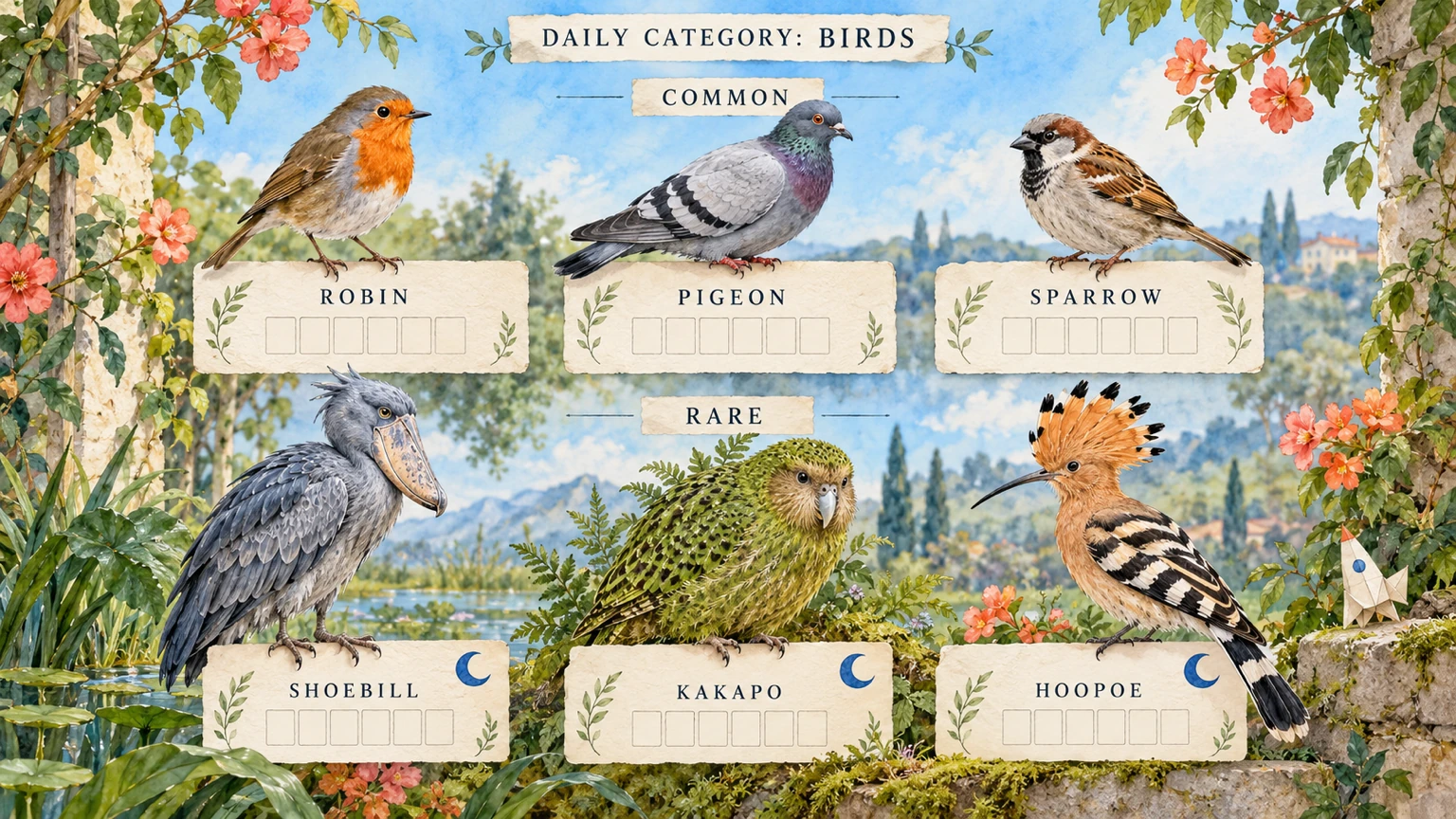
Test an original daily challenge without relying on another game’s name or answer data.
Explore puzzle prototypes ↗Compare
Check the reference publisher for its current official rules. This page is for an independent prototype.
| Feature | Create an original category game | Explore the reference game |
|---|---|---|
| Goal | Create an original category challenge and identity. | Play the reference game under its own current rules. |
| Vocabulary | Curate an answer set and aliases you can review. | Check the reference publisher’s own content and terms. |
| Tiers | Use transparent, game-defined labels and scoring. | Follow the reference game’s own categories and scoring. |
| Artwork | Make original names, copy and visual assets. | Use the game as a genre reference; do not reuse its assets. |
| Validation | Test aliases, duplicates, misspellings and daily reset behavior. | Use the official experience for its published challenge. |
Reviews
Videos reflect their creators’ own experiences; results and access depend on the current product flow.
Explore related game-making pages, guides and planning tools.
FAQ
This page helps you plan an original daily word-category prototype with a curated answer list and scoring rules. It is independent from Moonshot, is not its official game and is not affiliated with its publisher.
No. Use the reference only to understand the broad daily-category format. Create your own title, visual identity, text and answer data; do not copy proprietary content.
Choose a specific category boundary, record a source or editorial rule, and list accepted aliases. Test edge cases before you count an answer as valid.
You can use “rare” as a game label if you define what it means. Do not imply that it measures real-world frequency unless you have a cited method and data.
Set points by tier or another rule you can explain, then define turn limits, ties, duplicate answers and the final reveal.
List accepted aliases, choose a canonical display name and show the player why the entry was accepted. Do not silently merge distinct words without review.
Choose whether to reject, retry or consume a turn, and show a clear message. Test repeated answers, misspellings and words just outside the category.
Describe the timezone, reset moment and stable daily seed. Verify the behavior around date changes; a prompt alone does not prove a scheduled reset works.
Yes, if you can cite and review each fact. Keep educational notes distinct from game-defined rarity tiers and verify sources before publication.
Use original naming, artwork, copy, layouts and answer data. Treat the reference as a genre cue, and confirm rights for any external material you include.
Try accepted aliases, duplicate entries, invalid words, score boundaries, the daily reset and the results screen before adding more categories.
Request labeled input, keyboard operation, readable error messages and non-color-only tier cues; then check those behaviors in the actual prototype.
Treat it as a first pass. Review accuracy, data rights, spelling, accessibility and behavior in the destination environment before release.
The page uses the current SEELE AI creation flow. Sign-in, available credits, generation options and export choices depend on the account and workspace shown at submission time.
Choose a small answer set, make the tier and score rules explicit, then test a complete round.
Start my word game →