Tooling intent · separate model, client, protocol, server, and engine

Claude Opus 5 + Claude Code + MCP for Unreal

Plan a Claude Opus 5, Claude Code, and MCP workflow for Unreal with honest integration boundaries, least privilege, exact tools, review gates, native validation, and SEELE handoff.

Direct answer

Claude Opus 5 is a model; Claude Code is a coding-agent client; MCP is a protocol; an Unreal MCP server or plugin is a separate implementation. Do not call the combination an official Unreal integration unless Anthropic or Epic publishes one. Inventory the exact server, tools, transport, permissions, project version, and failure behavior, then validate every edit or editor action in the native Unreal project.

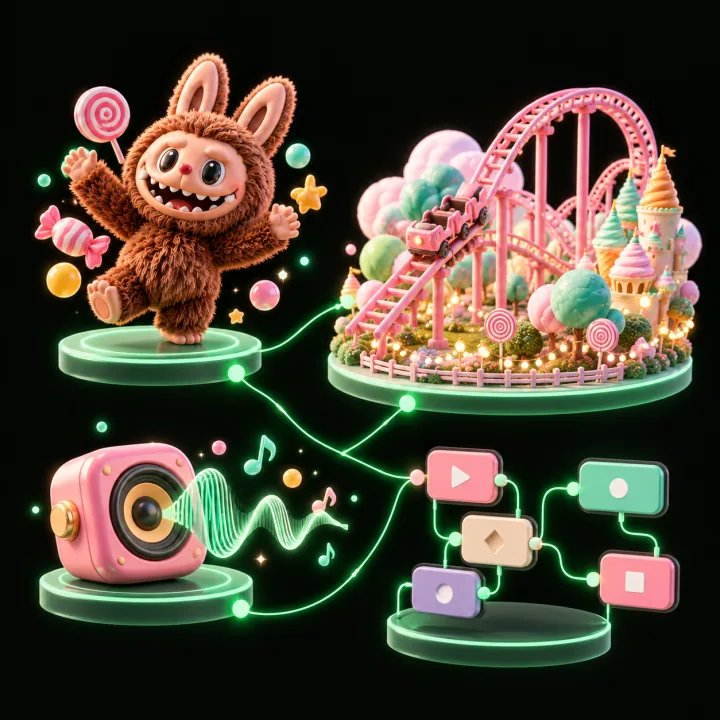
Seedream concept art of guarded source, tool, build, and Unreal test stations connected through permission gates
SEELE editorial concept created with Seedream 5.0. It is not an Anthropic or Epic asset, not a real Unreal Editor screenshot, not gameplay, and not proof of an official integration.

Start building an Unreal 5 game in SEELE

Choose a concrete prompt, open the SEELE Unreal creator, review the prefilled brief, and generate the native project. The first prompt is tailored to this page; the remaining prompts are reusable starting points.

Use this page's scoped brief

Create a native Unreal 5 cooperative-style puzzle that remains fully playable solo: the player routes energy between three stations, opens a vault, collects an artifact, and exits. Make state changes visually obvious, prevent invalid sequences, support reset, and structure the project so interaction, puzzle state, and level presentation have clear ownership. Provide a browser-preview path under five minutes.

Use this prompt in SEELE

Generate a mountain exploration game

Use Unreal Engine to generate a simple third-person tour game with mountains and water. Include responsive movement, a clear route, one completion state, failure recovery, immediate restart, browser preview, and a native downloadable Unreal 5 project.

Use this prompt in SEELE

Generate a playable dungeon crawler

Build a compact dungeon crawler using Unreal Engine. Include third-person movement, one combat loop, two connected rooms, one key-and-door objective, visible health and feedback, death, completion, immediate restart, browser preview, and a native downloadable Unreal 5 project. Test and regress the result.

Use this prompt in SEELE

Generate a city tour with weather

Create a native Unreal 5 third-person city tour with a compact walkable district, vegetation, landmark lighting, and sunny, cloudy, and rainy weather states. Include clear controls, browser preview, stable restart behavior, packaging checks, and local project download.

Use this prompt in SEELE

What SEELE gives you after generation

Native Unreal 5 project

An inspectable Unreal project rather than a model answer or an unofficial integration claim.

Browser preview

A fast way to check camera, controls, objective clarity, feedback, completion, failure, and restart before local continuation.

Optimization and packaging path

A workflow for performance review and package preparation before external distribution.

Downloadable project

A local project handoff for source, Blueprint, asset, plugin, rights, build, target-device, and release review.

What is verified—and what it means for Unreal

Model layer

The model interprets context and decides what to propose or which approved tool to call; it does not itself provide an Unreal connection.

Client layer

Claude Code or another client manages conversations, files, commands, permissions, checkpoints, and the presentation of MCP tools.

MCP layer

MCP standardizes discovery and invocation, but each server defines its real tools, trust boundary, transport, authentication, version support, and maintenance quality.

Engine layer

Unreal Editor, source, assets, build tools, automation, packaging, source control, and project-specific plugins remain the authority for the game.

A five-stage Claude Code and MCP integration planning workflow

Inventory the stack

Record the Opus model ID, client version, MCP server repository and revision, plugin or bridge version, transport, launch command, credentials, Unreal version, target project, and every exposed tool.

Classify each tool

Separate read-only inspection, source writes, asset changes, editor actions, builds, tests, network calls, uploads, publishing, and destructive operations. Default to the smallest useful set and require confirmation at irreversible boundaries.

Run a disposable project test

Use a clean sample project to test discovery, parameter validation, timeouts, cancellations, stale handles, editor restart, malformed outputs, concurrent calls, large assets, and recovery before touching production work.

Trace one real task

Follow request, model decision, client permission, MCP call, server action, Unreal state change, output, native verification, and rollback. Preserve logs at every boundary so failures are attributable.

Choose the creation path

For users who want the game rather than infrastructure, use SEELE AI to generate and preview a native Unreal 5 project directly. Adopt a custom Claude Code/MCP stack only when its engineering control justifies the added operational surface.

Failure modes to block before adoption

Risk 1

A working npm package or MCP handshake does not prove an Unreal tool is correctly bound to the project or editor.

Risk 2

Tool names can conceal broad shell, filesystem, editor, network, or publishing authority.

Risk 3

Plugin and server versions can drift from the engine version and silently change schemas or behavior.

Risk 4

Screenshots and success strings are not sufficient evidence that the intended asset, source, build, or packaged state changed.

Decision scorecard

DimensionWhat good looks likeEvidence to keep
DiscoveryExact tools and schemas are visible and versionedManifest, server revision, and live capability listing
SafetyEach operation has least privilege, confirmation, audit, timeout, and cancellationAdversarial permission and malformed-input tests
CorrectnessTool output matches the real Unreal stateIndependent source, asset, editor, build, and runtime inspection
RecoveryClient, server, editor, and project recover from partial failureKill, restart, stale-session, and rollback tests

Unreal implementation notes for this decision

Treat every MCP server as a capability grant

Document the server identity, transport, executable or endpoint, credentials, tool schema, read and write targets, network destinations, confirmation rules, timeout, logging, and revocation path. A friendly tool name is not a security or correctness boundary.

Separate observation from mutation

Repository search, log reads, asset inspection, build status, and editor state can often remain read-only. File edits, Blueprint changes, package installation, source-control actions, builds, packaging, cloud operations, and publishing should require progressively stronger approval and isolation.

Verify the actual tool result

A successful tool call may still target the wrong workspace, branch, map, asset, configuration, account, or build. Cross-check returned paths and identifiers, inspect diffs and dirty assets, and run native tests before trusting the orchestration transcript.

From evaluated idea to a SEELE native Unreal project

Use the model research to tighten the brief, not to replace project evidence. The direct creation path is deliberately short and observable:

1. Bound the player loop

Keep one camera, one primary verb, one objective chain, explicit failure and completion, restart behavior, visual direction, controls, target session length, and a clear cut list.

2. Generate in SEELE

Open the canonical Unreal creator, choose the closest verified starter world, submit the brief, and generate a native Unreal 5 project rather than treating a text answer as the deliverable.

3. Inspect the browser preview

Play the result from start through success, failure, and restart. Check camera, input, objective clarity, feedback, interaction state, visual hierarchy, and obvious performance or stability problems.

4. Download or continue production

Review the project, source, Blueprints, assets, plugins, rights, configuration, performance, saves, networking, cook, package, and target requirements before local continuation or external release.

Starter creation brief

Create a native Unreal 5 cooperative-style puzzle that remains fully playable solo: the player routes energy between three stations, opens a vault, collects an artifact, and exits. Make state changes visually obvious, prevent invalid sequences, support reset, and structure the project so interaction, puzzle state, and level presentation have clear ownership. Provide a browser-preview path under five minutes.

Official evidence and capability boundary

Snapshot date: July 25, 2026. Anthropic's July 24, 2026 announcement is the first-party source for release status, pricing, positioning, and launch availability. It does not claim an Epic-supported Unreal integration. Epic documentation and the exact project remain authoritative for engine behavior, compilation, assets, tests, cooking, packaging, and target-platform results.

Anthropic release

Release date, claude-opus-5 model ID, coding and agent positioning, pricing, Fast mode, alignment, safety, and availability.

Open official announcement

Developer guidance

Re-check current model behavior, API surface, prompting guidance, limits, effort settings, and migration notes before production use.

What's new in Opus 5 · Prompting guide

Continue through the Claude Opus 5 × Unreal cluster

Claude Opus 5 Pricing for Unreal Work

Calculate Claude Opus 5 cost for Unreal coding and agent tasks using official $5/$25 token pricing, effort, cache behavior, tools, retries, review time, and task-level budgets.

Read this guide

Claude Opus 5 vs GPT-5.6 for Unreal

Compare Claude Opus 5 and GPT-5.6 for Unreal coding, debugging, agents, computer use, cost, safety, native validation, and task routing without unsupported winner claims.

Read this guide

Secure Claude Opus 5 Unreal Agent Workflows

Threat-model Claude Opus 5 Unreal agent workflows across source, assets, tools, prompts, credentials, builds, plugins, publishing, data handling, approvals, and SEELE handoff.

Read this guide

Frequently asked questions

Does Claude Opus 5 include Unreal MCP?

No such inclusion is established by the cited release. The model, client, protocol, MCP server, and Unreal integration are separate layers.

Is Claude Code an Unreal plugin?

Claude Code is a coding-agent product, not an Unreal Editor plugin. A third-party bridge may connect them and must be evaluated separately.

What permissions should an Unreal MCP server have?

Begin with read-only project inspection, then add narrowly scoped writes or editor actions only after tests, audit, confirmation, and rollback are proven.

How do I verify a tool action?

Inspect the actual file, asset, editor state, build output, runtime behavior, and source-control diff rather than trusting the tool response alone.

When is SEELE the simpler choice?

When the goal is to generate a native Unreal project and playable result rather than maintain a custom agent-to-editor integration stack.

What should be logged for a Claude Code or MCP Unreal run?

Log the model and client, server and tool identity, workspace and revision, parameters, permissions, confirmations, outputs, changed files or assets, native test results, failures, and rollback.

Turn the research into a native Unreal 5 game

Open the canonical SEELE Unreal creator, choose a verified starter world, generate the native project, inspect the browser preview, then download or continue optimization and packaging. Keep third-party model evaluation and project evidence separate.