Programming intent · inspectable source and graph changes

Claude Opus 5 for Unreal C++ and Blueprints

Test Claude Opus 5 on Unreal C++ and Blueprint work with exact context, reviewable diffs, compile evidence, automation, packaged checks, security, and rollback.

Direct answer

Opus 5 may be useful for repository navigation, C++ planning, code review, log analysis, and translating Blueprint behavior into explicit state. Keep each task narrow and supply the exact Unreal version, module, class, graph evidence, error, and acceptance checks. Accept nothing until the actual project compiles, runs, reopens, cooks, packages, and passes the relevant tests.

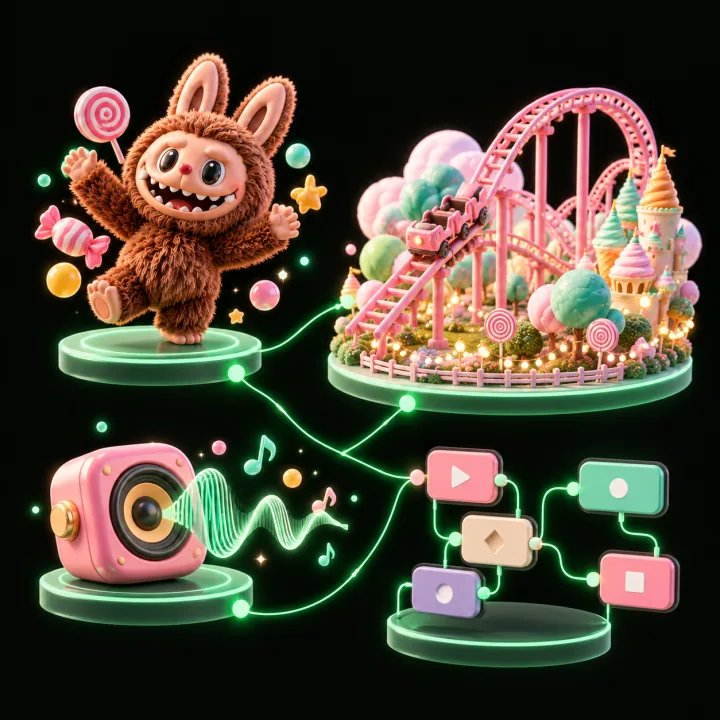
Seedream concept art of Unreal C++ structures and Blueprint-like nodes converging on a tested gameplay mechanic
SEELE editorial concept created with Seedream 5.0. It is not an Anthropic or Epic asset, not a real Unreal Editor screenshot, not gameplay, and not proof of an official integration.

Start building an Unreal 5 game in SEELE

Choose a concrete prompt, open the SEELE Unreal creator, review the prefilled brief, and generate the native project. The first prompt is tailored to this page; the remaining prompts are reusable starting points.

Use this page's scoped brief

Create a native Unreal 5 arena prototype where a third-person character activates three elemental switches in any order. Represent switch state clearly, unlock a central door only after all states are valid, prevent duplicate activation, support death and restart, and expose a clean separation between reusable switch behavior and level-specific progression. Include visible feedback and a short browser-preview test path.

Use this prompt in SEELE

Generate a mountain exploration game

Use Unreal Engine to generate a simple third-person tour game with mountains and water. Include responsive movement, a clear route, one completion state, failure recovery, immediate restart, browser preview, and a native downloadable Unreal 5 project.

Use this prompt in SEELE

Generate a playable dungeon crawler

Build a compact dungeon crawler using Unreal Engine. Include third-person movement, one combat loop, two connected rooms, one key-and-door objective, visible health and feedback, death, completion, immediate restart, browser preview, and a native downloadable Unreal 5 project. Test and regress the result.

Use this prompt in SEELE

Generate a city tour with weather

Create a native Unreal 5 third-person city tour with a compact walkable district, vegetation, landmark lighting, and sunny, cloudy, and rainy weather states. Include clear controls, browser preview, stable restart behavior, packaging checks, and local project download.

Use this prompt in SEELE

What SEELE gives you after generation

Native Unreal 5 project

An inspectable Unreal project rather than a model answer or an unofficial integration claim.

Browser preview

A fast way to check camera, controls, objective clarity, feedback, completion, failure, and restart before local continuation.

Optimization and packaging path

A workflow for performance review and package preparation before external distribution.

Downloadable project

A local project handoff for source, Blueprint, asset, plugin, rights, build, target-device, and release review.

What is verified—and what it means for Unreal

C++ context

Include Build.cs boundaries, headers, sources, reflection macros, ownership, lifetime, threads, replication, target, and exact compiler or Unreal Header Tool output.

Blueprint context

Include parent class, interfaces, components, events, variables, defaults, authority, node text, screenshots, inputs, outputs, and the failing state transition.

Diff discipline

Require the smallest file or graph responsibility change, an explanation of assumptions, tests that can falsify the proposal, and a clean revert point.

Native proof

Compiler success alone is insufficient; test runtime behavior, editor restart, save/load, networking where relevant, cooking, packaging, and the target device.

A five-stage C++ implementation and Blueprint engineering workflow

Reproduce before prompting

Checkout a clean revision, reproduce the issue, capture the first compiler, UHT, runtime, Blueprint, automation, or packaged failure, and record the exact path. If the baseline cannot be reproduced, stop and improve the evidence.

Constrain the authority boundary

Name the module, class, function, Blueprint, subsystem, target, and files the model may inspect or propose changing. State forbidden areas and require uncertainty rather than invented symbols.

Request a minimal proposal

Ask for root-cause reasoning, a small change plan, the exact diff or graph operations, compatibility assumptions, expected warnings, tests, and rollback. Separate observed facts from engine-version assumptions.

Apply under review

A developer inspects the proposal for ownership, lifetime, garbage collection, reflection, threading, replication, serialization, input, save compatibility, and project conventions before implementing it.

Run the full acceptance path

Build the affected targets, compile Blueprints, run automation, repeat success and invalid paths, restart the editor, reopen assets, cook and package, test the target configuration, and revert to confirm causality when uncertain.

Failure modes to block before adoption

Risk 1

Invented engine symbols and version-agnostic includes often look plausible until compilation.

Risk 2

Blueprint screenshots hide defaults, collapsed graphs, macros, latent actions, parent behavior, and unconnected pins.

Risk 3

Repository-wide cleanup can obscure the root cause and create unreviewable generated churn.

Risk 4

A passing editor test can still fail in standalone, dedicated server, cooked, packaged, or target-device execution.

Decision scorecard

DimensionWhat good looks likeEvidence to keep
OwnershipChange is located in the real owning subsystemArchitecture trace and known-correct maintainer review
Edit qualityDiff is minimal, typed, version-aware, and convention-compatibleCompiler, UHT, linter, code review, and graph compile
BehaviorNormal, invalid, repeated, interrupted, reload, and restart states remain correctAutomation and reproducible runtime evidence
ShippingCooked and packaged targets preserve the expected resultTarget configuration, device, networking, save, and performance checks

Unreal implementation notes for this decision

Trace ownership before syntax

Ask which module, subsystem, actor, component, interface, data asset, or Blueprint should own the behavior and why. A syntactically correct change in the wrong lifecycle or authority boundary creates harder failures than an obvious compiler error.

Test Blueprint and C++ contracts together

When native code changes reflected types, delegates, defaults, interfaces, replication, serialization, or component creation, reopen dependent assets and compile affected Blueprints. Check default-object changes, stale nodes, renamed pins, redirectors, saved instances, and cooked behavior.

Keep generated churn outside the decision

Separate intentional source or graph changes from project files, binaries, intermediate output, derived data, automatically resaved assets, and formatter noise. Review the smallest causal diff and preserve a clean rollback point before broader cleanup.

From evaluated idea to a SEELE native Unreal project

Use the model research to tighten the brief, not to replace project evidence. The direct creation path is deliberately short and observable:

1. Bound the player loop

Keep one camera, one primary verb, one objective chain, explicit failure and completion, restart behavior, visual direction, controls, target session length, and a clear cut list.

2. Generate in SEELE

Open the canonical Unreal creator, choose the closest verified starter world, submit the brief, and generate a native Unreal 5 project rather than treating a text answer as the deliverable.

3. Inspect the browser preview

Play the result from start through success, failure, and restart. Check camera, input, objective clarity, feedback, interaction state, visual hierarchy, and obvious performance or stability problems.

4. Download or continue production

Review the project, source, Blueprints, assets, plugins, rights, configuration, performance, saves, networking, cook, package, and target requirements before local continuation or external release.

Starter creation brief

Create a native Unreal 5 arena prototype where a third-person character activates three elemental switches in any order. Represent switch state clearly, unlock a central door only after all states are valid, prevent duplicate activation, support death and restart, and expose a clean separation between reusable switch behavior and level-specific progression. Include visible feedback and a short browser-preview test path.

Official evidence and capability boundary

Snapshot date: July 25, 2026. Anthropic's July 24, 2026 announcement is the first-party source for release status, pricing, positioning, and launch availability. It does not claim an Epic-supported Unreal integration. Epic documentation and the exact project remain authoritative for engine behavior, compilation, assets, tests, cooking, packaging, and target-platform results.

Anthropic release

Release date, claude-opus-5 model ID, coding and agent positioning, pricing, Fast mode, alignment, safety, and availability.

Open official announcement

Developer guidance

Re-check current model behavior, API surface, prompting guidance, limits, effort settings, and migration notes before production use.

What's new in Opus 5 · Prompting guide

Continue through the Claude Opus 5 × Unreal cluster

Claude Opus 5 for Long Unreal Tasks and Debugging

Evaluate Claude Opus 5 for long-running Unreal debugging and agent work using checkpoints, root-cause evidence, tool boundaries, interruption recovery, tests, and rollback.

Read this guide

Claude Opus 5 vs Opus 4.8 for Unreal

Compare Claude Opus 5 and Opus 4.8 for Unreal coding, debugging, long agents, price, migration, safety fallback, native validation, and rollback.

Read this guide

Claude Opus 5 Prompting for Unreal Projects

Build focused Claude Opus 5 prompts for Unreal C++, Blueprints, logs, assets, and release tasks, then turn the approved brief into a native Unreal 5 project with SEELE AI.

Read this guide

Frequently asked questions

Can Claude Opus 5 compile Unreal C++?

It can propose and review source text, but the real Unreal toolchain must compile and link the code. A response is not build evidence.

Can it edit Blueprints directly?

That depends on the authorized tool surface. Regardless of tooling, only the real asset compile and runtime tests establish correctness.

What Blueprint evidence is useful?

Provide graph screenshots plus node text, types, defaults, parent behavior, event order, authority, state transitions, and the exact failure path.

Should it convert Blueprints to C++?

Only after profiling and ownership analysis support the migration. Iteration speed, team skills, maintenance, networking, and API stability matter more than a generic preference.

Where does SEELE fit?

Use SEELE AI to generate or iterate the native Unreal project and player-facing slice; use this engineering loop to review and validate project-level C++ and Blueprint changes.

How small should the first C++ or Blueprint task be?

Prefer one owner, one observable behavior, one failure path, and one rollback. Expand only after compile, Blueprint, runtime, reopen, cook, and package checks pass.

Turn the research into a native Unreal 5 game

Open the canonical SEELE Unreal creator, choose a verified starter world, generate the native project, inspect the browser preview, then download or continue optimization and packaging. Keep third-party model evaluation and project evidence separate.