Cross-vendor intent · identical tasks, tools, evidence, and release gates
Claude Opus 5 vs GPT-5.6 for Unreal
Compare Claude Opus 5 and GPT-5.6 for Unreal coding, debugging, agents, computer use, cost, safety, native validation, and task routing without unsupported winner claims.
Direct answer
There is no defensible universal winner for Unreal development. Compare Opus 5 and GPT-5.6 on the same approved repository slices, Blueprint evidence, logs, tools, permissions, effort and cost ceilings, engine version, and target tests. Route only the task classes each model wins with reproducible results, and keep SEELE native Unreal generation separate from either provider evaluation.
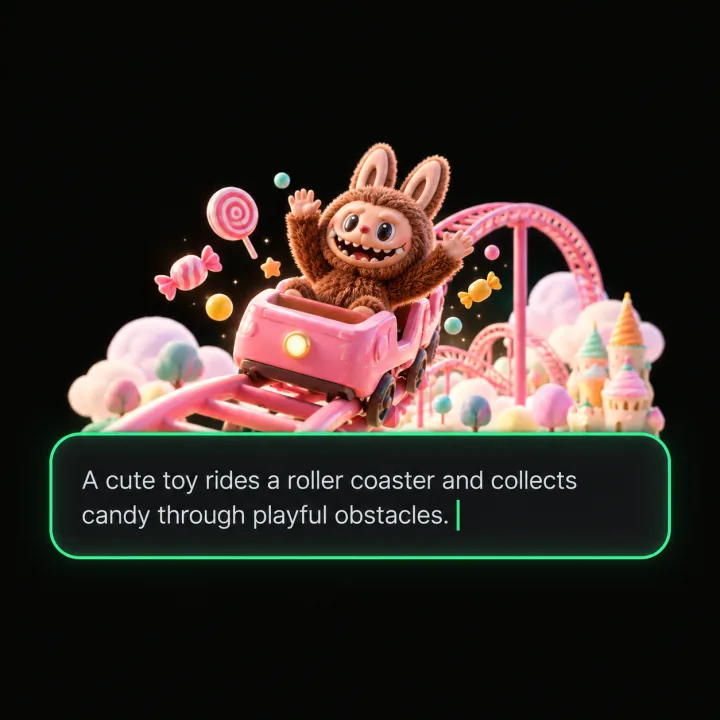
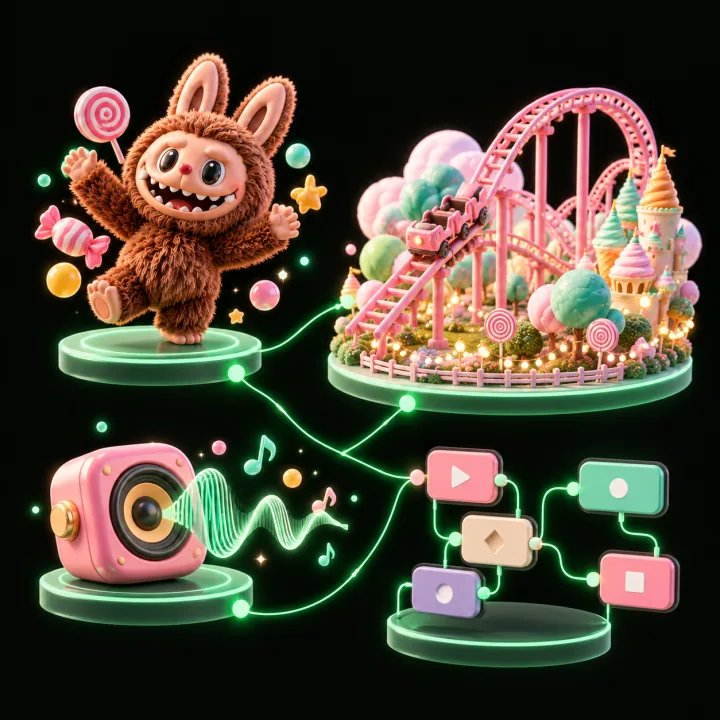
SEELE editorial concept created with Seedream 5.0. It is not an Anthropic or Epic asset, not a real Unreal Editor screenshot, not gameplay, and not proof of an official integration.
Start building an Unreal 5 game in SEELE
Choose a concrete prompt, open the SEELE Unreal creator, review the prefilled brief, and generate the native project. The first prompt is tailored to this page; the remaining prompts are reusable starting points.
Use this page's scoped brief
Create a native Unreal 5 island traversal test with a third-person player, one climbable route, one physics bridge, a collectible key, a locked lighthouse, failure and restart, and a clear completion moment. Keep inputs, objective state, and acceptance checks deterministic so two model-assisted workflows can be compared against the same browser preview and downloaded project.
Use Unreal Engine to generate a simple third-person tour game with mountains and water. Include responsive movement, a clear route, one completion state, failure recovery, immediate restart, browser preview, and a native downloadable Unreal 5 project.
Build a compact dungeon crawler using Unreal Engine. Include third-person movement, one combat loop, two connected rooms, one key-and-door objective, visible health and feedback, death, completion, immediate restart, browser preview, and a native downloadable Unreal 5 project. Test and regress the result.
Create a native Unreal 5 third-person city tour with a compact walkable district, vegetation, landmark lighting, and sunny, cloudy, and rainy weather states. Include clear controls, browser preview, stable restart behavior, packaging checks, and local project download.
An inspectable Unreal project rather than a model answer or an unofficial integration claim.
Browser preview
A fast way to check camera, controls, objective clarity, feedback, completion, failure, and restart before local continuation.
Optimization and packaging path
A workflow for performance review and package preparation before external distribution.
Downloadable project
A local project handoff for source, Blueprint, asset, plugin, rights, build, target-device, and release review.
What is verified—and what it means for Unreal
Compare exact products
Record the exact model IDs, API or client surfaces, effort settings, context limits, tool implementations, price dates, retention, region, and fallback behavior.
Use project tasks
General coding and agent benchmarks are discovery signals, not evidence that a model understands a project module, Blueprint graph, plugin, engine version, or packaged failure.
Normalize authority
Give both models the same read and write scope, shell or editor tools, network access, confirmations, timeouts, cancellation, and human-review rules.
Score the whole outcome
Include preparation, token and tool cost, latency, retries, accepted edits, escaped defects, recovery, and reviewer time—not just the quality of prose.
A five-stage Opus 5 versus GPT-5.6 evaluation workflow
Create a neutral harness
Remove provider-specific hints, use the same system constraints and evidence bundles, randomize response labels for review, and capture raw tool calls and final artifacts. Preserve a known-correct answer for each task.
Test diverse Unreal jobs
Include repository navigation, a C++ compile issue, Blueprint state plan, crash or cook log, multiplayer authority bug, visual regression, architecture review, long-running feature, and release checklist.
Run native gates
Apply proposed changes only in isolated branches or disposable projects. Compile, run automation, restart the editor, replay invalid and interruption paths, cook, package, and test the target configuration.
Analyze failures by class
Separate wrong owner, invented API, missed evidence, excessive churn, security refusal, unsafe tool judgment, timeout, cost overrun, incomplete recovery, and truthful stop. Different classes need different routing or prompt changes.
Adopt reversible routing
Choose per-task winners, canary the router, monitor actual model and acceptance, and keep a manual override. For game creation, hand the approved brief to SEELE and evaluate the native project independently.
Failure modes to block before adoption
Risk 1
Provider-specific clients and tools can make a model comparison actually measure integration quality.
Risk 2
Unequal context selection, effort, permissions, or fallback invalidates cost and quality conclusions.
Risk 3
One polished response can hide high variance across repeated agent runs.
Risk 4
Cross-vendor data handling, retention, region, security, and procurement rules may constrain the available test.
Decision scorecard
Dimension
What good looks like
Evidence to keep
Correctness
Root cause and proposed change match the project and engine version
Known answer, blind review, compile, automation, and runtime
Agency
Tools are selected safely and the task survives interruption
Audit log, permission test, forced cancellation, and resume
Economics
Total accepted-task cost and elapsed time
Tokens, tools, retries, builds, and reviewer minutes
Operations
Identity, schema, policy, fallback, monitoring, and rollback fit production
Canary and route-back drill
Unreal implementation notes for this decision
Blind the artifact review
Remove provider names from plans, diffs, explanations, and test reports when possible. Randomize presentation and have reviewers score ownership, correctness, minimality, uncertainty, tests, and rollback before seeing latency or cost.
Repeat tasks to expose variance
Run more than one trial for each task class and distinguish truthful stop, wrong owner, invented API, incomplete change, unsafe tool use, timeout, and regression. A model that wins once but fails unpredictably may be the weaker production route.
Respect cross-vendor governance
Compare data retention, training controls, region, access logging, incident response, procurement, credentials, tool hosting, and fallback behavior alongside technical results. Some task classes may be disallowed regardless of benchmark quality.
From evaluated idea to a SEELE native Unreal project
Use the model research to tighten the brief, not to replace project evidence. The direct creation path is deliberately short and observable:
1. Bound the player loop
Keep one camera, one primary verb, one objective chain, explicit failure and completion, restart behavior, visual direction, controls, target session length, and a clear cut list.
2. Generate in SEELE
Open the canonical Unreal creator, choose the closest verified starter world, submit the brief, and generate a native Unreal 5 project rather than treating a text answer as the deliverable.
3. Inspect the browser preview
Play the result from start through success, failure, and restart. Check camera, input, objective clarity, feedback, interaction state, visual hierarchy, and obvious performance or stability problems.
4. Download or continue production
Review the project, source, Blueprints, assets, plugins, rights, configuration, performance, saves, networking, cook, package, and target requirements before local continuation or external release.
Starter creation brief
Create a native Unreal 5 island traversal test with a third-person player, one climbable route, one physics bridge, a collectible key, a locked lighthouse, failure and restart, and a clear completion moment. Keep inputs, objective state, and acceptance checks deterministic so two model-assisted workflows can be compared against the same browser preview and downloaded project.
Official evidence and capability boundary
Snapshot date: July 25, 2026. Anthropic's July 24, 2026 announcement is the first-party source for release status, pricing, positioning, and launch availability. It does not claim an Epic-supported Unreal integration. Epic documentation and the exact project remain authoritative for engine behavior, compilation, assets, tests, cooking, packaging, and target-platform results.
Anthropic release
Release date, claude-opus-5 model ID, coding and agent positioning, pricing, Fast mode, alignment, safety, and availability.
Continue through the Claude Opus 5 × Unreal cluster
Claude Opus 5 Prompting for Unreal Projects
Build focused Claude Opus 5 prompts for Unreal C++, Blueprints, logs, assets, and release tasks, then turn the approved brief into a native Unreal 5 project with SEELE AI.
A complete Claude Opus 5 Unreal Engine guide covering the July 2026 release, coding and agent claims, pricing, limits, evaluation, and a direct SEELE game-creation path.
Evaluate Claude Opus 5 for long-running Unreal debugging and agent work using checkpoints, root-cause evidence, tool boundaries, interruption recovery, tests, and rollback.
There is no universal evidence-based winner. Run matched project tests and route task classes from reproducible results.
Which benchmarks should I trust?
Use official benchmarks as hypotheses, then rely on your versioned Unreal task suite, native builds, runtime evidence, and reviewer decisions.
How do I make the comparison fair?
Normalize context, tools, permissions, effort, time, cost, engine version, target, acceptance checks, and response-label blinding.
Can one model review the other?
It can provide an additional opinion, but independent human and native project evidence should decide. Cross-review can share the same blind spot.
Where does SEELE fit in the comparison?
SEELE is the action layer for generating and previewing the native Unreal project after the team approves a game direction; it is not evidence that either model won.
How many tasks make an Opus 5 versus GPT-5.6 comparison useful?
Use a representative suite across several Unreal task classes with repeated trials. Report the distribution of failure types, accepted outputs, total cost, latency, and review effort instead of one aggregate win rate.
Turn the research into a native Unreal 5 game
Open the canonical SEELE Unreal creator, choose a verified starter world, generate the native project, inspect the browser preview, then download or continue optimization and packaging. Keep third-party model evaluation and project evidence separate.